E-Paper



1999 Staines murder case: Odisha rejects Dara Singh’s premature release plea
The board cited possible social and communal repercussions, after a recent gathering outside Keonjhar jail raised concerns over provocative slogans.

 Prefer HTon Google


Odisha’s State Sentence Review Board has rejected a plea for premature release by Dara Singh, who is serving life imprisonment for the 1999 murder of Australian missionary Graham Staines and his two minor sons, ending months of uncertainty over his remission plea.
The board’s decision comes ahead of the next hearing in Supreme Court on September 17, and after multiple prompts from the apex court.
Board cites possible social and communal disturbances
The board, which considered the case at its special meeting on August 31 said Singh’s release could have “societal ramifications” and potentially lead to communal disturbances in the area. District authorities in Keonjhar, where Singh is lodged in a jail, had in March 2025 conditionally recommended that he could be allowed premature release, but made this contingent on imposing conditions to ensure social harmony. In its latest report, the district administration reported that a crowd of about 200 to 250 people associated with the Dara Sena assembled outside the Keonjhar District Jail on August 15 and raised provocative slogans.
HT has reviewed a copy of the minutes of the board meeting.
The board noted that the latest report from the Keonjhar administration did not contain a specific recommendation and was inconclusive.
Singh became eligible under 2022 remission guidelines
Singh, 67, has spent more than 26 years and six months in prison and became eligible for consideration for premature release under Odisha’s 2022 remission guidelines. He approached the Supreme Court in 2024 seeking directions to the Odisha government to consider his premature release under those guidelines.
The board had earlier rejected his plea of premature release in November 2016, June 2019, December 2020, January 2022 and February 2023 citing various grounds, including concerns over communal harmony.
The latest decision came after the top court last week directed the state government to take a clear position on Singh’s plea.
“You want to reject it, you do it. You take a decision. We will deal with it. You can’t keep it lingering like this,” the SC bench of justices Manoj Misra and Vijay Bishnoi said while warning that state officials could be summoned if the Sentence Review Board continued to delay its decision. The court, on August 19, directed the board to take a decision by September 2 and inform it of the outcome.
Also read: SC asks Odisha to decide remission plea of Dara Singh in Staines murder case
Singh convicted over 1999 killing of Staines, sons
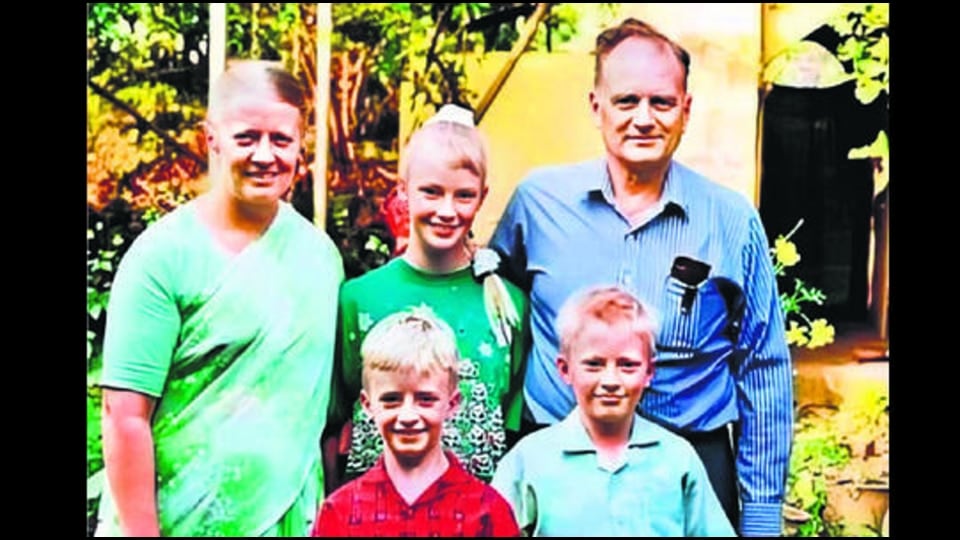
Singh was convicted for the killing of Staines and his sons, Philip, 10, and Timothy, 6, who were burnt alive while sleeping in a station wagon at Manoharpur in Odisha’s Kendujhar district on January 22, 1999. A CBI court sentenced Singh to death in 2003 and convicted him under several provisions of IPC including murder, criminal conspiracy and rioting. Following an appeal, the Orissa High Court in 2005 acquitted 11 other accused and commuted Singh’s death sentence to life imprisonment. His appeal against the conviction was subsequently dismissed by the Supreme Court.
Singh was also convicted in two other murder cases in Mayurbhanj district — the killing of Catholic priest Father Arul Doss at Jambani Church and the murder of garment shop owner SK Rahman. He received life sentences in both cases in 2007. His appeals were later dismissed by the Orissa High Court.
Co-accused released prematurely in April 2025
One of his co-accused, Mahendra Hembram, was released prematurely from Kendujhar district jail in April 2025.
Singh first sought premature release through the state review process several years ago, but successive boards rejected or deferred his plea. After a 2023 direction from the Orissa High Court, the Sentence Review Board held a special meeting on February 20 that year and again rejected his request.
His case was placed before the board in November 2024, when it sought a fresh opinion from the district authorities. Kendujhar officials subsequently recommended his release in March 2025, subject to conditions.
Also read: Odisha defers decision to release Staines murder convict Dara Singh from jail
Three murder convictions cited as reason for deferral
The board nevertheless deferred the matter in May 2025, citing his convictions in three murder cases and seeking further reports.
It again deferred the case in September 2025, seeking a fresh opinion from authorities in Auraiya district of Uttar Pradesh, where Singh originally lived. The Auraiya authorities subsequently supported his premature release in February 2026.
In July 2024, the Supreme Court said his premature release should have been considered by the competent state committee.
The matter was subsequently adjourned several times as the state sought time for the review process.