E-Paper



SC restrains casual use of DNA tests
The Supreme Court ruled DNA testing can't be routinely ordered, citing privacy, dignity, and potential harm to family relationships.

 Prefer HTon Google


The Supreme Court on Monday held that courts cannot direct DNA testing as a routine measure, underscoring that such orders intrude upon bodily autonomy, privacy and the dignity of individuals, and may also cause irreversible harm to the sanctity of family relationships.
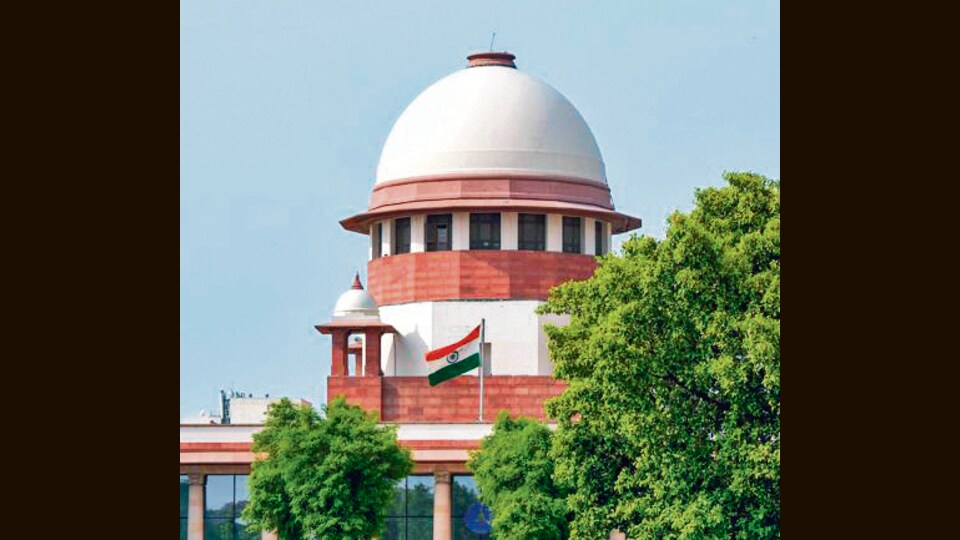
A bench of justices Prashant Kumar Mishra and Vipul M Pancholi stressed that DNA profiling is a highly intrusive process and must be ordered only when it is “eminently necessary” to secure justice.
“This Court has consistently held that DNA testing cannot be ordered as a matter of course and must be subject to stringent safeguards to protect the dignity of individuals and the legitimacy of children born during the wedlock,” said the bench. Courts, it added, “must remain vigilant against fishing inquiries masquerading as legitimate requests for scientific evidence.”
The top court said that when judicial discretion is exercised in matters involving a conflict between truth-finding and privacy, the balance must be conducted with “scrupulous care”. “When there is an apparent conflict between the right to privacy and bodily integrity on the one hand, and the Court’s duty to ascertain truth on the other, such direction can be issued only after a careful balancing of interests of all parties and upon due consideration of whether, for a just decision in the matter, DNA test is eminently necessary,” it underlined.
The judgment came while setting aside a 2017 order of the Madras High Court directing DNA profiling of a doctor accused of having an extra-marital relationship with a patient’s wife and fathering her child. The woman had alleged cheating and harassment under Sections 417 and 420 of the IPC and Section 4(1) of the Tamil Nadu Women Harassment Act. The Supreme Court held that the allegations could be examined without subjecting the parties to intrusive genetic testing.
The court emphasised that the paternity of the child was not central to determining whether the offences alleged had been committed. Since the child -- now an adult, was neither a party to the case nor required for establishing guilt, ordering DNA testing would be “wholly extraneous” to the investigation.
Citing the landmark Puttaswamy privacy judgment (2017), the bench underscored that compelling a person to undergo DNA profiling constitutes a serious invasion of personal liberty, and must satisfy the tests of legality, legitimate state aim and proportionality. In the present case, the bench held that the proposed test failed all three.
The bench also foregrounded the ethical and psychological dimension of DNA testing, noting that it can permanently affect the identity and emotional wellbeing of the child involved. Ordering a test without considering such ramifications risks inflicting “irreversible psychological and social harm.”
“Beyond the legal framework, it is also imperative to recognise the ethical and psychological dimensions of directing DNA testing. The process though scientific, is not without profound ethical and emotional implications. The act of extracting and analysing one’s genetic material intrudes into the innermost sphere of personal identity, autonomy, and privacy. It can have lasting emotional and social ramifications not only for children but also for adults, as such testing often brings to surface intimate aspects of familial and personal relationships,” it highlighted.
Importantly, the court also reaffirmed the statutory presumption of legitimacy under Section 112 of the Evidence Act, which holds that a child born during a valid marriage is conclusively presumed to be legitimate unless non-access between spouses at the time of conception is proved. Allegations of infidelity, simultaneous relationships or suspicion, the court said, cannot disrupt the presumption.
“Section 112 stands as a bulwark against the casual illegitimisation of children,” warned the bench, emphasising that courts must not destabilise family identity on speculative or unsupported claims.
Setting aside the Madras High Court order, the Supreme Court concluded that the direction for DNA testing lacked necessity, proportionality and legal justification.