
 E-Paper



SC ruling on Waqf Act a fine balance of presumption of constitutionality, property rights
The top court recognised that certain provisions, if implemented immediately, could lead to irreversible harm

 Prefer HTon Google


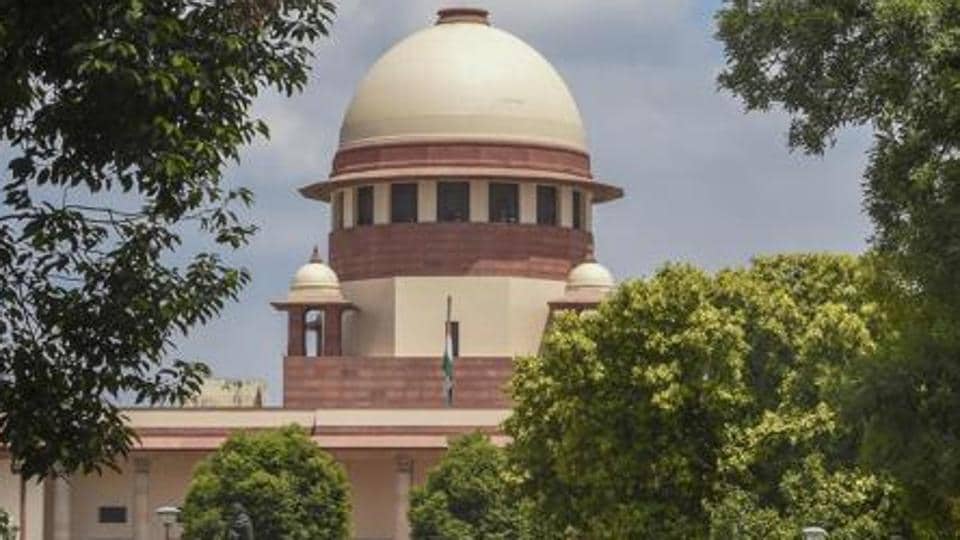
The Supreme Court on Monday declined to suspend the Waqf (Amendment) Act, 2025 in its entirety, but kept in abeyance some provisions that could have immediate and irreversible consequences for property rights. In doing so, the bench led by Chief Justice of India Bhushan R Gavai walked a fine line between the strong presumption of constitutionality attached to every law and the need to protect citizens from irreparable harm.
This balancing act lay at the heart of the court’s approach to the challenge mounted by a cluster of Muslim organisations and individuals to the sweeping amendments brought into the century-old waqf law earlier this year.
Reiterating a settled principle, the court said every law enacted by Parliament or a state legislature is presumed valid. Challengers carry the heavy burden of showing that the statute violates constitutional provisions beyond doubt. “The courts should be very slow in granting interim relief by way of staying the provisions of an enactment,” noted the bench, adding that such orders are justified only in rare cases where the legislature lacks competence or the provision is manifestly arbitrary.
The bench noted that legislatures are considered best placed to appreciate the needs of their people and that their laws often respond to long-standing public concerns. Tracing the history of waqf regulation to the Mussalman Wakf Act of 1923, the court said Parliament has repeatedly stepped in to curb mismanagement and misuse of endowments. The 2025 amendments, it reasoned, were part of this continuing process.
At the same time, the court recognised that certain provisions, if implemented immediately, could lead to irreversible harm. One such measure empowered authorities to denotify waqf properties, raising fears that once land passed out of the statutory framework, it could not easily be reclaimed even if the law was later struck down. Another mandated that only a Muslim who has practised Islam for at least five years may create a valid waqf, but provided no mechanism to verify such practice.
The bench held that while these provisions are not unconstitutional on their face, they cannot be enforced until safeguards are put in place. It therefore stayed their operation until the government frames appropriate rules.
By upholding most of the Act while freezing provisions that risked irreparable damage, the court struck a careful balance. It reaffirmed judicial deference to legislative wisdom but also underscored the judiciary’s role as a protector of rights when statutory changes threaten to extinguish them beyond recovery.



