The five-judge Supreme Court bench hearing the Ramjanmabhoomi-Babri Masjid title dispute on Thursday sought clarifications on three points from one of the Hindu parties arguing against the 2010 Allahabad high court verdict that ordered the division of the disputed site in Ayodhya into three equal portions to be handed over to three claimants.
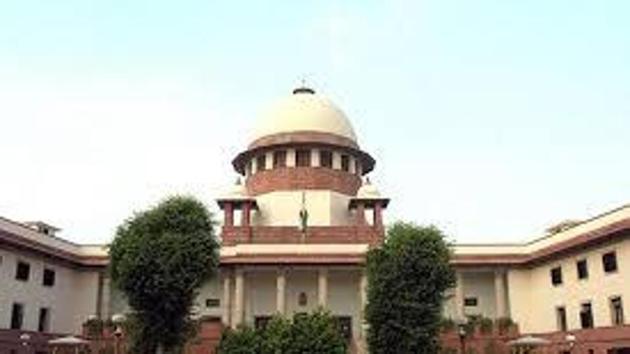
The bench led by Chief Justice of India (CJI) Ranjan Gogoi posed the questions to senior advocate PN Mishra, lawyer for the Ram Mandir Revitalisation Committee: whether the prior existence of a mosque at the site can be negated; whether the structure that existed on the site was indeed a mosque; and could a King appoint a waqf (property endowment) from the wealth of the state or would he have to buy it first?
The bench also comprises justices SA Bobde, DY Chandrachud, Ashok Bhushan and SA Nazeer. In December 1992, Hindu activists campaigning for the construction of a Ram temple on the disputed site in Ayodhya tore down a 16th century mosque that existed there. Hindu groups claim the mosque had been built on the ruins of a Ram temple that marked the birthplace of the warrior-god Ram.
Fourteen appeals have been filed in the apex court against the 2010 Allahabad High Court judgment, delivered in four civil suits, that the 2.77-acre land in Ayodhya be partitioned equally among the three parties — the Sunni Waqf Board, the Nirmohi Akhara, a religious denomination, and Ram Lalla Virajman, which claims to represent the infant deity Ram.Mishra claimed that the Quran does not permit building of a mosque on a disputed land nor on a piece of land where another structure existed. Also, he argued, it has not been proved as to who constructed the disputed structure.
{{/usCountry}}Fourteen appeals have been filed in the apex court against the 2010 Allahabad High Court judgment, delivered in four civil suits, that the 2.77-acre land in Ayodhya be partitioned equally among the three parties — the Sunni Waqf Board, the Nirmohi Akhara, a religious denomination, and Ram Lalla Virajman, which claims to represent the infant deity Ram.Mishra claimed that the Quran does not permit building of a mosque on a disputed land nor on a piece of land where another structure existed. Also, he argued, it has not been proved as to who constructed the disputed structure.
{{/usCountry}}Muslims in their case have heavily relied on two inscriptions, one that was placed at entrance and the other on the pulpit in the mosque. But it is also admitted that these inscriptions were either badly damaged or destroyed . Justice Bobde intervened to remark that the mosque cannot be wished away. “The mosque stands or stood. There was a structure in the shape of a mosque. There is no dispute about that. Whether it was dedicated for the purpose of mosque is argued. However, that does not take away existence of a mosque,” the judge said.
To expand his argument on the structure not being a mosque, as laid down in Quran, Mishra steered away to give an example. At this senior advocate Rajeev Dhawan , appearing for a Muslim party, objected and asked Mishra to restrict himself to evidence.
Justice Chandrachud too told Mishra to rely on exhibits placed before the high court..
“While Islam prohibits worship of anything apart from Allah, Hinduism says whatever you worship ultimately reaches the same one power. Hinduism in that sense is different, Hindus can worship in a place where Namaz is offered,” the judge said.
Mishra then listed out characteristics of a mosque to show that Babri Masjid was not a mosque. “If the construction is in line with Islamic tenets and Islamic law, then only will it be termed as mosque. If it is taken by force it will be his property and go to heirs but waqf board would have no role,” he submitted.
According to Islam, a mosque built at a place after demolishing another place of worship there is not proper. If a person creates a waqf out of illegally acquired property, then it is not a lawful waqf, he argued.