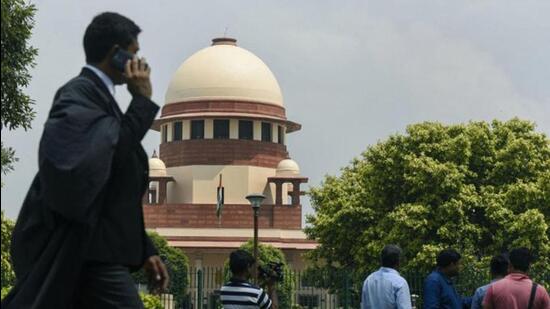
The Supreme Court has initiated the process of formulating broad guidelines to strengthen and streamline the functioning of bar associations across the country, seeking suggestions from all lawyers’ bodies within four weeks. Emphasising that this effort was a long-term investment crucial for the institution’s future, a bench comprising justices Surya Kant and Dipankar Datta on Wednesday made it clear that the issue was not adversarial but aimed at institutional reform.
“Unless we start doing something now, how will we succeed? There cannot be a magical wand to do everything,” said the court, urging all parties involved to start submitting their suggestions. To facilitate the process, the court appointed advocate Vipin Nair, president of the Supreme Court Advocates-On-Record Association (SCAORA), as the nodal counsel. Nair will coordinate with all bar associations nationwide to gather their inputs, which will be compiled and circulated according to the court’s order.
The suggestions are expected to address a wide range of issues, including the criteria for admitting members to various bar associations, the conduct of elections, and the overall governance of these bodies.
The proceedings stemmed from a case originally concerning allegations of discrimination and elitism against the Madras Bar Association. Although the petitioners in the case expressed their willingness to withdraw these allegations, the Supreme Court decided to examine the broader issue of bar association reforms.
Senior advocate S Prabhakaran, representing the Bar Council of India (BCI), informed the court that notices had been issued to bar associations across the country to gather their responses. However, the bench clarified that the court’s focus was not on grievances but on necessary reforms even as it cautioned against any reluctance to engage in the process, warning that such non-cooperation would not deter the court’s intention to address the issues at hand.
{{/usCountry}}Senior advocate S Prabhakaran, representing the Bar Council of India (BCI), informed the court that notices had been issued to bar associations across the country to gather their responses. However, the bench clarified that the court’s focus was not on grievances but on necessary reforms even as it cautioned against any reluctance to engage in the process, warning that such non-cooperation would not deter the court’s intention to address the issues at hand.
{{/usCountry}}During the proceedings, the bench posed questions for consideration, including the criteria for admitting members to the district, high courts, and Supreme Court bars, and whether there should be uniform standards across the board. It also addressed concerns about the substantial funds spent on bar association elections and suggested that an independent regulatory body might be necessary to oversee these elections, given the numerous complaints and election petitions.
The bench proposed it could fix one day each for addressing issues specific to district, high court, and Supreme Court bar associations, ensuring that every member has one vote. The court acknowledged the need for basic infrastructural improvements for bar members and directed SCAORA to include suggestions on this aspect.
As part of the process, the Supreme Court directed the registry to post a notice on its website, informing all high court and district bar associations to submit their suggestions to the SCAORA president. The matter has been scheduled for a hearing in October.