The Supreme Court on Friday set aside a controversial observation made by the Allahabad high court, which had stated that the majority population in the country could become a minority if religious congregations promoting conversions were not stopped.
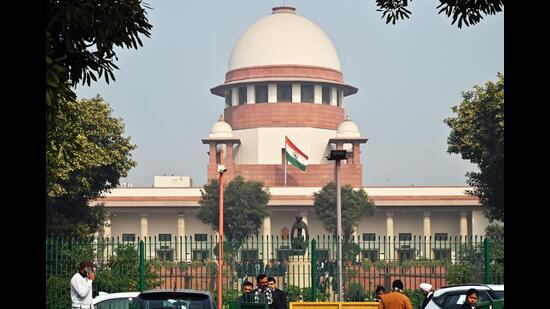
A bench led by Chief Justice of India Dhananjaya Y Chandrachud remarked that the observation of the high court was “uncalled for” and should be expunged.
“We clarify that the general observations made by the high court had no bearing on the facts of the present case and were, therefore, not required for the disposal of the case. The observations, therefore, shall not be cited in any other case or proceeding in the high court or in any other court,” directed the bench, also comprising justices JB Pardiwala and Manoj Misra.
The bench passed the order while granting bail to Kailash, who was charged under the Uttar Pradesh Prohibition of Unlawful Conversion of Religion Act and Section 365 of the Indian Penal Code (kidnapping or abducting with intent to secretly and wrongfully confine a person).
The court granted bail to Kailash, noting that he had been in custody since May 21, 2023, and the charge sheet had been submitted on July 19, 2023. In its brief order, the bench clarified that the high court’s general remarks had no relevance to the specific facts of the case and were not necessary for its resolution.
{{/usCountry}}The court granted bail to Kailash, noting that he had been in custody since May 21, 2023, and the charge sheet had been submitted on July 19, 2023. In its brief order, the bench clarified that the high court’s general remarks had no relevance to the specific facts of the case and were not necessary for its resolution.
{{/usCountry}}The high court, on July 2, while considering Kailash’s bail plea, had made remarks about allegations that he had been taking individuals from Hamirpur, Uttar Pradesh, to a religious congregation in Delhi for conversion purposes. It had warned that if such activities were allowed, the country’s majority population could become a minority. It had also denied Kailash bail, stating that such conversions violated the Constitution, which guarantees “freedom of conscience and free profession, practice, and propagation of religion.”
The high court had further observed that it had noticed several cases where conversions of individuals from Scheduled Castes, Scheduled Tribes and economically disadvantaged groups to Christianity were occurring at a rapid pace across Uttar Pradesh.