
 E-Paper



SC strikes down provisions of tribunal law that fixed tenure of members at 4 yrs
It was in this case that Attorney General KK Venugopal told the Supreme Court (SC) in February this year that Parliament can override any judgment by a court.


New Delhi: Holding that security of tenure, adequate remuneration and conditions of service are necessary to ensure independence of functioning by members of tribunals, the Supreme Court by a 2:1 majority on Wednesday reversed amendments to the law governing tribunals to provide a minimum tenure of five years to tribunal chairpersons and members with a retirement age of 70 and 67 years, respectively.
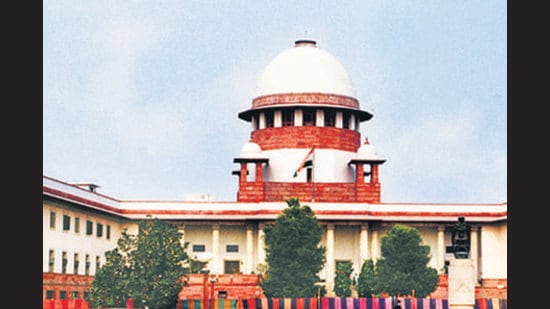
The conditions were prescribed under the Tribunal Reforms (Rationalization and Conditions of Service) Ordinance 2021 promulgated in April this year. By this ordinance, certain provisions of the Finance Act of 2017 were modified. The amendments to the Finance Act and select provisions of the Ordinance were challenged in the top court by Madras Bar Association.
It was in this case that Attorney General KK Venugopal argued in February this year that Parliament can override any judgment by a court. He further argued that the tenure of four years was fixed after discussing with experts and courts cannot direct the legislature how to make laws.
The majority bench of justices L Nageswara Rao and S Ravindra Bhat, however, struck down the relevant provisions that reduced tenure of chairperson/members to four years, introduced a minimum entry age of 50 years for tribunal membership, required a panel led by chief justice of India to propose two names for appointment of chairperson or members, and three months’ time for the government to process appointments as it were found to be contrary to the past directions of the top court.
The bench also held the legislative exercise to be an “impermissible legislative override” that violated the doctrine of separation of powers, having gone contrary to past judicial decisions.
The majority, however, upheld the retrospective effect with regard to the four-year tenure that was made applicable from May 26, 2017. But the majority view clarified that this rule shall not in any manner affect the tenure of any chairperson or member appointed as a consequence of various orders passed by the court between May 26, 2017 and April 4, 2021.
The majority view was partly supported by the third judge, justice Hemant Gupta on two counts; prescribing a four-year tenure and recommending a panel of two names for appointment. Justice Gupta said the legislature could fix any tenure of the chairperson and the members other than four years. He also ruled that the provision that requires the selection committee to recommend a panel of two names is contrary to the directions of this court in the Madras Bar Association case decided last year. However, Justice Gupta disagreed with the other two judges on the bench on introducing a minimum entry age of 50 years and fixation of house rent allowance since the legislature hadn’t nullified the judgment of this court on the above aspects.
The court also expressed concern over the burgeoning pendency of cases and large number of vacancies that had rendered the tribunals “ineffective”.
“It is high time that a serious effort is made by all concerned to ensure that all the vacancies in the tribunals are filled up without delay. Access to justice and confidence of the litigant public in impartial justice being administered by tribunals need to be restored,” said justice Rao in his judgment.
He was supported by justice Bhat in his concurring but separate opinion which said, “It is necessary that the Union expedite the process of appointments to tribunals, towards ensuring swifter and efficacious justice delivery.”
The Madras Bar Association challenged the newly-inserted provision, Section 184(11), into f the Finance Act 2017 that provides for retrospective fixing of tenure as four years with effect from May 2017 with retirement age fixed at 70 years for Chairperson and 67 years for Members. Under this provision, those appointed between May 2017 and April 2021 will get a maximum tenure of five years. The association also challenged Section 184(1) that prescribed a minimum age of 50 for appointment as chairperson or member. The other provision held to be unconstitutional was Section 184(7) that provided that the selection committee (headed by Chief Justice of India or his nominee) should recommend a panel of two names for appointment to the post of Chairperson or Member.
Justice Bhat listed out the current pendency and vacancy position in tribunals and said, “Constitution does not and cannot be read so as to provide two kinds of justice: one through courts, and one through other bodies. The quality and efficacy of these justice delivery mechanisms have to be the same.” A minimum age limit will have a “devastating effect” on bright young advocates with subject expertise to join tribunals. By an earlier decision, the court had allowed lawyers with 10 years’ experience to be eligible to join tribunals.
Justice Rao held a similar view as he said that inordinate delay in filling vacancies in tribunals has led to “emasculation” of tribunals that were introduced to provide speedy justice.


