
 E-Paper



SC tells FTII to allow colour-blind students to pursue all courses
A bench led by justice Sanjay Kishan Kaul directed FTII to grant admission to colour-blind candidates in all 12 courses, and help them with assistants wherever required.

 Prefer HTon Google


Let arts and filmmaking have the widest canvas instead of being boxed in conformist mores, the Supreme Court said on Tuesday, as it opened the doors of the prestigious Film and Television Institute of India (FTII) to colour-blind candidates.
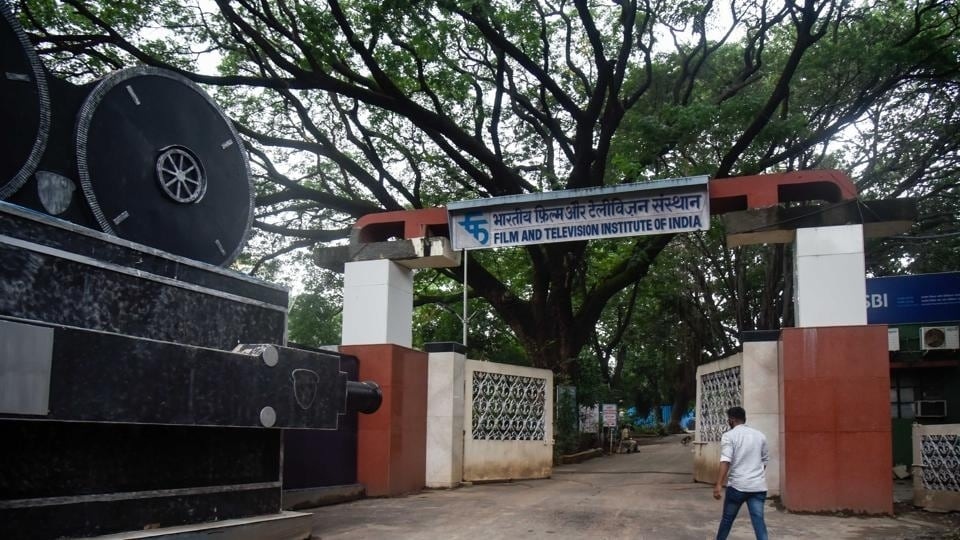
A bench led by justice Sanjay Kishan Kaul directed FTII to grant admission to colour-blind candidates in all 12 courses, and help them with assistants wherever required. At present, colour-blind candidates are not eligible for admission in six out of the 12 courses offered.
“Art is non-conformist in character. FTII is a premier Institute and we would have expected it to encourage liberal thought process and not put courses connected with films and art in any conformist boxes,” said the court in its order, reminding the Pune-based institute that arts and film-making must have the widest canvas to explore and innovate.
The bench, which also comprised justice MM Sundresh, “whole-heartedly” accepted the report of a panel of experts set up by the court through an order in December to ascertain whether a person’s inability to distinguish between certain colours will have a serious impact on their ability to pursue courses at FTII.
The committee of seven experts were National Film Award winner film editor Akkineni Sreekar Prasad, director and cinematographer Ravi K Chandran, well-known colourist Swapnil Patole, script supervisor Shubha Ramachandra, FTII’s head of department (editing) K Rajasekaran, ophthalmologist Jignesh Taswala, and advocate Shoeb Alam.
As reported first by HT on December 1, the committee was formed to review FTII’s admission criteria with respect to colour-blind candidates on a plea by Patna-based Ashutosh Kumar, who convinced the Supreme Court to consider whether he should be barred from admission in the film editing course at FTII just because he is colour blind.
The panel, in its 15-page report submitted on Monday, recommended that the 20-minute colour grading module, which was cited as the chief reason by FTII in barring colur-blind candidates, can be either done away with or be made optional in the film editing course. It further recommended that colour-blind candidates should be permitted to enrol for all 12 courses at FTII and any limitations can be overcome by an assistant in educational and professional life since film-making is a collaborative art form.
FTII’s representative in the panel opposed both the recommendations. On Tuesday, FTII’s counsel Amit Anand Tiwari tried to persuade the bench that the colour-grading module is an important part of the film editing course, which like all the other courses has been designed by a team of experts and ratified by the academic council and the governing council of the institute.
But the court was emphatic that the panel carried out a thorough job before making its recommendations and that it is time for FTII to accept changes that must be made to accommodate colour-blind candidates instead of prohibiting their entry to academic courses on the sole consideration of how they may fare in their professional life after completing the courses.
“You are obstructing the entry of a person based on your perception of how he or she will perform later...It is much easier to change the law than the mindset. That is why the judiciary has to push at times. We wish the approach of your institute would have been constructive. Remember, when the question of constitutional tests comes, an institution cannot say we will go on like this just because we want the freedom to decide who we will teach and how we will teach,” the bench told Tiwari.
The bench recounted the journey of candidates with different kinds of disabilities that had to invariably pass through the courts before they could secure equal opportunities and finally, the concept of “reasonable accommodation” was evolved under the Right to Persons with Disabilities (RPwD) Act of 2016.
“Remember a time when visual disability was a complete handicap. It has taken several judgments and several judges to change this mindset. It is time you made these changes in view of the passage of time and developments of science and medicines,” it added, even as Tiwari requested the bench to reconsider allowing colour-blind candidates in all the 12 courses without a more detailed study.
“The theme which permeated the constitution of the committee was to see that art and culture, innovation and creativity remain unrestricted by impediments which can be overcome with assistance. We find ourselves wholeheartedly in support of this view. We think that these changes are required in the curriculum of FTII. It doesn’t impinge on the freedom of FTII to design its curriculum but rather gives FTII a broader canvas and a chance to make a beginning. We hope other institutions will also start a discussion based on the findings of the committee,” stated the court order.
At this point, senior counsel Colin Gosalves, appearing for the petitioner, requested the bench to also allow Kumar take admission in the film editing course in the next session. Gonsalves pointed out that his client applied for the three-year postgraduate diploma course in film editing at FTII in 2015, and was also shortlisted for the course. But his candidature was declined after he was found to be colour-blind during the medical examination.
The senior lawyer said that after the Supreme Court order, Kumar should be permitted to join the course. To this, the bench asked FTII to file a reply, adding the response of the institute should try to resolve the problem this time. The court will hear the case next on May 10 on the aspect of letting Kumar join the course.
FTII is India’s leading film institute based in Pune. Its list of famous alumni includes Adoor Gopalakrishnan, Naseeruddin Shah, Shabana Azmi, Om Puri, Jaya Bachchan, Santosh Sivan, and Sanjay Leela Bhansali.



