
 E-Paper



Supreme Court’s real-time case data to be accessible on Judicial Data Grid portal
This is the first time the data on case disposal with detailed charts and graphs will be available on NJDG

 Prefer HTon Google


The Supreme Court on Thursday linked its case management data on pending and disposed matters on the National Judicial Data Grid (NJDG), which came for praise from Prime Minister Narendra Modi who said the step would further transparency in judiciary and enhance the justice delivery system in the country.
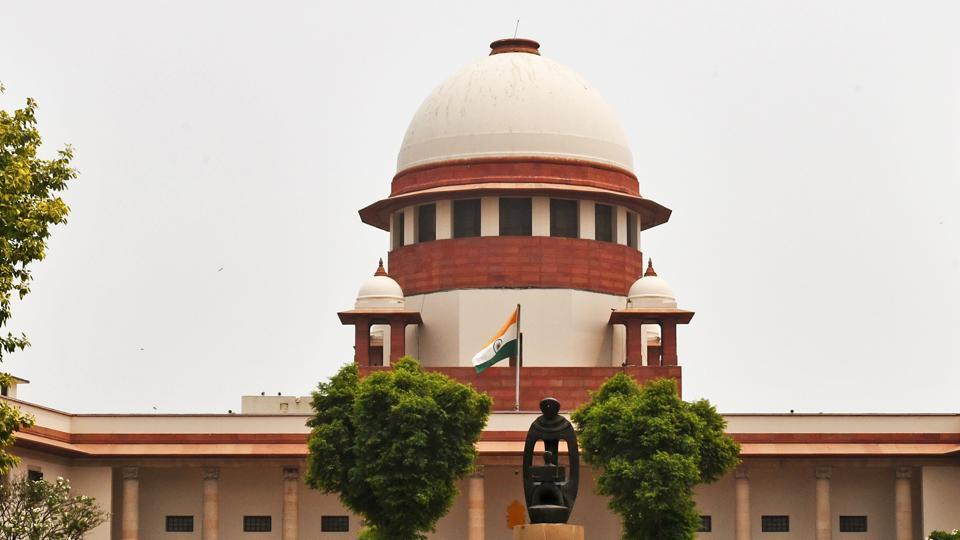
This is the first time the data on case disposal with detailed charts and graphs will be available on NJDG, a flagship project under the eCourts mission, which so far contained data with regard to trial courts and high courts.
A press release issued by the Supreme Court said, “Now we have all three tiers of Indian judiciary on NJDG portal...On a click of a button, one may access case-related information, statistics such as institution, pendency and disposal of cases, case types, year-wise break-up of the Supreme Court of India.”
“Laudatory step by the Supreme Court and Chief Justice of India (CJI) Dhananjaya Y Chandrachud ji. Such harnessing of technology will further transparency and enhance the justice delivery system in our country,” Prime Minister Narendra Modi posted on X, formerly Twitter.
As the court assembled for the day, the CJI announced to the gathered lawyers in the courtroom and those connected online, “We mark a historic event today that will ensure transparency of the work of the court.”
So far, data about the Supreme Court’s total pendency of cases, disposal figures and the number of pending cases before five-judge, seven-judge and nine-judge benches was available on a month-wise basis on the Supreme Court website. It did not carry charts or graphs on the time taken for disposal of cases along with comparative figures for previous years. Now, this data will be available for research or any other purpose to the entire citizenry.
Presently, the Supreme Court has 64,989 registered cases (both civil and criminal) and 15,512 unregistered cases (where filing defects are yet to be rectified by lawyers). This will be a dynamic figure which gets periodically updated. The webpage of the Supreme Court on NJDG portal will further provide real-time data on the number of cases instituted in a month along with the disposal rate that month. Similarly, it will carry data on yearly filing and disposal of cases by the top court, to aid accountability of the highest seat of judiciary in the country.
The CJI, while introducing how to navigate the data on NJDG, chose to defend the judiciary against the criticism faced by it over long vacations and said, “We have graphs to see the effect of vacations as in July, the disposal was 5,500 cases as opposed to the institution of 3,115 cases.”
The CJI said the oldest cases in the top court pending for more than 20 years (prior to the year 2000) were roughly 100. “This gives a data tool for the CJI to reorganise work so that we can dispose the oldest cases,” CJI Chandrachud said, adding that he will be constituting special benches to deal with these cases.
On the NJDG, any citizen can ascertain which are the cases disposed and which are still pending and the type of these cases – civil or criminal appeals, writ petitions, suo motu cases, contempt, transfer or review petitions, etc.
The decision of the SC to onboard its data on NJDG has come a day after the Union cabinet sanctioned the infusion of a huge corpus of ₹7,210 crore for the third phase of the eCourts mission, spearheaded by the e-committee of the Supreme Court chaired by the CJI.
Under this phase, the government seeks to digitise the entire court records, both legacy records and pending cases, estimated to be around 3,108 crore documents at a cost of ₹2,038.40 crore. The project also envisages migration of the data storage facility in courts to cloud technology providing 25 petabytes of cloud storage at an estimated cost of ₹1,205.20 crore.
Read here: Supreme Court to soon come under National Judicial Data Grid platform. What does it mean?
The third phase seeks to spruce up digital infrastructure of courts by setting up 2,500 new modern, virtual-friendly courts, establishment of 1,150 virtual courts, 4,400 eSewa kendras in all court complexes from where citizens who are not technology-savvy can access virtual courts and a host of judicial services online, including e-filing and e-payment of court fees.
A release issued by the Press Information Bureau said, “The main objective of eCourts Phase-III is to create a unified technology platform for the judiciary, which will provide a seamless and paperless interface between the courts, the litigants and other stakeholders.”


