
 E-Paper



Send only stranded migrants: Centre tells states
Home secretary Ajay Bhalla’s mild reprimand came after state governments rushed to the railways ministry to run special trains to send all migrant workers home.

 Prefer HTon Google


As state governments scramble to book buses and trains to send migrant workers home, the Union home ministry on Sunday rebuked the state administrations and told them the transport hadn’t been meant for workers who intended to visit home, but for those in distress because they had been caught unawares by the lockdown.
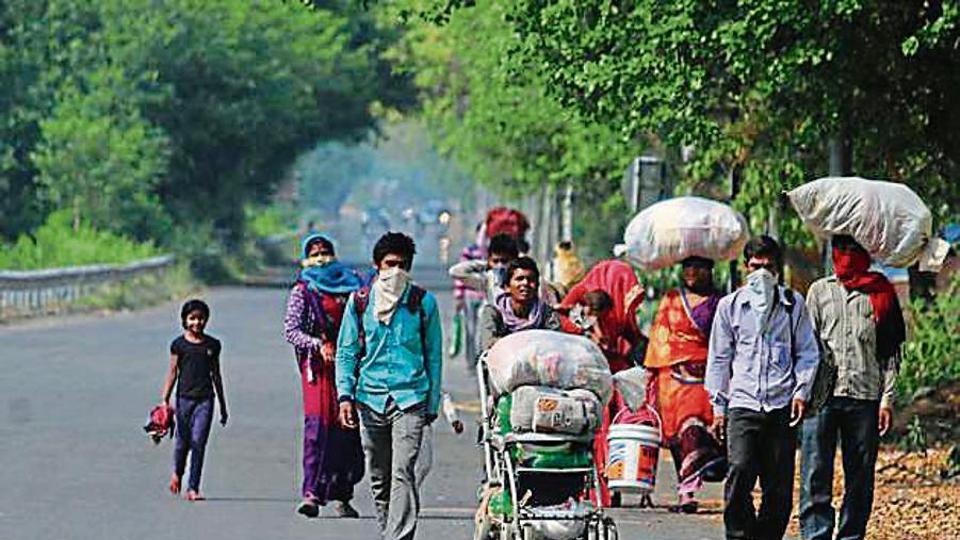
Home secretary Ajay Bhalla’s mild reprimand came after state governments rushed to the railways ministry to run special trains to send all migrant workers home. Bhalla underlined that the Centre had only made an exception for people who had been stranded because of the lockdown, enforced for three weeks from March 25 and twice extended since.
“The facilitation envisaged in the aforesaid orders is meant for such distressed persons, but does not extend to those categories of persons, who are otherwise residing normally at places, other than the native places for purposes of work, etc., and who wish to visit their native places in normal course,” he wrote in a letter to state chief secretaries, a copy of which accessed by Hindustan Times.
This is the first time that the home ministry has explicitly, in writing, stressed that the operative word in its order allowing the transport of migrant workers, tourists, students and others was “stranded”. On April 30, Hindustan Times reported the operative word fine print of the home ministry’s order:
Cabinet secretary Rajiv Gauba had also spelt out in a video conference with state chief secretaries last week that the relaxation shouldn’t result in a free-for-all and the states should only allow people who had been stranded due to the lockdown to travel from one state to another.
The Centre decided to send the clarification in writing on Sunday after an assessment that the states, under pressure from the public and opposition parties, were getting into a race to send, or bring home, as many migrant workers as possible.
“It is clarified that the MHA orders are meant to facilitate movement of such stranded persons, who had moved from their native places/workplaces, just before the lockdown period, but could not return to their native places/workplaces on account of restrictions placed on movement of persons and vehicles as part of lockdown measures,” Bhalla wrote in his letter..
Central government officials said the state governments should have, in the first instance, offered the ride home to 1.4 million people living in relief camps run by the states or non-profit organisations.
“They are the people who have been really in distress and are stranded in every sense of the word,” a government official said.
He explained that the states, which were practically encouraging migrant workers to return home, should account for the fact that the state’s economy would take longer to revive in the absence of the migrant workforce that powers most industries.
This was one reason why the Centre had been reluctant to run special trains to transport the workers. It relented when the chorus from the states became too loud.


