The government will soon make it mandatory for automobile makers to provide three-point safety belts for all seats in a passenger car, including the middle rear seat, officials privy to the development said on Monday. At present, only the front and rear window seats have three-point seat belts, also known as Y-shaped belts. The middle rear seats in most cars have a belt similar to aircraft seat belts that go over the lap.
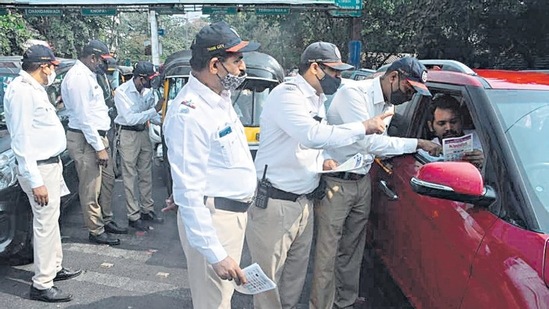
Although not wearing seat belts in cars is a punishable traffic offence in India for decades now, it is not enforced largely for passengers in the rear.
The transport ministry will issue a draft notification in this regard in about a month, and seek suggestions and comments from the public, officials said.
“The intention of the government is to improve the overall safety ratings of passenger cars manufactured in India. The ministry found that barring a few models, no vehicle has three-point seat belts for the passenger seated in the rear middle in India,” a ministry official said, asking not to be named.
“They only have a lap belt, which we found is hardly effective in case of a crash, thus putting the passenger at great risk.”
The three-point seat belt, innovated by Swedish carmaker Volvo and made available to all in the interest of public safety, has been proven to be safer than the lap belt because it evenly spreads out the energy of a moving body over the chest, shoulders and pelvis at the time of a collision, resulting in lesser injuries.
{{/usCountry}}The three-point seat belt, innovated by Swedish carmaker Volvo and made available to all in the interest of public safety, has been proven to be safer than the lap belt because it evenly spreads out the energy of a moving body over the chest, shoulders and pelvis at the time of a collision, resulting in lesser injuries.
{{/usCountry}}This will be the second intervention to make cars safer after the government recently proposed to make six air bags mandatory for all passenger vehicles, a second official said.
The transport ministry on January 14 issued a draft notification seeking comments from the public on making six air bags mandatory that will be implemented from October 1.
Experts welcomed the move to improve safety but said it would be effective only if passengers obey the rule of wearing belts in the rear. Almost 90% of passengers in the rear seat of cars in India do not wear safety belts, they said.
More than 30% of the fatal crashes investigated by SaveLIFE Foundation across various highways involved injuries suffered by passengers who were not wearing belts in the rear seats, said Piyush Tewari, chief executive of the non-profit that promotes greater road safety.
“In a recent case involving seven fatalities in a single vehicle, it emerged that not a single passenger was wearing a seat belt, as a result of which all seven were ejected from the vehicle on impact,” Tewari said. “Seat belts in front as well as rear are not mere accessories. They save lives when used properly.”
Officials at the Society of Indian Automobile Manufacturers (SIAM) agreed that it is a good move to ensure road safety, but questioned enforcement of the motor vehicle rules.
“It is okay that the government is planning this, though we will have to look at the finer details once the government announces it. But where is the enforcement? Automobile manufacturers would comply if such a notification comes out, but how many rear passengers are even challaned for not wearing seatbelts inside the car. Last month, the government came out with a notification proposing to make six airbags mandatory in all passenger cars. Globally nowhere such a mandate exists,” said a senior member of SIAM requesting anonymity.