Near the sacred shores of Lake Mansarovar in Tibet, a group of 55 Indian pilgrims finds itself in a state of anxious limbo. Their spiritual journey to Mount Kailash, said to be the abode of Lord Shiva, continues for now, but the path home has been severed by nature’s fury.
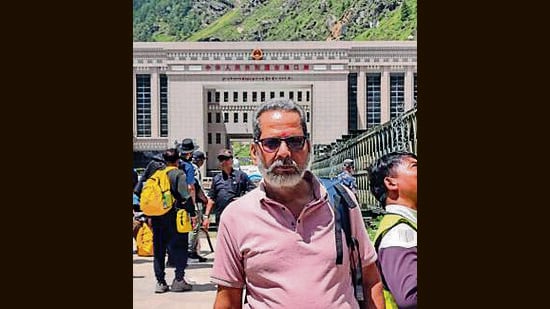
A day before catastrophic flash floods tore through the Nepal-China border region on August 26 these devotees completed visa formalities at the Gyirong County immigration office and pressed onward. Today, with the Friendship Bridge washed away and roads obliterated, they pin their hopes on Chinese and Nepali authorities to restore a lifeline by their scheduled return on September 3.
Mohan Jee Chaubey, 59, a resident of Ahirauli village in Buxar, Bihar, counts himself among the fortunate. Alongside Mandavi Singh, 61, from Gaya, he was part of the contingent that spent the entirety of August 25, clearing Chinese visa procedures and other formalities at the Gyirong immigration office. The batch of the pilgrims reached lake Mansarovar on Thursday in the afternoon, said Chaubey.
Deep Dive
What are the current conditions for Indian pilgrims stranded near Lake Mansarovar after the Nepal floods?
Why are Indian pilgrims unable to return home from the Kailash Mansarovar Yatra after the floods?
How are authorities assisting stranded Indian pilgrims in Tibet and Nepal after the floods?
The next day, as the group departed for the high-altitude pilgrimage, disaster struck. The immigration office itself was completely washed away by the raging waters of the Bhotekoshi river (known as the Lhende on the Tibetan side). Chaubey and his companions had already moved beyond the danger zone, escaping the devastation that claimed scores of lives and left hundreds missing across the borderlands.
{{/usCountry}}The next day, as the group departed for the high-altitude pilgrimage, disaster struck. The immigration office itself was completely washed away by the raging waters of the Bhotekoshi river (known as the Lhende on the Tibetan side). Chaubey and his companions had already moved beyond the danger zone, escaping the devastation that claimed scores of lives and left hundreds missing across the borderlands.
{{/usCountry}}“We are safe for now, and the agency has arranged food, cooking materials and cooks,” Chaubey said from near Mansarovar Lake, roughly 600 kilometres from the Gyirong border point. He is travelling under a package organised by Jodhpur-based Travel Pocket. The full contingent numbers 71, including support staff from the agency. Among the pilgrims are two from Jharkhand, one of them Tulshi Dutta from Dhanbad. For the moment, basic needs are met. What weighs heavily on their minds is the return journey.
The route they traversed — crossing into Nepal from Bihar and proceeding northward through the Rasuwa corridor — has been left in ruins. The Friendship Bridge, constructed by China barely a year ago to strengthen the road link with Nepal across the Bhotekoshi River at the Rasuwagadhi-Gyirong crossing, has been swept away entirely. Downstream and along the approach roads, the infrastructure that once facilitated the passage of pilgrims, traders and locals has been reduced to debris. Bridges, stretches of highway and communication links lie shattered, rendering the familiar path impassable.
Their carefully laid plans for a seamless yatra have been partly shattered by the recent flood devastation that struck both Nepal and Tibet. The pilgrims now find themselves cut off from the most practical exit route. They are scheduled to re-enter Gyirong County and proceed to Kathmandu on September 3. Until then, they remain deep in Tibetan territory, hoping against hope that bilateral efforts will succeed in restoring the vital communication and transport links in time.
Anxiety mingles with quiet faith. The group is relying on Chinese authorities to arrange a safe and timely return. Should repairs prove impossible by the appointed date, they trust that officials will provide all necessary assistance during any extended stay and, if required, open an alternative route home. “We only wish that China and Nepal will be able to restore the connection,” said Tulshi Dutta. “We believe the Chinese authorities will certainly arrange another way if needed.”
For these pilgrims, the Kailash Mansarovar Yatra was meant to be a profound act of devotion. Instead, the journey has become a test of endurance against forces beyond human control. As rescue and restoration work intensifies along the devastated border, the 55 devotees wait near the holy lake, their thoughts turning repeatedly to the long road back to Bihar, Gaya, Dhanbad and the homes that now feel farther away than ever.