A stringent anti-corruption law is the “need of the hour” as corruption is making the country hollow, the Centre has told a five judge constitution bench of the Supreme Court that examined whether public servants can be prosecuted for bribery if bribe givers fail to record their statements or turn hostile.
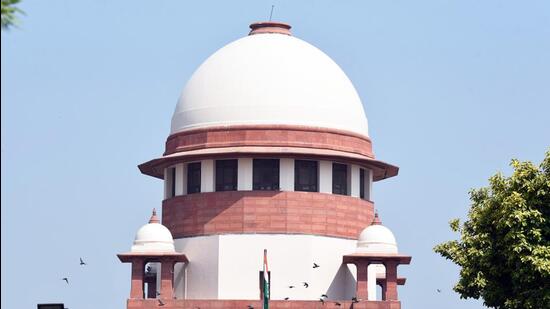
“It [corruption] strikes at the root of national interest and these stringent provisions [under the Prevention of Corruption Act] should be given its full meaning,” additional solicitor general Aishwarya Bhati, who appeared for the Centre in the matter, told a bench of justices S Abdul Nazeer, BR Gavai, AS Bopanna, V Ramasubramanian and BV Nagarathna on Tuesday .
The bench concluded the hearing and reserved its judgment on the issue whether death, non-appearance of complainants or them turning hostile will impact pending cases against the public servant under the Prevention of Corruption Act. It was also to examine whether in such a scenario it will for the prosecution to establish guilt using other evidence.
A public servant can be convicted in offences related to bribery if the element of demand and acceptance of bribe is proved.
In February 2019, a two-judge bench referred the matter to the Chief Justice of India citing an inconsistency in an earlier top court decision of 2015 in Satyanarayana Murthy v State of Andhra Pradesh. In the 2015 matter, the court said that public servants ought to be acquitted if the primary evidence was lacking against them.
{{/usCountry}}In February 2019, a two-judge bench referred the matter to the Chief Justice of India citing an inconsistency in an earlier top court decision of 2015 in Satyanarayana Murthy v State of Andhra Pradesh. In the 2015 matter, the court said that public servants ought to be acquitted if the primary evidence was lacking against them.
{{/usCountry}}The court then said direct proof of demand may not be available if the complainant is dead or could not be examined, turned hostile, or was not available for other reasons.
Bhati said the constitution bench has a perfect opportunity to clarify its 2015 judgment to say that lack of direct evidence or primary evidence will not result in automatic acquittal. She pointed out several cases where the accused were set free on the basis of the 2015 verdict.
The bench said the 2015 decision referred to acquittal where there was no other evidence. “As constitution bench, we will lay down the principle of law. We will say that if evidence of complainant is not there, this will not mean the end of the road. You can still proceed ahead with other evidence,” the bench said. It clarified that it will not decide on facts as each individual case has to be appreciated based on the evidence gathered.