
 E-Paper



Supreme Court by 4-1 majority upholds constitutional validity of Section 6A of Citizenship Act
The Supreme Court upholds Section 6A of the Citizenship Act 1955, which recognises the Assam Accord. Justice JB Pardiwala dissented.

 Prefer HTon Google


Supreme Court on validity of Section 6A of Citizenship Act: The Supreme Court’s five-judge Constitution bench on Thursday, October 17, upheld the constitutional validity of Section 6A of the Citizenship Act inserted by way of an amendment in 1985 in furtherance of the Assam Accord.
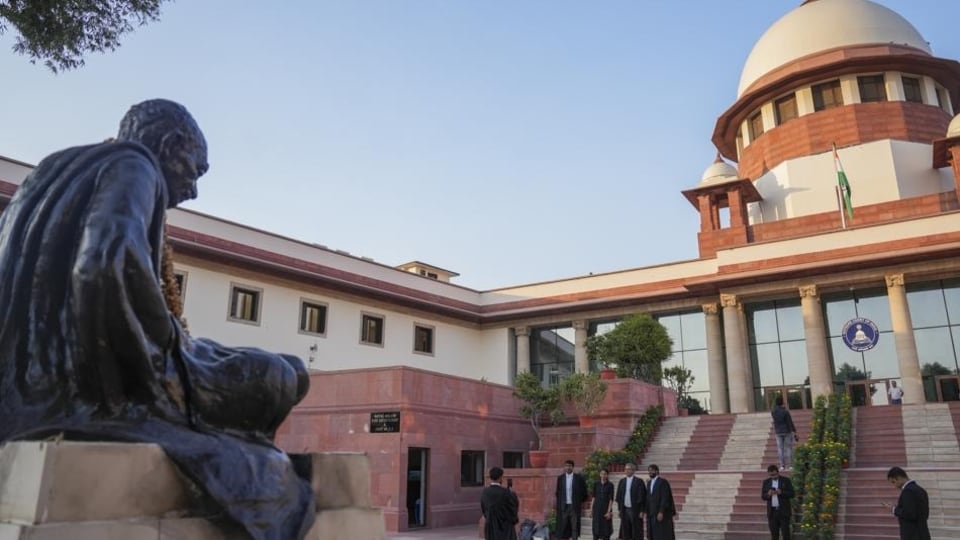
By 4-1, a Supreme Court Constitution bench affirmed the validity of Section 6A in the Citizenship Act, which granted citizenship benefits to illegal immigrants – mostly from Bangladesh, who entered Assam between January 1, 1966, and March 25, 1971.
A five-judge Constitution bench headed by Chief Justice DY Chandrachud said the Assam Accord was a political solution to the problem of illegal migration.
Justices Surya Kant, MM Sundresh and Manoj Misra in their majority verdict held that Parliament had the legislative competence to enact the provision.
Justice Pardiwala gave a dissenting judgment to hold Section 6A as unconstitutional.
“Mere presence of different ethnic groups in a state does not mean infringement of Article 29(1),” the Supreme Court said in its verdict on Section 6A of the Citizenship Act.
What is Section 6A of the Citizenship Act, 1955?
- Section 6A of the Citizenship Act, 1955, was introduced in 1985 as part of the Assam Accord to address illegal immigration into Assam from Bangladesh.
- It grants Indian citizenship to persons who entered Assam before January 1, 1966, and allows those who arrived between January 1, 1966, and March 24, 1971, to register as citizens after a 10-year waiting period, during which they cannot vote.
- Those arriving after March 24, 1971, are to be detected and deported.
- Section 6A has been contentious, with its constitutionality being challenged in the Supreme Court due to demographic concerns.


