
 E-Paper



Supreme Court denies bail to Umar Khalid and Sharjeel Imam, grants relief to others in Delhi riots case
The Supreme Court said that Umar Khalid and Sharjeel Imam stood “on a qualitatively different footing” as compared to the other accused in the Delhi riots case.

 Prefer HTon Google


The Supreme Court on Monday refused to grant bail to student leaders Sharjeel Imam and Umar Khalid, who are among those who are behind bars for many years in connection with the 2020 Delhi riots case.
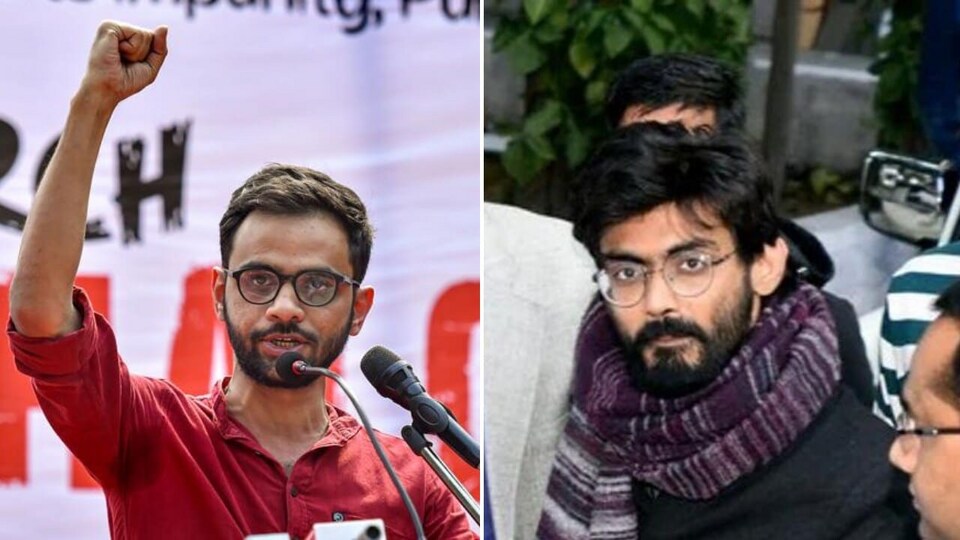
The Supreme Court cited the gravity of allegations against the two, and said they stood “on a qualitatively different footing” when compared to the other accused in the case. Umar Khalid and Sharjeel Imam are among those accused in the February 2020 northeast Delhi riots case. They have been behind bars for many years now and had challenged a Delhi High Court order refusing bail to them under the Unlawful Activities (Prevention) Act (UAPA).
The Supreme Court allowed the release of five other co-accused – Gulfisha Fatima, Meeran Haider, Shifa Ur Rehman, Mohd Saleem Khan, and Shadab Ahmad, after drawing a clear distinction in their alleged roles.
However, the court also clarified that the bail was not indication of the allegations against them becoming any less serious. The court listed 12 conditions for their release, warning that any violation would lead to the cancellation of bail.
The order was reserved on December 10, and read out by a Supreme Court bench of Justices Aravind Kumar and NV Anjari, on Monday.
Here are some key observations in today's order, as quoted by Bar and Bench:
- “The discussion has been confined to delay and prolonged incarceration. UAPA offences are rarely confined to isolated acts. The statutory scheme reflects this understanding.”
- “The bail is not a forum for evaluating defences. Judicial restraint is not an abdication of duty. The correct application requires the court to undertake a structured enquiry.”
- The SC bench also referred to the applicability of section 15 of the UAPA, which defines a “terrorist act”. Not just death and destruction, the particular provision also encompasses acts disrupt services and threat to the economy, the bench reportedly said.
- The court said that each application under the UAPA was being assessed independently because every accused's participation in the culpability was different. “Umar Khalid and Sharjeel Imam stand on a qualitatively different footing as compared to other accused,” the bench said.
- The court also directed that a timely conclusion of the trial be ensured and protected witnesses be examined without any delay.
The Delhi Police has long opposed bail to all accused in the case, arguing that the 2020 riots were an “orchestrated, pre-planned and well-designed” attack on India's sovereignty. However, Sharjeel Imam had argued that he was labelled an "intellectual terrorist" without any evidence or conviction.
The police had also alleged that the riots were deliberately planned to coincide with the arrival to then US President Donald Trump to India, in order to draw international media attention to the issue of the Citizenship Amendment Act (CAA).


