The Supreme Court on Friday sought the response of the central government to a petition that challenges amendments to the Aadhaar law cleared by parliament in July this year.
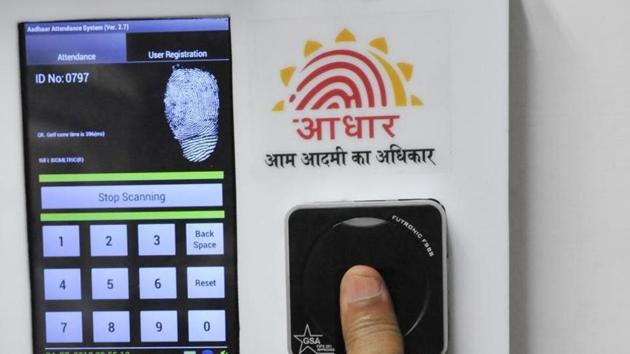
The petition by a retired army officer and a rights activist has argued that the amendments in the law create a backdoor to permit private parties to access the Aadhaar ecosystem. The petition contended that this would pave way for surveillance of citizens by State and private parties.
In their petition, SG Vombatkare and human rights activist Bezwada Wilson also challenged the Aadhaar (Pricing of Aadhaar Authentication Services) Regulations, 2019 on the ground that they permit commercial exploitation of personal information collected for the State alone.
A bench headed by Chief Justice of India SA Bobde heard senior lawyer Shyam Divan before issuing notice to Centre and the Unique Identification Authority of India, or UIDAI, the body that runs the Aadhaar identification programme.
The petition states that the amendments to the Aadhaar law create a new system of “offline verification” that bypasses the UIDAI. This method creates unprecedented opportunities for unauthorized parties to save and replicate Aadhaar-related personal data, the petitioners have submitted.
It also underscores that the change made to the 2016 law this year had amended its Section 7 that had been the focal point of the Aadhaar litigation decided by the Supreme Court earlier. In its new form, it had increased the ambit of Aadhaar to cover the Consolidated Fund of States also. This is an impermissible expansion as it violates the federal structure of India, the petitioners have argued.
The petitioners have placed reliance on the 2017 Supreme Court judgment in Justice KR Puttaswamy vs Union of India in which the Court had struck down certain provisions of the Aadhaar (Targeted Delivery of Financial and Other Subsidies, Benefits and Services) Act, popularly called the Aadhaar Act, 2016. This included Section 57 which had permitted private parties to use Aadhaar for authentication.
{{/usCountry}}The petitioners have placed reliance on the 2017 Supreme Court judgment in Justice KR Puttaswamy vs Union of India in which the Court had struck down certain provisions of the Aadhaar (Targeted Delivery of Financial and Other Subsidies, Benefits and Services) Act, popularly called the Aadhaar Act, 2016. This included Section 57 which had permitted private parties to use Aadhaar for authentication.
{{/usCountry}}It is the petitioners’ argument that the changes, first enacted by an ordinance in February, was an attempt to re-legislate the Aadhaar Act 2016.