
 E-Paper



Supreme Court notice to govt on Gujarat AAP’s blocked social media accounts
The petition asked the court to call for records to ascertain the reason for the suspension of the social media handles on April 25,

 Prefer HTon Google


The Supreme Court on Friday sought responses from the Centre and the Gujarat government to a plea by the Aam Aadmi Party (AAP) against government orders last month suspending Instagram and Facebook handles of its Gujarat unit a day before local body polls.
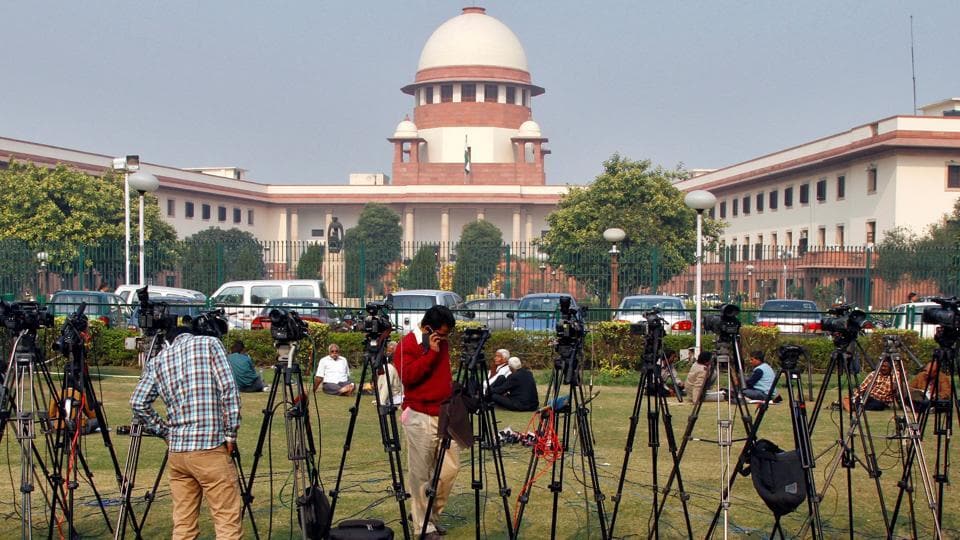
The petition asked the court to call for records to ascertain the reason for the suspension of the social media handles on April 25, and asked the top court to lay down guidelines and procedural safeguards to govern the exercise of powers to block or suspend official social media accounts of registered political parties.
The plea filed by advocate Siddhant Sharma said this was essential to ensure protection of the fundamental right to speech under Article 19(1)(a) of the Constitution of India, which limits this right on specified grounds under Article 19(2).
A bench of justices PS Narasimha and Alok Aradhe issued notices to the state and central governments and sent the case to be attached to a related matter pending before a bench headed by Chief Justice of India (CJI) Surya Kant.
“We will issue notice and tag it with that matter,” the bench said, even as solicitor general Tushar Mehta insisted that the court not issue notice to the government and instead have a copy of the petition supplied to him
Senior advocate Shadan Farasat, appearing for AAP, said the petition raises an important ground whether Section 79(3)(b) of the Information Technology Act could be the source of power to issue such a direction.
“Section 79(3)(b) is not at all a relevant provision for issuing such an order. This is a safe harbour provision for intermediaries,” he said.
The ‘safe harbour’ protections under Section 79 exempt social intermediaries from liability for their users’ actions, provided they adhere to government-prescribed guidelines. Under Section 79(3)(b), they lose this immunity if they fail to remove or disable access to unlawful content after receiving “actual knowledge” or a notification from a court or government authority.
When the bench asked him if this issue was already pending before the top court, Farasat said that though not “identical”, there was a petition by the Software Freedom Law Centre where overlapping issues raised in his plea were pending.
He urged the bench to consider listing the matter urgently and sought interim relief.
“Today, my portal is gone. I need something in the interregnum,” Farasat said.
The AAP also asked the court to declare the suspension of its accounts, which had 800,000 followers, as unconstitutional and insisted that any such action should be taken only after prior notice, requiring the government to give reasons in writing and in strict conformity with the grounds prescribed under Article 19(2) of the Constitution along with Section 69A of the IT Act, 2000.


