The Supreme Court on Thursday quashed the trial court proceedings against former IPS officer Amod Kanth in the 1997 Uphaar fire tragedy case over lack of sanction for his prosecution.
A bench of Justices KM Joseph, BV Nagarathna and Aravind Kumar said that the magistrate had erred in issuing summons against Kanth.
“…we find that the magistrate erred in the facts of this case in taking cognizance against the appellant contrary to the demands of section 197 of CrPC. On this short ground alone (of lack of sanction) the appellant (Amod Kanth) succeeded. Appeal is allowed and the impugned order stands set aside. The proceeding stands quashed,” the bench said.
In its detailed order, the bench said, “We, however, make it clear that this will not stand in the way of the competent authority taking a decision in the matter and for granting sanction against the appellant in accordance with law”.
Also Read: Uphaar case: HC seeks Delhi govt response on Ansal plea challenging conviction
{{/usCountry}}Also Read: Uphaar case: HC seeks Delhi govt response on Ansal plea challenging conviction
{{/usCountry}}The top court listed the matter for further hearing on April 26 for dealing with other aspects of the case including de-sealing of Uphaar cinema hall.
On November 29, 2013, the top court had stayed the trial court proceedings against Kanth and asked the CBI to file its response to the petition of the officer who has since retired.
In November 2013, the Supreme Court had stayed the summoning order on an appeal filed by Kanth after the Delhi high court in October 2013 refused to quash the summons.
Since then, the matter remained pending before the top court.
The Association of Victims of Uphaar Tragedy (AVUT), at whose instance the summoning order came to be passed charged Kanth of causing death by negligence (Section 304A), causing hurt (Section 337) and causing grievous hurt (Section 338) of the Indian Penal Code (IPC).
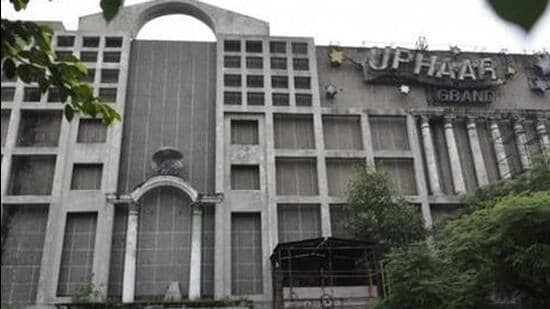
The tragic incident of June 13, 1997 that claimed 59 lives and injured more than 100 persons had exposed the illegalities committed by the theatre owners – Sushil and Gopal Ansal as additional seats placed in the balcony blocked the gangway and path to the exit door resulting in deaths due to suffocation.
Probe into the case revealed that on December 24, 1979, when Kanth headed the licensing department under the Delhi Police, he issued an order permitting Uphaar owners to retain 37 additional seats in the balcony.
Senior advocate R Basanth who represented Kanth said that his client was a highly decorated police officer who passed the decision in 1979 according to the direction of the Delhi high court and on the suggestion of a technical committee which comprised members from the public works department, municipal authorities and fire department.
He argued that sanction under Section 197 will be necessary to prosecute his client and without it, the order of Magistrate should not be given effect.
Senior advocate KTS Tulsi appearing for AVUT opposed Kanth by raising questions on his conduct.
The facts revealed that Uphaar benefited under an order passed by Lieutenant Governor in 1976 to increase 100 seats which applied to all cinema halls in Delhi.
Three years later, when this order was revoked, Kanth as DCP directed all cinema halls to remove the additional seats.
The two orders (by L-G and Kanth) was challenged by cinema owners before the Delhi high court.
Kanth had filed an affidavit in the HC supporting the removal of additional seats.
This conduct was seen by victims to be contrary to his decision to allow retention of 37 additional seats in the balcony.
The Court noted that the fact that Kanth filed an affidavit will not obviate the need for sanction that will provide protection to an officer even in case of an omission committed while discharging official duty.
The Court said, “In a case where fact of omission is clearly traceable to discharge of public function by the public servant, for the court not to accept his objection will clearly defeat the purpose underlying Section 197.”
The most important question to be answered while dealing with the issue of sanction is to see whether the officer was acting or purporting to act in exercise of his official duty.
“This is for good reasons so that the officer can exercise his power fearlessly and for bonafide reasons.”
The Court noted that in passing the decision to retain 37 seats, Kanth was following the HC order which required the licensing authority to work out a way by which not all additional seats are removed and there is substantial and not rigid compliance of the order revoking the L-G’s 1976 order allowing 100 additional seats.
Moreover, this was a collective decision taken by Kanth on the recommendation of a technical committee that found HC’s approval.
Basanth stated that his decision of 1979 should not be held at fault for a fire tragedy that occurred 17 years later.
Kanth joined the licensing department as deputy commissioner of police in February 1979 and vacated the post in May 1980.
After him, regular inspections were conducted at Uphaar cinema and the new DCP who joined subsequently, permitted 15 additional seats in the balcony.
The license of Uphaar was suspended in 1983 but the theatre owners got stay of the suspension and continued to operate till the unfortunate fire took place.
The bench said, “It may be true by benefit of hindsight following the unfortunate tragedy that took place 17 years thereafter, the loopholes, later as it turned out to be in the act of the appellant and members of technical committee had been laid bare.”
But the Court said that the issue before the Court was not whether an offence was made out but whether the appellant can be prosecuted on there being no sanction.
In March 2009, the CBI had filed a closure report in the Uphaar case stating that except the 16 persons named in the original FIR, no case was made out against any other accused including Kanth.
In October 2011, the Supreme Court while deciding the issue of monetary compensation to be awarded for the victims had exonerated Kanth for permitting the 37 additional seats.
Having already filed a closure report, senior advocate Aparajita Singh appearing for CBI had a narrow scope for argument. But the Delhi police, represented by additional solicitor general (ASG) KM Nataraj said that no ground for granting sanction was made out.
The Delhi police said that if officers like Kanth are allowed to be prosecuted for their genuine, bonafide decisions taken in good faith, it will impact the morale of the entire police force.