
 E-Paper



The many twists and turns in legal battle for justice in 1997 Uphaar cinema fire
A Delhi court last week upheld the conviction of real estate barons Sushil and Gopal Ansal for tampering with evidence in the 1997 Uphaar cinema fire case but released them, taking note of their “old age and ailments”

 Prefer HTon Google


New Delhi: Crime and punishment have seen a disquieting disconnect in the Uphaar cinema fire case that snuffed out 59 lives in June 1997. The Ansal brothers, Sushil and Gopal, were convicted for their negligence leading to the incident and also in a separate case of tampering with prosecution evidence, but their age and the duration of the case worked to their advantage when it came to the sentence, even in the latest ruling in the tampering case on July 19.
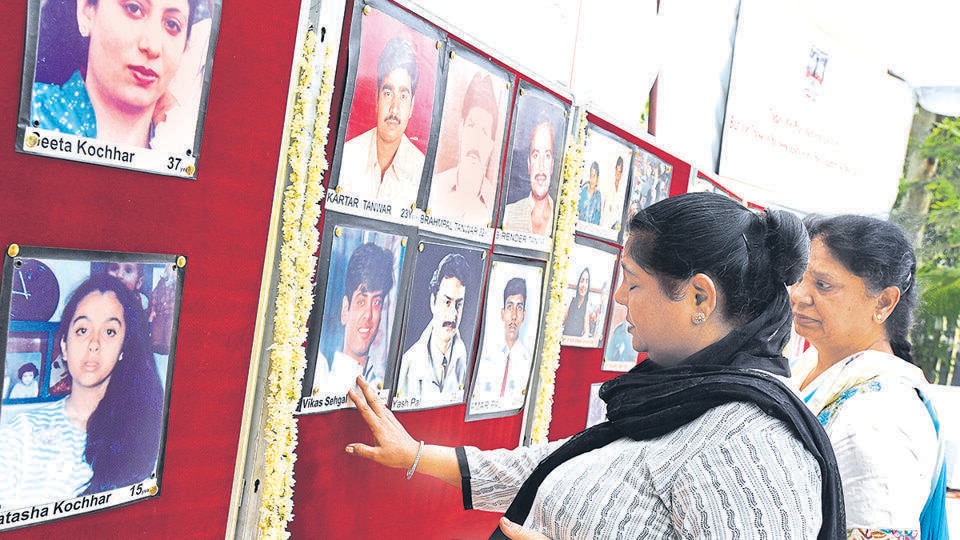
It was a decade after the fire broke out on June 13, 1997 -- during a screening of the film Border -- that the trial court gave its verdict in November 2007, convicting the two brothers, among others, to two years in prison. This is the maximum sentence the law provides for causing death due to negligence under Section 304A of the Indian Penal Code (IPC). A year later, in December 2008, the Delhi high court upheld the conviction but reduced the sentence to one year.
The matter finally reached the Supreme Court after appeals were filed by the victims, jointly represented through the Association of the Victims of Uphaar Tragedy (AVUT), the Central Bureau of Investigation (CBI) that probed the case, and the Ansals. It was here that the matter went through several twists and turns. Finally, in February 2017, almost 20 years after the tragedy, the top court while deciding the review petitions of the accused, directed that the two brothers pay a fine of ₹30 crore each ( ₹60 crore in all) which would go towards construction of a trauma centre.
As for their sentence, Sushil Ansal, who spent a little over five months in jail, was let off for the period already served on account of his age (77 years) while Gopal Ansal (68 ) was directed to undergo one-year imprisonment.
Also Read: Firefighter recalls rescue operation at Uphaar cinema 25 years ago
Correspondingly, the issue of compensation to victims also made its way through the courts. The Supreme Court in October 2011 held the Ansals jointly liable along with erstwhile Delhi Vidyut Board to pay a compensation of ₹10 lakh to each deceased aged over 20 years and ₹7.5 lakh to those below 20 years. This was a considerable reduction from the amounts of ₹18 lakh and ₹15 lakh fixed by the Delhi high court under the two categories. Further, every injured person was entitled to receive a compensation of ₹1 lakh as per the Supreme Court order.
The latest ruling
And in a case which has lingered on for over two decades, a Delhi court on July 19 convicted the Ansal brothers for tampering and destroying evidence in the Uphaar fire tragedy case, which was tried separately. District judge Dharmesh Sharma, however, let them off for the period already served by them during the pendency of the case – an order that added to the agony of the victims.
This judgment reversed an earlier decision of November 2021 by a magistrate sentencing the brothers to seven years in prison and a fine of ₹2.25 crore each. While the district judge retained the fine, the two walked out of jail having served a little over eight months of the seven-year sentence.
The magistrate’s court considered the offence of tampering no less serious than the fire itself. The magistrate observed that the convicts attacked the very purity and sanctity of the justice system, thereby making it the victim.
The Ansal brothers faced prosecution, along with a former court worker and others, for causing disappearance of evidence, abetment of offence, criminal breach of trust by a public servant and criminal conspiracy, in a FIR registered by the Delhi police on an order by the Delhi high court in May 2006. The charge sheet revealed that to subvert justice and get a favourable outcome in the Uphaar fire case trial, the Ansals facilitated tampering of documents, which included a police memo detailing the recoveries immediately after the incident, Delhi Fire Service records regarding the repair of the transformer installed inside the cinema hall, and minutes of the managing director’s meetings. Some documents crucial for the trial were either mutilated, defaced or portions torn off or stained with ink. The court worker involved in committing this crime was suspended.
The Supreme Court in September 2008 even cancelled the bail granted to them in the negligence case with the bench of justices BN Agrawal and GS Singhvi observing: “Tampering with court records is worse than murder and dacoity…Whenever anyone attempts to tamper with court records, it is a serious offence and has to be dealt with sternly.”
Twists and turns in Supreme Court
The Ansals hired senior criminal lawyer Ram Jethmalani to defend them in the Supreme Court in the negligence case. After the Delhi high court refused to alter the conviction while reducing just the sentence to one year, the appeal of Ansals came to be listed in the Supreme Court before the same bench of justices Agarwal and Singhvi who earlier cancelled the bail of Ansals and adversely remarked on their conduct in the tampering case.
Three days before the case was to be listed, the legal team of Ansals wrote a letter to the Registrar seeking transfer of their case from the present bench. The reason they cited was that since Jethmalani wrote a critical newspaper article against one of the judges on the bench, he was too embarrassed to argue before him. When the application came up before the bench, they refused to hear the case and transferred the matter to another bench. This marked a crucial twist in the case and in January 2009, the Ansals got bail.
After several adjournments and constant efforts by AVUT to get the matter listed, the top court decided the appeals in March 2014, a good 17 years after the incident. The two judges on the bench – justices TS Thakur and Gyan Sudha Mishra -- agreed on convicting the Ansal brothers, but on the sentence, they differed. While justice Thakur went with the high court’s view, justice Mishra enhanced the punishment to two years, with a rider that the enhanced term could be substituted with a ₹100 crore fine payable by Ansals towards construction of a trauma centre. This marked a crucial twist in the case before Supreme Court.
A three-judge bench – justices Anil R Dave, Kurian Joseph and Adarsh K Goel -- decided the issue of sentence in August 2015. They directed both brothers to pay ₹30 crore each ( ₹60 crore in all) within three months subject to which their two-year sentence would stand reduced to the period already served. Here too, their advanced age came to their rescue.
To avoid any further brush with the courts, with just 10 days remaining for the deadline to expire, on November 9, 2015, the brothers promptly deposited the entire amount of ₹60 crore with the Delhi government for setting up a trauma centre.
The case went on as AVUT acting through Neelam and Shekhar Krishnamoorthy, who lost their children in the fire, relentlessly pursued the fight for justice against the Ansals by filing a review petition. In February 2017, a three-judge bench by a 2:1 majority, with the majority verdict by justices Ranjan Gogoi and Kurian Joseph gave Sushil Ansal the benefit of advanced age and reduced the sentence to the period undergone, while retaining the ₹30 crore fine. Gopal Ansal was directed to undergo one year in jail and pay a ₹30 crore fine. The dissent was by justice Adarsh K Goel who stuck by his earlier decision. This judgment serves as final verdict till date as in February 2020, the Supreme Court dismissed a curative petition against this order.
The legal journey continues
With the Delhi court verdict on tampering of evidence out, neither Ansals nor AVUT will be willing to rest their case. Going by the over 20-year litigation in the main Uphaar case, it is likely that the verdict on tampering against Ansals will be carried to the high court and up to the Supreme Court.
But this may not be the lone thing bothering the Ansals. Sushil Ansal is also facing action for getting his passport renewed in 2013 without disclosing to the authorities, his conviction in the Uphaar case. As per rules for renewing passport, the applicant has to disclose whether he is involved in any criminal case and in the event of any involvement, the applicant must produce a no objection certificate (NOC) from the court concerned.
This fact came to light before the Delhi high court where AVUT sought expeditious hearing in the tampering case. The lawyer for Sushil Ansal stated that his client’s passport was being renewed every 5-10 years. As no NOC was obtained from the trial court, AVUT moved a plea before the Delhi court asking the accused to produce the record for passport renewal. The trial court rejected this application in January 2018 by saying that the accused cannot be compelled to produce documents and any offence under the Passports Act required sanction of Central government.
In May 2018, AVUT wrote a letter to the Passport authority complaining against Sushil Ansal and holding his passport renewal to be illegal. A copy of complaint was sent to Prime Minister’s office which confirmed that Sushil Ansal, when asked about the status of his passport, said that he had surrendered his passport to apply afresh. AVUT brought this up before the Delhi high court in a fresh plea following which the HC ordered registration of FIR against Sushil Ansal and the police officers who signed off on his application.
In 2019, the FIR was registered by Delhi police and in February 2021, a charge sheet was filed in this case. The trial in this case did not begin as the investigating agency said in March 2022 that sanction from the Centre was awaited. But AVUT obtained information under the Right to Information (RTI) Act that the sanction was granted way back in September 2021. The matter is still pending before the trial court even as AVUT has approached the Delhi high court seeking CBI probe on grant of passport renewal to Sushil Ansal.
With the Uphaar saga still to see its end, the case has become an example of how the wheels of justice turn slowly in the country, sometimes skewing the balance between the rights of the accused and the victims in favour of the former.


