
 E-Paper



Miami plane crash: Why landing is one of aviation’s most dangerous phases
An Amazon cargo jet ran off a Miami runway on Sunday and killed five people. A look at the trickiest phase of flight: the landing.

 Prefer HTon Google


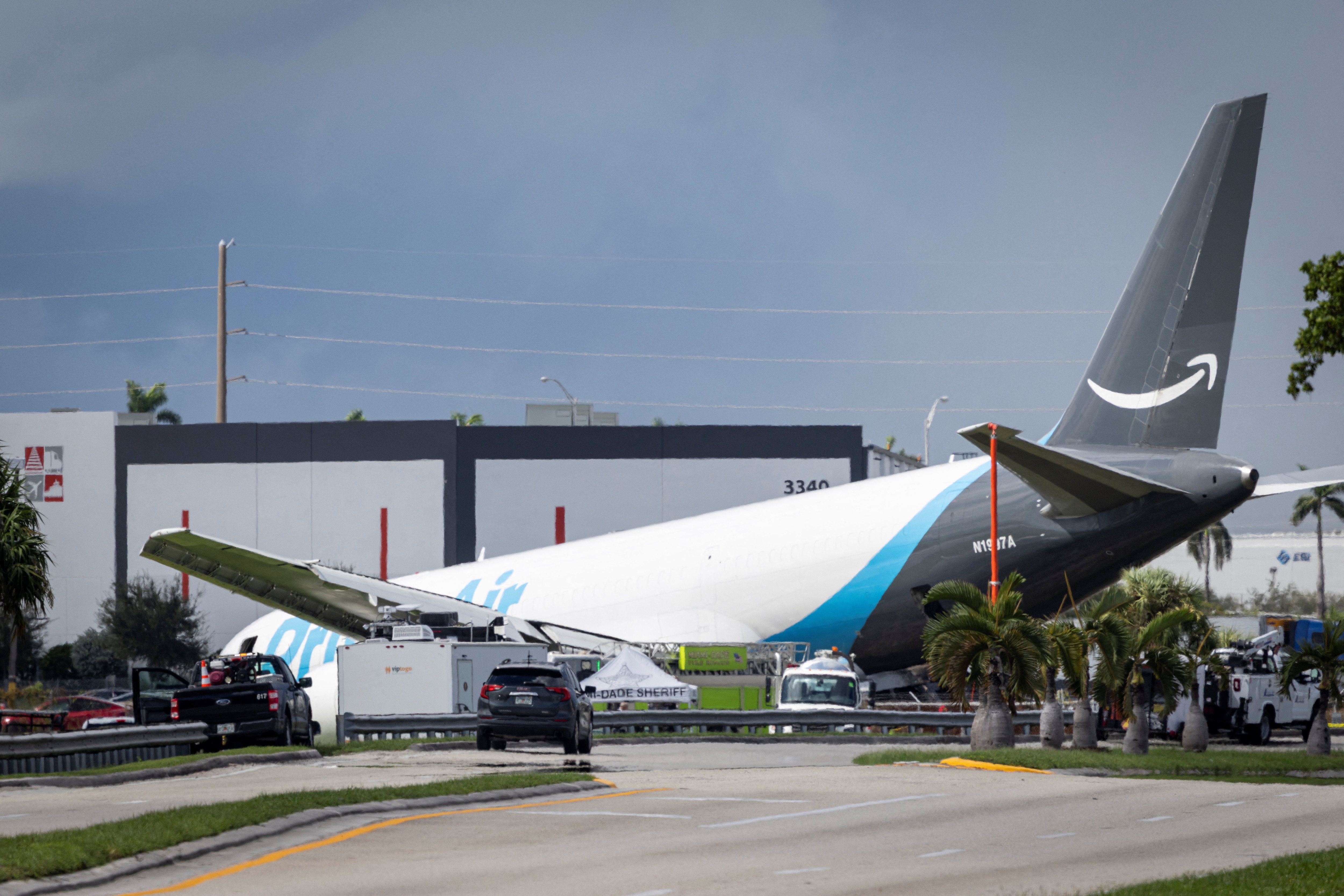
A Boeing 767 freighter carrying Amazon cargo touched down on runway 30 at Miami International Airport at about 1.58pm local time on Sunday, ran out of pavement, went through the perimeter fence, crossed a public road and struck vehicles before catching fire. The crash killed five people and injured five more. Both pilots survived. Officials had not said by Monday whether the dead were on the ground or aboard the aircraft.
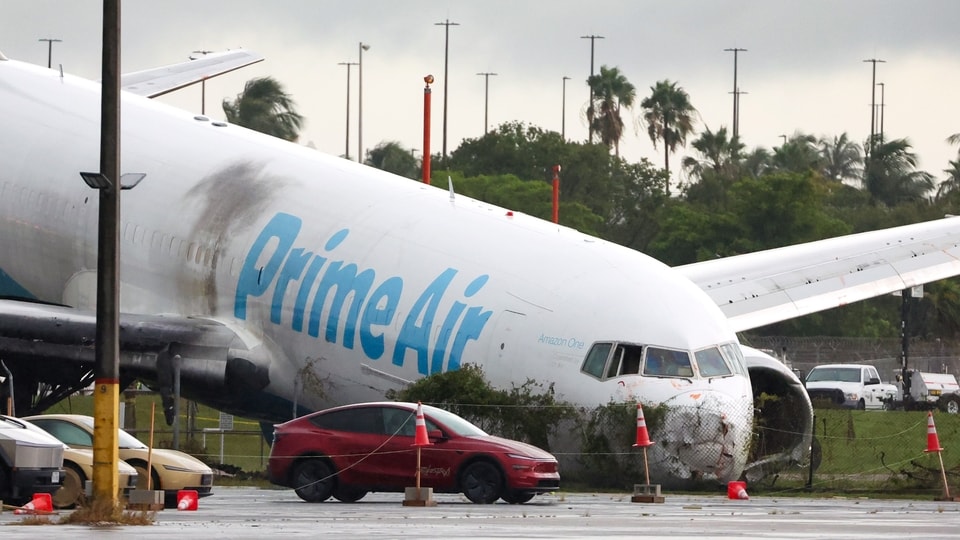
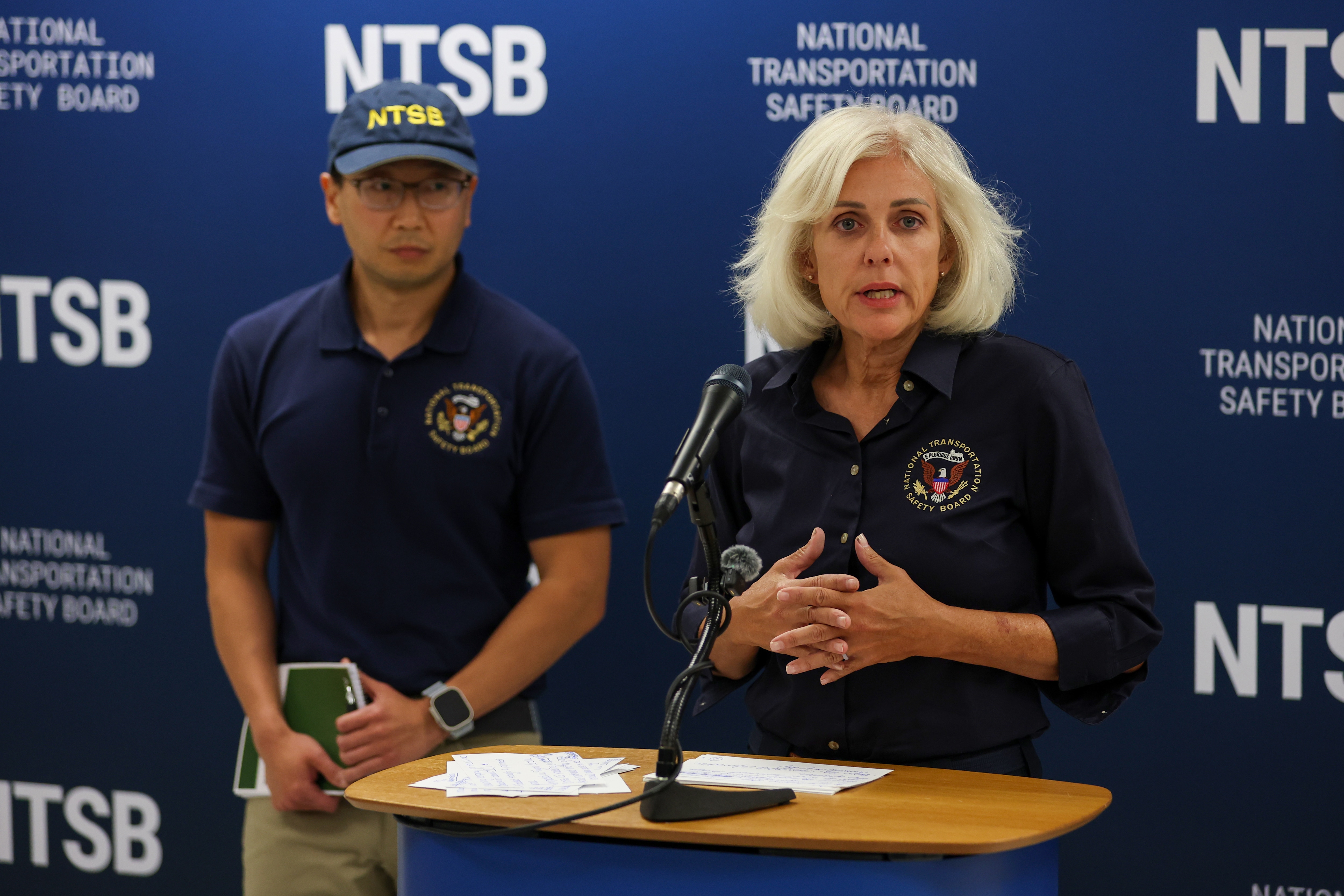
The aircraft was a 32-year-old 767-300 converted to a freighter, registration N1997A, operated by 21 Air, a North Carolina cargo carrier that flies for Amazon's Prime Air network. It had come from San Juan, Puerto Rico, and thunderstorms were over Miami when it arrived. Flightradar24 tracking data shows it still moving at 112 knots, roughly 207kmph, as it left the runway. CNN reviewed air traffic control recordings and reported that the crew declared no emergency before landing. The National Transportation Safety Board (NTSB) has sent a go-team led by its chair, Jennifer Homendy, and has not said what went wrong.
Boeing's 2025 Statistical Summary of Commercial Jet Airplane Accidents places 35% of all fatal accidents in the worldwide commercial jet fleet between 2016 and 2025 in the landing phase. Cruise, which fills most of an airliner's hours in the air, accounts for 10% of fatal accidents.
Landing accidents kill comparatively few of the people caught in them. In the Flight Safety Foundation's reading of Boeing's 2008-2017 figures, the landing phase produced 22% of fatal accidents and 12% of onboard deaths, while cruise produced 11% of fatal accidents and 23% of deaths. An accident at altitude therefore kills roughly four times as many people as one on landing.
Running off the end of the runway, the failure at Miami, is the most common accident type in the industry. IATA counts runway excursions in 21% of all accidents between 2015 and 2024, 104 of them, of which eight were fatal and killed 80 people on board. But they are less deadly: Excursions rank fourth among causes of fatal accidents.
A matter of energy
An aircraft holds energy in two forms, the kinetic energy of its motion and the potential energy of its height, and the two convert into each other freely. A takeoff creates both. The engines run at full thrust, the surplus energy over drag becomes speed, and aerodynamics turn the speed into altitude. In cruise the aircraft holds a balance of energies, thrust equalling drag and lift equalling weight, and the altitude it has climbed to works as a store — the pilots can trade back some height for speed when something fails.
On approach both forms have to come off together, and because height converts into speed the two work against each other. A crew that finds itself too high can put the nose down and lose the height quickly, but the descent feeds speed back in, and speed is the other thing they are trying to lose. Shedding it calls for drag, which the crew adds by lowering the landing gear, extending the flaps along the back of the wing and raising the speedbrakes, and each of those carries a limit and a speed above which it cannot be used. The engines are no help. They put the energy in on departure and cannot take it out again in the air. Only once the wheels are on the ground do the brakes, the spoilers and the thrust reversers come into play, with whatever runway is left.
Kinetic energy climbs with the square of speed, so touching down 10% faster than planned leaves roughly 20% more energy to get rid of on a runway of unchanged length. A late touchdown does the same damage from the other direction, because every metre spent floating above the surface is a metre no longer available for stopping.
Wheel braking depends on load. The harder an aircraft presses its tyres into the surface, the more friction they generate, and a wing still producing lift holds much of that load off them. Spoilers solve this. The panels hinge up from the wing on touchdown, spoil the airflow that generates lift and drop the weight onto the wheels, and a few seconds' delay in raising them costs stopping distance. Here, rain can be a threat. Water attacks the same link in the chain.
At speed a film of water can lift a tyre clear of the surface, friction falls away, and the aircraft aquaplanes. Reverse thrust, which redirects the engines' fan air forward, does its useful work early in the landing roll while the aircraft is still fast, and the wheel brakes take over as speed falls.
Through the approach itself the engines run near idle, and a large turbofan needs several seconds to spool up to useful thrust. Certification rules treat that lag as a fixed cost. For go-around performance a manufacturer may claim only the thrust an engine actually delivers eight seconds after the pilot pushes the levers, and aircraft carry a higher approach idle setting to shorten the wait.
Peter Bedell, an airline pilot writing in AOPA's magazine in 2018, measured the cost in distance. An airliner covers about 75 metres for every second it floats above the runway waiting to touch down.
A takeoff has one decision point. The crew computes performance on the ground against known conditions, briefs the abort before releasing the brakes, and makes the choice once, at a speed worked out in advance. An approach has no equivalent moment. The crew remakes the decision to continue over and over - always keeping an eye on whether the approach angle, speed and weather conditions on ground are in the correct, small window of safety.
Also read: Amazon plane crash nearly hit Tesla Cybercabs: Why were Elon Musk’s 40 robotaxis at Miami airport?
Numbers that pilots have to source
Other people supply most of the figures a crew uses on approach. Air traffic control reports the wind. Airport staff assessed the runway condition code at some earlier point along a strip three kilometres long. Braking action often reaches the crew as a report from the aircraft that landed before them. A late runway change, or an instruction to keep the speed up for traffic behind, can arrive on final approach and force the calculation to be redone at the moment the crew has the least altitude and the least time to absorb it.
In May this year the NTSB told the American regulator FAA that the matrix used to convert runway conditions into braking performance understates the landing distance required during heavy rainfall, and that wheel braking friction can fall well below the values the matrix assumes. The board drew on eleven wet-runway overruns between 2008 and 2022, among them a Boeing 737 that aquaplaned off an ungrooved runway at Jacksonville in May 2019 and ended up in the St Johns River. Everyone on board survived. This is to say: the establishment arithmetic may not still be perfect.
A crew that judges the approach unstable can break it off and fly the circuit again. The Flight Safety Foundation's Go-Around Decision-Making and Execution Project, published in 2017 and researched by the Presage Group, found that about 96% of approaches are stable, and that of the unstable remainder only around 3% end in a go-around. The research links that pattern to excursions without establishing that any particular overrun would have been prevented. A further analysis cited by the foundation found that 83% of runway excursions over a 16-year period could have been avoided had the crew gone around, an assessment made after the event and against outcomes the crews could not see at the time.
The 2017 study asked line pilots why they continue. Their answers described crew pressure to land, doubt that the other pilot would support a go-around, discomfort at challenging a captain or at being challenged, and the authority structure of the cockpit. Bedell, writing under his own name in a pilots' magazine, put it more plainly. Pilots dislike admitting defeat, the work is mission-oriented, and outside mandatory simulator sessions they almost never fly one for real.
What lies past the pavement
International standards require a runway end safety area, cleared and graded ground beyond the runway to slow an aircraft that fails to stop on it. ICAO sets a minimum of 90 metres and recommends 240. Some airports go further and install an engineered materials arresting system, a bed of crushable blocks that collapses under the wheels and absorbs the aircraft's energy as it breaks. The FAA says such beds have stopped 26 overrunning aircraft in the United States carrying 497 people, and that they are now fitted at 122 runway ends across 70 airports. The beds are designed to hold an airport's critical aircraft entering at about 70 knots.
Miami International has none. A perimeter fence marks the end of runway 30 and a public road runs beyond it. On Sunday afternoon, vehicles were on that road. The 767 crossed the boundary at 112 knots, well above the speed an arrestor bed is built to handle.
Also read: ‘Very complex situation’: Miami-Dade Fire rescue chief provides update on Amazon plane crash
The tabletop problem
Indian readers are acquainted with a different threat pilots face. Several Indian airports are built on tabletops, with the runway laid across a levelled hilltop and the ground dropping away at the ends. Here, the stopping on time becomes even more crucial.
At Kozhikode on August 7, 2020, an Air India Express Boeing 737-800 returning from Dubai on a repatriation flight landed too late on runway 10 in rain, ran off the end, went over the edge and broke apart. Twenty-one of the 190 people on board died, including both pilots. India's Aircraft Accident Investigation Bureau concluded in 2021 that the captain had continued an unstable approach and touched down well beyond the touchdown zone despite a go-around call from the first officer. The runway end safety area was 90 metres, the ICAO minimum. Air traffic control had offered the switch to runway 10 after an earlier approach to runway 28.
Ten years before that, an Air India Express 737 overran at Mangaluru and went down the hillside, killing 158 of the 166 people on board.


