
 E-Paper



Supreme Court questions some clauses of UP anti-conversion law, cites India's ‘secular nature’
SC observed that the Act’s pre- and post-conversion declaration requirements “seem to introduce a very onerous procedure.”

 Prefer HTon Google


The Supreme Court on Thursday raised concerns over key provisions of the Uttar Pradesh Prohibition of Unlawful Conversion of Religion Act 2021, enacted by the Yogi Adityanath government, reportedly describing parts of the law as “onerous” and potentially intrusive.
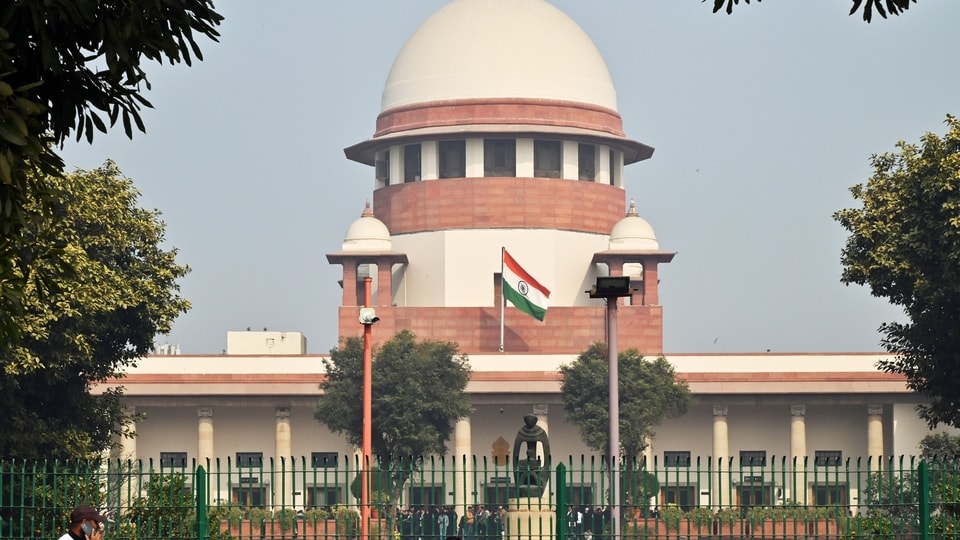
A bench led by Justice JB Pardiwala, along with Justice Manoj Misra, highlighted the “conspicuous” involvement of government authorities in the religious conversion process.
The court noted that it was not examining the constitutional validity of the UP Conversion Act in this case, but observed that the Act’s pre- and post-conversion declaration requirements "seem to introduce a very onerous procedure to be followed by an individual seeking to adopt a faith other than the one he professes," LiveLaw reported.
According to the report, the court highlighted the visible involvement of State authorities in the conversion process, noting that the District Magistrate is legally obliged to direct a police enquiry in every case of intended religious conversion.
It also flagged concerns over the law’s requirement to make public the personal details of converts, which “may require a deeper examination to ascertain if such a requirement fits well with the privacy regime pervading the constitution,” Live Law quoted the bench's observation.
The Court also noted that the Act mandates a declaration before the District Magistrate prior to conversion, giving authorities significant visibility and control over personal decisions.
Fundamental rights and privacy concerns
The bench underscored that the people of India enjoy freedom of thought, belief, and worship, calling it “an embodiment and expression of the secular nature of the country.” It also questioned whether publishing the personal details of those who convert aligns with the constitutional right to privacy.
During the hearing, the bench orally remarked that parts of the 2021 Act “seem to be violating fundamental rights guaranteed under Part III of the Constitution, particularly Article 25.”
The justices made these observations while quashing FIRs against the Vice Chancellor and other officials of Sam Higginbottom University of Agriculture Technology and Science (SHUATS), Prayagraj, which had accused them of allegedly forcing mass religious conversions to Christianity.


