E-Paper



SC questions UP government over Atiq Ahmed’s security cover
“How did they (shooters) know? We have seen on TV. Why were they not taken in an ambulance till the hospital? Why were they made to walk and paraded?” a bench of justices S Ravindra Bhat and Dipankar Datta asked senior counsel Mukul Rohatgi, who represented the state.


The Supreme Court on Friday questioned the Uttar Pradesh government over the security provided to gangster-turned-politician Atiq Ahmed and his brother Ashraf who were killed while police were taking them for a routine medical examination in Uttar Pradesh’s Prayagraj on April 15, as it sought a detailed report from the state on the incident and the probe initiated by it.
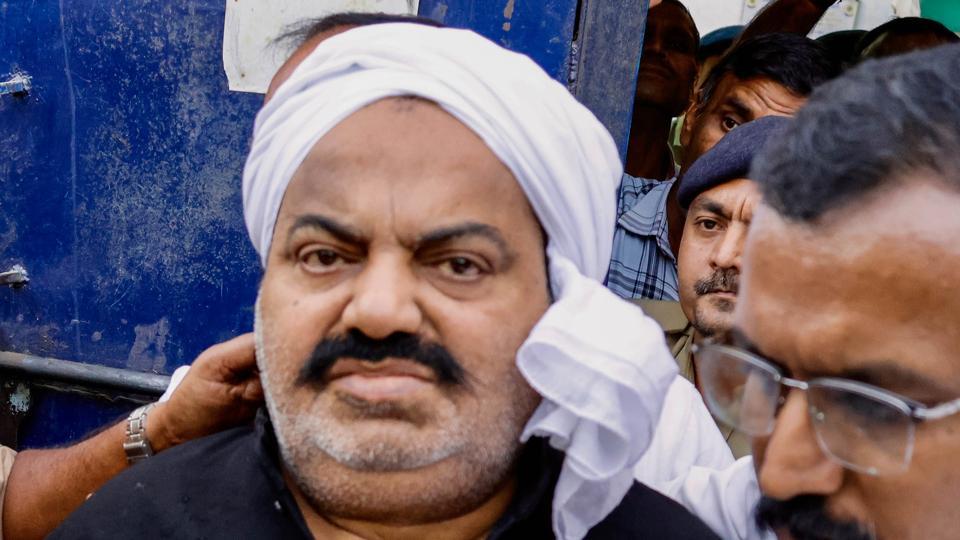
“How did they (shooters) know? We have seen on TV. Why were they not taken in an ambulance till the hospital? Why were they made to walk and paraded?” a bench of justices S Ravindra Bhat and Dipankar Datta asked senior counsel Mukul Rohatgi, who represented the state.
The bench also took note that Ahmed’s son Asad was killed in an alleged encounter on April 13 – two days before the former’s killing, asking the state to also bring on record the inquiries conducted by the state government following this.
Assailants Lavlesh Tiwari, 22, Mohit, 23, and Arun Kumar Maurya, 18, reportedly sprayed the two with bullets on the premises of a hospital as Ahmed and Ashraf were talking to the media. Policemen ring-fenced them when gunshots rang out. The April 15 murders were captured live on video.
Two days before that, the Uttar Pradesh Police killed former Samajwadi Party MP Ahmed’s son Asad, and one of his associates in Jhansi. Asad was wanted in connection with the murder of Umesh Pal, who was a witness in a murder case against Ahmed. Pal was shot dead in Prayagraj on February 24 and the CCTV footage of the incident showed Asad to be one of the shooters.
Responding to a PIL by advocate Vishal Tiwari demanding an independent probe into the killings of Ahmed and Ashraf, Rohatgi stressed that the state has already set up two judicial commissions. “What more can we do?” he asked.
To this, the top court observed that the government should put the steps taken by it on a comprehensive affidavit, along with records of the judicial commissions and their terms of references.
“If there is indeed a pattern (in the killings), as the petitioner says, we can ask the commission to examine sample cases and come out with certain conclusions and recommendations. We can decide the terms of reference too,” the bench told Rohatgi.
The senior counsel, on his part, said that the state government was willing to put everything on record before the court to show that they have taken adequate steps. Commenting on Ahmed’s antecedents, Rohatgi said: “Unfortunately this man and his family have been embroiled in heinous cases. We are still looking into why he Was killed. The boys (Atiq’s shooters) said they wanted to gain popularity, but we don’t know so far. This might have also been done by those who have incurred the wrath of the family in the past. We are looking into everything.”
At this, the bench referred to a slew of recommendations made by a judicial committee headed by a former Supreme Court judge BS Chauhan in 2022 following an inquiry into the encounter killing of gangster Vikas Dubey in July 2020. Dubey was killed in a shootout when he was being brought to Kanpur from Ujjain by the police. The police claim the vehicle he was in overturned, and Dubey got free, snatched a gun, and dashed into the surrounding fields before being killed in an exchange of fire.
“Justice Chauhan commission said police were not responsible. The state accepted the recommendations, and this court also closed the proceedings last year,” responded Rohatgi.
To this, the bench said that the UP government, in its affidavit to be filed within three weeks, should also bring on record the follow up steps taken by the state in terms of justice Chauhan’s report.
Apart from seeking a court-monitored inquiry into the killings of Ahmed and his brother, Tiwari asked for a probe into the 183 “encounters killings” in Uttar Pradesh since 2017.
On March 28, a bench led by justice Ajay Rastogi dismissed Ahmed’s plea for protection and observed that the state machinery would take care of his protection in case of a threat to his life. Ahmed was asked by the top court to approach the Allahabad high court if he had any apprehension regarding his safety.
In his plea, Tiwari cited a “severe threat to democracy and rule of law” in UP and said that in a democratic society, police cannot be allowed to become “a mode of delivering final justice or to become a punishing authority.” The plea underlined the power of punishment is only vested in the judiciary and added that extrajudicial killings or fake police encounters have no place in the law. “When the police turn daredevils then the entire rule of law collapses and generates fear in the mind of people against the police which is very dangerous for democracy and this also results in more crimes,” it stated.
The petition sought “guidelines/directions to safeguard the rule of law by constituting an Independent Expert Committee under the Chairmanship of former Supreme Court justice to inquire into the 183 encounters which had occurred since 2017 as stated by Uttar Pradesh Special Director General of Police (Law and Order) and also to inquire into the police custody murder of Atiq and Ashraf.” .
After the incident, the Uttar Pradesh government constituted a three-member judicial commission to probe the killings of Ahmed and Ashraf. Another magisterial inquiry, as mandated by the Supreme Court for all encounter killings, was constituted for Asad’s encounter.
A first information report (FIR) registered in Ahmed’s killing r said the three assailants confessed that they killed Ahmed and Ashraf to wipe out their gang and make a name for themselves in the state. The three were booked for murder, attempt to commit murder, using prohibited arms, carrying prohibited arms, and using arms without licence.
The murders raised questions about how the assailants breached the police cordon in such a high-profile case or why dozens of policemen could not stop the three assailants. The three carried video cameras, mikes, and media identity cards to pose as journalists and were later overpowered. They used expensive made-in-Turkey pistols for the killings.