E-Paper



Supreme Court raps Telangana speaker for delay in deciding on MLAs
The bench berated the prolonged inaction despite a clear three-month deadline fixed by the court in July

 Prefer HTon Google


The Supreme Court on Monday came down heavily on the Telangana legislative assembly speaker for delaying decisions on disqualification petitions against 10 Bharat Rashtra Samithi (BRS) MLAs who had defected to the ruling Congress last year, warning that failure to comply with the court-mandated timeline would amount to “gross contempt”.
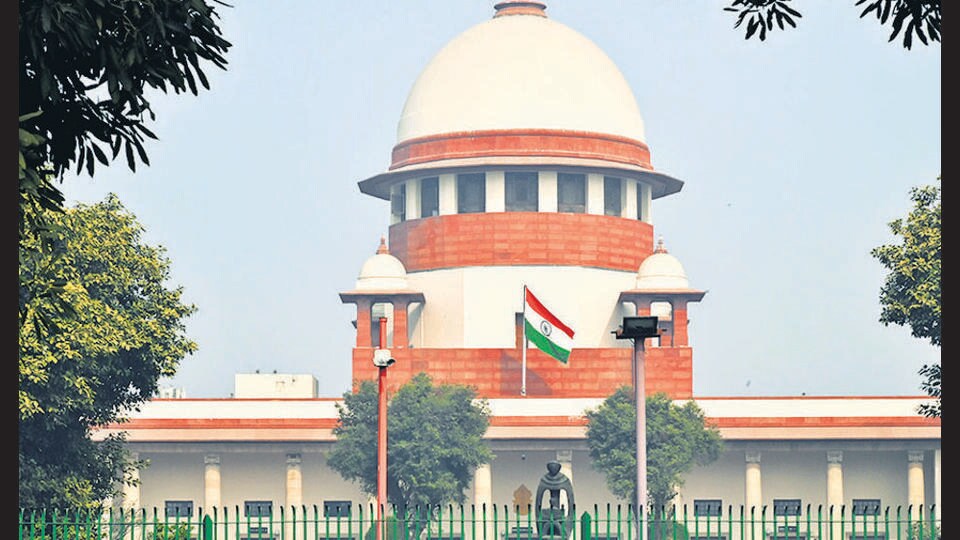
“Finish it or face contempt,” a bench of Chief Justice of India Bhushan R Gavai, and justices K Vinod Chandran and NV Anjaria told the speaker’s counsel, as it berated the prolonged inaction despite a clear three-month deadline fixed by the court in July.
The bench was hearing three contempt petitions filed by BRS legislators, including party working president KT Rama Rao and MLA Padi Kaushik Reddy, accusing the speaker of deliberately stalling the adjudication to politically benefit the ruling Congress, besides committing the contempt of court. The bench issued notice in all three petitions and sought a detailed explanation from the speaker within four weeks.
The proceedings saw the bench deliver strong observations on Speakers’ delays under the anti-defection law.
Senior advocate Abhishek Manu Singhvi, appearing for the speaker, argued that proceedings were underway and had been delayed by “just 10 days because of floods”, adding that hearings were taking place “day to day” and that the Speaker had drawn up an eight-week schedule to conclude the process.
But the bench was unmoved. “We have fixed the timeline in our previous judgment and it is for the Speaker to decide whether he wants to decide the disqualification petitions or stand before this court,” the bench said.
When Singhvi submitted that orders in two petitions were reserved and only “two or three matters are left,” the bench cut in: “Finish it or face contempt. We have already clarified that he does not enjoy constitutional immunity but acts as a tribunal in deciding disqualification cases.”
At one point, the bench remarked: “It is for him to decide where he wants to celebrate the New Year.”
Appearing for the state of Telangana, senior advocate Mukul Rohatgi assured the bench that the government would convey the court’s remarks to the Speaker. To this, the bench responded: “It is for the Speaker to take a call whether he wants to comply or face further proceedings. This would be gross contempt of the Court. His previous conduct fortifies our observations. He issued notices only after we took up the matter judicially.”
The speaker was granted personal exemption only until the next order.
Monday’s hearing followed the Supreme Court’s landmark July 31 judgment, which held that constitutional courts can set timelines for speakers to decide disqualification petitions under the Tenth Schedule, given the growing pattern of long, politically convenient delays.
In the July ruling, the bench, led by CJI Gavai, held that although courts cannot direct how Speakers should decide disqualification cases, they can “facilitate” decision-making by laying down reasonable timelines, especially when prolonged inaction defeats the very purpose of the anti-defection law.
The court had at the time severely criticised the Telangana speaker for sitting on the BRS petitions for more than seven months without issuing notices, calling the situation a betrayal of Parliament’s trust that Speakers would act “fearlessly and expeditiously.”
The top court ruled that the speaker must decide the ten disqualification petitions within three months, warning that it would not permit the “widely criticised situation of ‘operation successful, patient dead’” -- where the defecting MLAs complete their terms as elected representatives while the petitions gather dust.
The petitions against BRS MLAs Tellam Venkat Rao, Kadiyam Srihari, Danam Nagender and others were filed in March and April 2024, soon after they joined the Congress. However, the Speaker took no action until early 2025, prompting the petitioners to move court. A single judge of the Telangana High Court had in September 2024 directed the speaker to fix a hearing schedule but this order was overturned by a division bench in November.
The Supreme Court, in its July ruling, quashed the division bench ruling, terming the appeal by the assembly secretary “entirely uncalled for”.
Reasserting what it said in July, the Supreme Court on Monday emphasised that the speaker, while deciding disqualification matters, acts as a tribunal, and therefore does not enjoy parliamentary immunity. His decisions are subject to judicial review. The bench reminded the speaker that he remains accountable to the Court’s timeline and cannot delay adjudication indefinitely.