
 E-Paper



Apex court rectifies its July 24 order in Gyanvapi mosque case
The Supreme Court rectifies its July 24 order after the court was informed that it inadvertently disposed of the entire petition instead of just an application

 Prefer HTon Google


New Delhi: The Supreme Court on Wednesday revived an appeal by the Gyanvapi mosque management committee against the maintainability of a suit, which sought the right to worship Hindu deities inside the mosque complex, after the court was informed that it inadvertently disposed of the entire petition instead of just an application through its July 24 order.
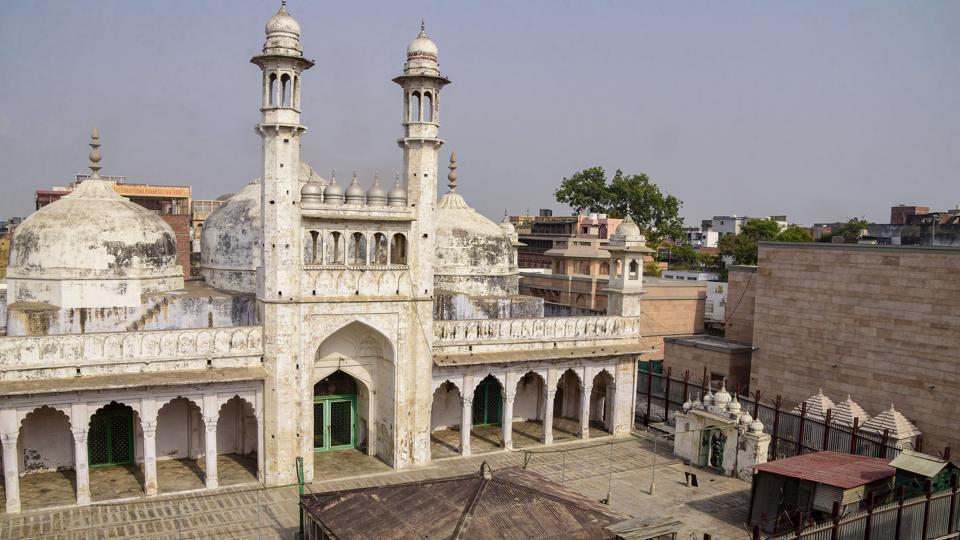
On July 24, a bench led by Chief Justice of India Dhananjaya Y Chandrachud stayed for two days an Archaeological Survey of India (ASI) survey on the mosque premises to determine if it was built upon a temple. On that day, the bench held that the committee must get “some breathing time” to challenge the impugned directive of the Varanasi district court and directed the Allahabad high court to hear the petition before the order of status quo expired.
While the court passed its order on an application moved by the committee, the final order of the day was recorded as the court having disposed of the committee’s challenge to the maintainability of the suit.
Mentioning the matter before the CJI, senior counsel Huzefa Ahmadi, appearing for the committee, requested the bench to rectify the inadvertent error in the July 24 order.
“There is a correction needed in the Monday order. Your Lordships accidentally disposed of the entire special leave petition (SLP) instead of an application. The SLP challenges the maintanability of the suit and the order of the high court upholding it but we never argued on that. We only argued on the ASI survey point,” Ahmadi submitted.
He added that since the Allahabad high court has been hearing the committee’s appeal against the order on ASI survey, it should not have an impression that the committee’s challenge to the maintainability of the suit filed by five Hindu women seeking the right to worship has been disposed of by the Supreme Court.
Acknowledging Ahmadi’s submissions, the CJI asked for the presence of solicitor general Tushar Mehta, who represents the Uttar Pradesh government in the case. Mehta supported Ahmadi’s contentions, adding the inadvertent mistake should be corrected by the bench.
The bench, which also comprised justices JB Pardiwala and Manoj Misra, then rectified the error in its July 24 order, clarifying that only the application regarding the ASI survey was disposed of. The court order, thus, revived the committee’s appeal on the point of maintainability.
On July 24, the top court had stayed till 5pm on July 26 the Varanasi district court’s order of an extensive survey of the Gyanvapi Masjid by ASI to ascertain whether the mosque was built over a pre-existing Hindu temple.
“Having regard to the fact that the order of the district court was pronounced at 4.30pm on July 21, 2023, and the survey is in the process of being carried out today, we are of the view that some ‘breathing time’ must be granted to the petitioners to move the high court for pursuing their remedies. We direct that the impugned order of the district court shall not be enforced until 5pm on July 26, 2023,” stated the bench in its order.
The directive on July 24 came at a time when a 30-member team of ASI was inside the mosque complex to carry out the survey — as directed by the Varanasi district court, while the mosque management committee had rushed to the Supreme Court, pressing for an immediate stay of the contentious order.
On July 21, Varanasi district judge Ajaya Krishna Vishvesha directed ASI to conduct a comprehensive survey, using dating, excavation and ground penetrating radar (GPR) techniques, of the plot where the mosque stands, next to the Kashi Vishwanath temple. The judge held that the scientific investigation is “necessary” for the “true facts” to emerge, as it allowed an application by the four Hindu women plaintiffs. The district court, however, ordered excluding the section which has remained sealed since the Supreme Court order in May 2022. The area under seal is where the Hindu side insists a Shivling has been found, while the Muslims says it is part of a fountain.
The mosque management committee earlier sought to get the case thrown out under Order VII Rule 11 of the Civil Procedure Code (CPC), arguing the suit by the Hindu plaintiffs was barred by the 1991 Places of Worship Act. The Act locks the position or “religious identity” of any place of worship as it existed on August 15, 1947.
But last September, the Varanasi district judge dismissed the committee’s application. This judgment was upheld by the Allahabad high court in May, and the committee’s appeal is now pending before the Supreme Court. It was this appeal that was mistakenly disposed by the top court on July 24.



