
 E-Paper



Supreme Court seeks Centre’s reply on SC/ST creamy layer
The Supreme Court on Thursday observed that carving out a creamy layer among scheduled castes and scheduled tribes is a “sensitive” issue.

 Prefer HTon Google


The Supreme Court on Thursday observed that carving out a creamy layer among scheduled castes and scheduled tribes is a “sensitive” issue, one that requires responses from the Centre and all possible stakeholders on the extent to which courts can interfere on this subject.
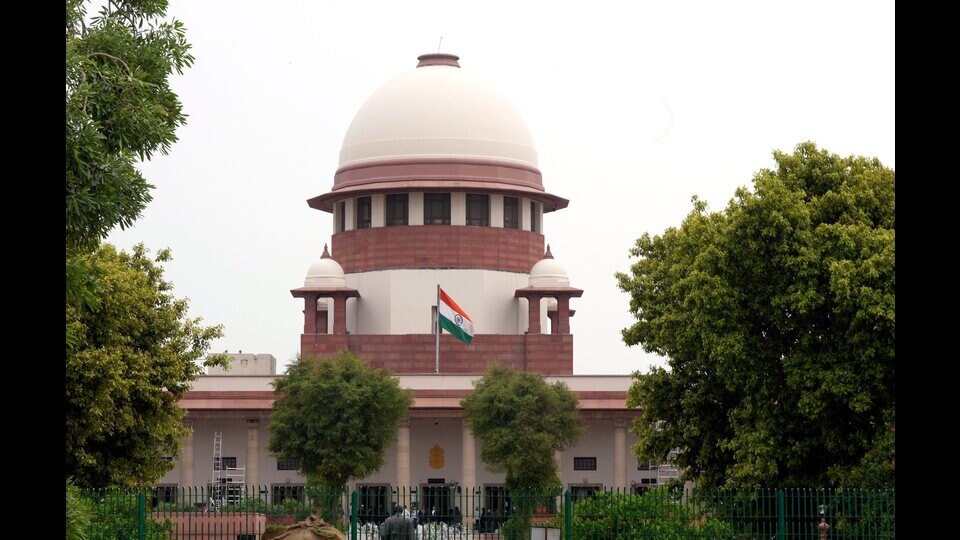
With the plea coming up for consideration before the court in two public interest litigations (PIL) — one by two individuals hailing from scheduled caste and OBC community, and other by lawyer Ashwini Kumar Upadhyay — a bench headed by Chief Justice of India (CJI) Surya Kant said, “This is a sensitive issue. We don’t know as per law, what should happen in this matter,” and posted the matter after six weeks to know the Centre’s view on this issue.
The bench, also comprising justices Joymalya Bagchi and Vijay Bishnoi, said, “This is not a matter that can be decided routinely. We want to have benefit of every possible stakeholder to know as to what extent courts can interfere.”
The bench was informed that, though a notice was issued to the Centre on one of the petitions by Ramashankar Prajapathi and another in August 2025, no reply was forthcoming. However, the court was confronted with several applications filed by associations of SC/ST workers who opposed the PIL.
Though the court allowed all the applications, it asked senior advocate Amit Anand Tiwari, appearing for the SC/ST Railway Employees Association, “We thought Class 3 and 4 employees would be interested in excluding creamy layer. We want to know how many members you have and their designation.”
Tiwari told the court that his association has 3,00,000 members and is primarily opposing the PIL as it directly impacts the welfare and constitutional rights of its SC/ST community, as thousands of years of discrimination and exploitation suffered by them cannot be wiped out in one generation. The application filed by the association said, “The economic criteria alone are not applicable to SC/ST categories, which are identified based on their historical social and educational backwardness.”
The court said that the purpose behind entertaining this matter was not to dilute the reservation for SC/ST. “This reservation was given thoughtfully and it must be kept intact without reducing it. However, creamy layer has to be on a specified parameter. We should be liberal about it. Class 3 and 4 workers should not be declared creamy layer as against those who have attained positions in institutions and are socially advantaged.”
Upadhyay, the other PIL petitioner, presented the court with data on how billionaires, politicians, and persons of significant social standing continue to enjoy the benefit of reservation. “The benefits are meant for the poor in these communities,” he said.
Even Prajapathi’s petition highlighted the economic disparities within SC/ST communities that have led to an inequitable distribution of benefits under the existing reservation policies. “By introducing an income-based prioritisation mechanism within SC, ST reservations, the proposed framework aims to prioritise opportunities for the most disadvantaged individuals amongst the SC-ST communities,” the petition said.
The economic realities within these groups have significantly changed over time as the PIL claimed that a small percentage of families within these communities have gained access to quality education, stable employment and economic mobility, thereby securing a generational advantage over the majority, which continues to remain deprived and impoverished.
A seven-judge Constitution bench of the top court in the State of Punjab v Davinder Singh, decided by a 6:1 majority in August 2024 that the Constitution permits sub-classification of a class and held subclassification of scheduled castes to be constitutionally permissible for reservation.
The matter has now been kept for hearing after six weeks, awaiting a response from the Centre.


