NEW DELHI: The Supreme Court has set aside a 2013 order of the Bombay high court that closed the trial in a 2006 murder case, holding that the high court’s decision to discharge the accused reflected “non-application of mind” and that the high court order hadn’t even referred to the evidence collected by the investigating agency.
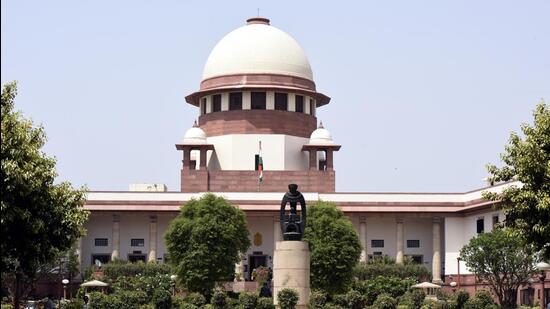
“The high court had exercised the jurisdiction in a manner which is not vested in it to scuttle the trial of a heinous crime,” the bench of justices Abhay S Oka and Rajesh Bindal said in its verdict on May 18. The bench also faulted the high court for its July 2013 verdict discharging the accused even before the trial court had an opportunity to frame the charges against them.
The top court was ruling on a petition filed by a Maharashtra resident Manjit Singh Virdi who petitioned against the high court letting of the people accused of the murder of his brother, Manmohan Singh Sukhdev Singh Virdi, who was found dead at his Lonawala house on May 14, 2006.
According to the prosecution, Virdhi was killed by his neighbour Hussain Mohammad Shattaf who suspected that his neighbour was in a relationship with his wife while he was working in Dubai. The police charge sheet filed in December 2009 said Virdhi was killed by Shattaf, his wife and a third person, Zaanish Khan.
{{/usCountry}}According to the prosecution, Virdhi was killed by his neighbour Hussain Mohammad Shattaf who suspected that his neighbour was in a relationship with his wife while he was working in Dubai. The police charge sheet filed in December 2009 said Virdhi was killed by Shattaf, his wife and a third person, Zaanish Khan.
{{/usCountry}}“If the facts of the case are examined in the light of law laid down by this court on the subject, it is evident that the high court has not even referred to the evidence collected by investigating agency produced along with charge sheet in its entirety. Rather there is a selective reference to the statements of some of the persons recorded during investigation. It shows that there was total non-application of mind,” the Supreme Court said.
The court noted that the police extensively used psychological evaluation including psychological profiling, polygraph testing and Brain Electrical Oscillations Signature Profiling (BEOS) tests of the accused because there were no witnesses to the murder.
But the high court “summed up the entire evidence in two paras without even referring to the Psychological Evaluation”, the May 18 verdict said.
“Though psychological evaluation test report alone may not be sufficient to convict an accused but certainly (is) a material piece of evidence. Despite this material on record, the High Court could not have opined that the case was not made out even for framing of charge, for which only prima facie case is to be seen.”
The Supreme Court referred to the opinion of the forensic sciences directorate in its report that indicated the involvement of the husband in the murder and its conclusion about the conduct of the other accused.
Advocate Kunal Cheema who appeared for the deceased’s brother pointed out past judgments of the top court to show that while deciding discharge application, if a prime facie case is made out against the accused, the high court will not proceed to discharge the accused.
The top court agreed. “Truthfulness, sufficiency and acceptability of the material produced can be done only at the stage of trial. At the stage of charge, the court has to satisfy that a prima facie case is made out against the accused persons. Interference of the court at that stage is required only if there are strong reasons to hold that in case the trial is allowed to proceed, the same would amount to abuse of process of the court.”
The trial court refused to discharge the accused on February 21, 2012. The high court set aside this order and allowed the accused to be set free.
To be sure, the Maharashtra police did not challenge the high court order but in response to the court’s notice, accepted that it believed that the high court verdict was clearly erroneous.