
 E-Paper



Can’t have media censorship, but effective self-regulation must: SC
In 2021, the Centre amended the rules for regulating television, and prescribed a three-tier grievance redressal mechanism.

 Prefer HTon Google


The Supreme Court on Monday said it is wary about the government regulating media, and would not want “pre- or post-censorship of media” by the state, but added that self-regulatory mechanisms for media should be made strong and effective.
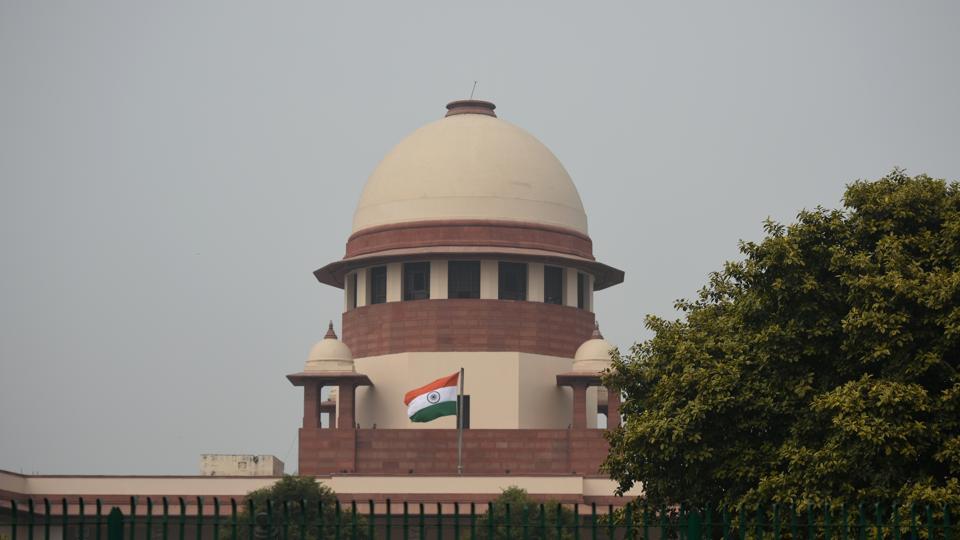
A bench, headed by Chief Justice of India Dhananjaya Y Chandrachud, that was hearing a petition moved by the News Broadcasters Association (NBA) noted that the enforcement apparatus does not seem effective.
NBA (now, News Broadcasters & Digital Association) is a self-regulatory body representing 27 news and current affairs broadcasters, issuing broadcasting and programming standards which are more in the nature of guidelines. Former Supreme Court judge AK Sikri is currently the chairperson of NBA.
Also Read| ‘Mischievous’: Supreme Court flags viral social media post falsely quoting CJI Chandrachud
“One thing is clear. We must be circumspect about regulations of media by the Government...We don’t want pre- or post-censorship of media by the Government. At the same time, the self-regulation mechanism has to be effective,” said the bench, which also included justices JB Pardiwala and Manoj Misra.
The court pointed out that it is equally concerned about media freedom and their right under Article 19(1)(a), namely the freedom of speech and expression. “While we appreciate there should be self-regulation, that self-regulation mechanism has to be strong,” said the court, adding self-regulation of television channels seems to be ineffective and that the court could push for strengthening these regulations.
NBA approached the Supreme Court against a 2021 judgement of the Bombay high court, holding that the self-regulatory character of NBA has no sanctity and that it has no statutory powers at all.
Also Read| ‘Just opinions’: Chief Justice on Ranjan Gogoi's Constitution's basic structure remark
Senior counsel Arvind Datar, representing NBA, submitted that the statements in the high court judgment came in the course of a public interest litigation relating to the death of Bollywood actor Sushant Singh Rajput in June 2020 under suspicious circumstances. In its judgment in January, the high court issued a string of guidelines for the media to report on an ongoing investigation while imploring the press to refrain from conducting media trials at the cost of people’s reputations.
Datar told the bench that the high court’s observations against NBA would be detrimental to the body’s status, for it administers the ‘Codes of Ethics & Broadcasting Standards’ for its member broadcasters.
Responding, the bench remarked: “There was a frenzy after the actor died. Everybody went berserk whether it was a murder or something else. You preempt a criminal investigation by this.”
When asked about the quantum of fines imposed on member broadcasters who violate the guidelines, Datar informed the bench that NBA can impose a maximum penalty of ₹1 lakh, which was fixed in 2008.
Surprised, the court asked Datar if a penalty of ₹1 lakh can ever be considered as a deterrent. “In the end if you are going to impose a penalty of ₹1 lakh, where is the deterrent? Have you considered how much they make? We see a rationale when you say that you don’t want the government to have a say in your broadcasting. Equally, a self-regulatory mechanism has to be made effective...Your fine must be proportionate to the money they make by telecasting such things.”
The bench added that merely having a judge of the Supreme Court as head of the self-regulatory body would not be enough. “They are all eminent judges, but their remit is confined by your remit...We are concerned as much about your right under Article 19(1)(a) as you are. However, it is also reputation of people. Sometimes there is a presumption of guilt in place of a presumption of innocence in the manner programmes are shown. We are not painting all the channels with the same brush but there are some channels like that.”
Advocate Amit Pai, representing one of the respondents in the matter, flagged another issue. “There was an instance when NBA imposed a penalty on a TV channel that left the membership of the association and joined another one,” he said.
Solicitor General Tushar Mehta, appearing for the Central government informed the bench that there is three-tier system for the regulation of media and that he would bring on record the pertinent norms.
In 2021, the Centre amended the rules for regulating television, and prescribed a three-tier grievance redressal mechanism that treats them similarly to digital news platforms. This comprises: self regulation by the channel; regulation by bodies such as the NBA; and oversight by the Centre.
Observing that the court would like to strengthen the framework, the bench asked Datar to consult justices Sikri and RV Raveendran (former SC judge and ex-chairman of NBA) and come back with their suggestions on the issue. “This court has to consider whether steps taken to frame the self-regulatory mechanism needs to be strengthened with regard to framework,” the bench said in its order, fixing the hearing after three weeks.



