E-Paper



‘Symbol of the heroic resistance’: India condemns demolition of Mujibur’s home
Sheikh Mujibur Rahman’s residence in Dhaka, where he was assassinated with seven members of his family in August 1975, was brought down by a massive mob

 Prefer HTon Google


NEW DELHI: India on Thursday condemned the destruction of Sheikh Mujibur Rahman’s historic residence in Dhaka by a mob, and said the building had an important role in the “national consciousness of Bangladesh” and for those who valued the neighbouring country’s freedom struggle.
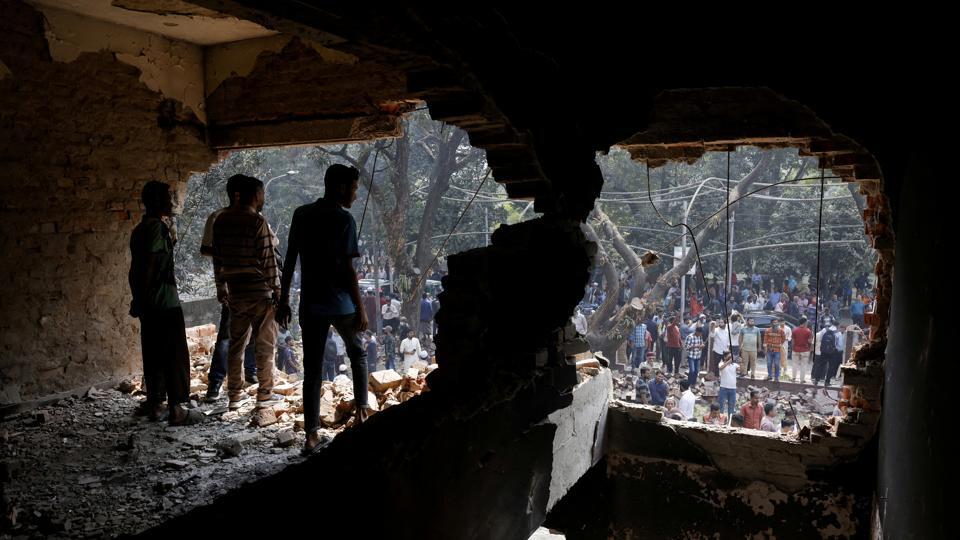
Rahman’s residence in the heart of Dhaka, where he was assassinated with seven members of his family in August 1975, was brought down by a massive mob using a crane and a bulldozer. The interim government in Dhaka sought to blame Rahman’s daughter, former premier Sheikh Hasina who is in self-exile in India, for the demolition by saying people were offended by a “provocative speech” she made on Wednesday night.
External affairs ministry spokesperson Randhir Jaiswal responded to the demolition of the house by saying: “This act of vandalism should be strongly condemned.”
He added, “All those who value the freedom struggle that nurtured Bangla identity and pride are aware of the importance of this residence for the national consciousness of Bangladesh.”
Jaiswal said it is regrettable that Rahman’s historic residence, “a symbol of the heroic resistance of the people of Bangladesh against the forces of occupation and oppression”, was destroyed on Wednesday.
New Delhi’s condemnation late on Thursday night followed the Bangladesh foreign ministry’s move of lodging a strong protest against what it said were “false and fabricated” statements by Hasina while living in India. The foreign ministry handed over a protest note to India’s acting envoy that asked the Indian government to take appropriate measures to stop Hasina from making “incendiary statements” while living in India.
Rahman received strong support from India’s leadership after he declared independence for the erstwhile East Pakistan in early 1971. India armed and supported Bangladeshi freedom fighters in the run-up to the war with Pakistan in December 1971. The defeat of the Pakistan Army led to the emergence of Bangladesh as an independent nation and Rahman went on to become the prime minister and president of the nation.
The latest developments come at a time when India-Bangladesh relations are at a historic low because of differences on a range of issues. The Indian side has been critical of Bangladesh’s interim government’s handling of attacks on the country’s religious minorities.