E-Paper



Tauktae intensified rapidly this morning, took IMD and scientists by surprise
In its trajectory of Tauktae, the IMD forecast that it would intensify into a very severe cyclonic storm and cross the Gujarat coast on Tuesday early morning. This was as per IMD’s bulletin at 2.20am on Monday. But by 8.15am, it said Tauktae had already intensified to an extremely severe cyclonic storm

 Prefer HTon Google


Tauktae intensified from a very severe to an extremely severe cyclonic storm rapidly on Monday morning, taking weather experts and scientists by surprise.
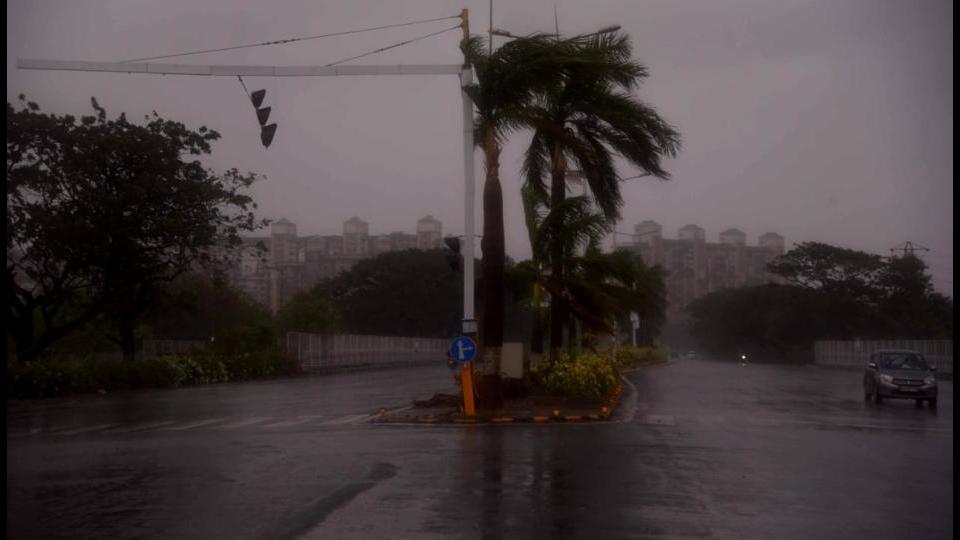
“Tauktae intensified very rapidly this morning. We did not state that it would intensify to an extremely severe cyclone in our forecast. But it did because of extremely favourable oceanic and atmospheric conditions,” said M Mohapatra, director general, India Meteorological Department (IMD).
In its trajectory of Tauktae, the IMD forecast that it would intensify into a very severe cyclonic storm and cross the Gujarat coast on May 18 (Tuesday) early morning. This was as per IMD’s bulletin issued at 2.20am on Monday. But by 8.15am, IMD issued another bulletin that said Tauktae had already intensified to an extremely severe cyclonic storm with a maximum wind speed of 180-190 kmph gusting to 210 kmph and that it would cross the Gujarat coast between Porbandar and Mahuva on Monday night between 8pm and 11pm.
Heavy to very heavy rain was recorded in north Konkan, including Mumbai, which will continue for the next 12 hours.
Click here for LIVE updates of Cyclone Tauktae
Gale wind speed reaching 180–190 kmph gusting to 210 kmph is likely to prevail over eastcentral Arabian Sea during the next six hours. Gale wind speed reaching 80-90 kmph gusting to 100 kmph is likely to prevail along and off the Maharashtra coast on Monday and gradually decrease thereafter.
Gale wind speed reaching 90-100 kmph gusting to 110 kmph is prevailing over adjoining northeast Arabian Sea. It would gradually increase, becoming 170–180 kmph gusting to 200 kmph from Monday evening for the subsequent six hours and decrease thereafter.
Independent experts had warned of rapid intensification of Tauktae.“Cyclone Tauktae, which is now skirting the Mumbai coast, has undergone rapid intensification from Category 1 (90-125 km/hr) to Category 4 ( 220-280 km/hr) status. Winds reaching 220 km/hr as per JTWC (and 185 km/hr as per IMD). Rapid intensification of cyclones is a response to climate change and ocean warming, and cyclone forecast models have a hard time in picking them up. We need to incorporate this in forecast models and also be prepared on the ground for future cyclones to come,” said Roxy Mathew Koll, a climate scientist at the Indian Institute of Tropical Meteorology.

“Strong waves, 3-6 metres, are forecast along the coast of Mumbai and Maharashtra. One way to reduce these impacts is to work on our natural defences like mangroves. Historically, Mumbai and Goa had a lot of mangroves—we can bring them back—they can reduce the impact of cyclones and floods,” he added.
Tauktae intensified very rapidly from a depression to a cyclone on Friday. There was rapid intensification of the cyclone on Saturday also.
“With Cyclone Tauktae, this will be the fourth consecutive year of pre-monsoon cyclone over the Arabian Sea. This is also the third consecutive year when a cyclone has come very close to the west coast of India. Sea surface temperatures in Arabian Sea have increased rapidly during the past century and this has led to an increase in the frequency and intensity of cyclones in the Arabian Sea…global warming has presented us with new challenges such as rapid intensification of cyclones, which need to be closely monitored at higher resolution and accuracy using on-site platforms such as buoys and moorings. Improving the Indian Ocean Observing System (IndOOS) and incorporating the global warming signals in the weather models can help us tackle the challenges of intense cyclones in the future,” Koll added in a statement.
“Conditions are extremely favourable for its (Tauktae’s) rapid intensification. Ocean heat potential is above normal; sea surface temperatures are 1-2°C above normal… We should be prepared,” Sunitha Devi had said on Thursday when a low pressure area had formed over Arabian Sea.