
 E-Paper



Taxpayers shouldn’t be given quotas, key report recommended
Creamy layer’ income limit should be eschewed, said the report which was submitted to the government in 2010, when the Congress-led United Progressive Alliance (UPA) was in power, but never been made public.


A report that served as one of the premises for the constitutional amendment that reserves 10% of government jobs and college seats for the poor in the general category had, as far back as eight years, recommended limiting the benefits to non-tax payees and eschewing the income limit applicable to the so-called creamy layer, or rich, among the other backward classes (OBCs).
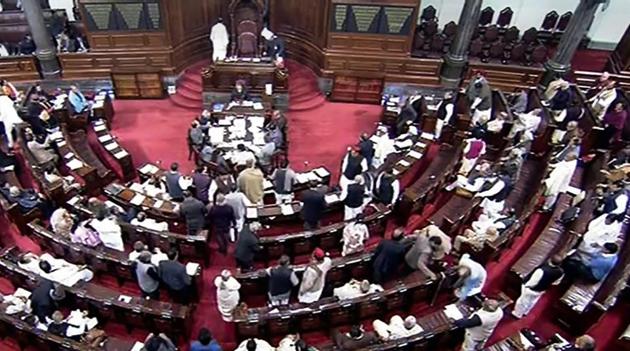
The 10% quota for the economically backward classes (EBCs) in the general category was approved this week by both houses of parliament and needs the signature of the President to become law. It was introduced and passed ahead of general elections this year and seen by some analysts as a move to soothe the anger of upper castes over the restoration of some provisions of the Scheduled Castes and Scheduled Tribes (Prevention of Atrocities) that had been struck down by the Supreme Court . The report cited as a premise for the quota was prepared by the Commission for Economically Backward Classes.
It was headed by Maj Gen SR Sinho, which underlined deprivation faced by EBCs in the general category and suggested “easy access to various welfare schemes in sectors of education, housing and healthcare and appropriate monitoring measures.”
The report was submitted to the government in 2010, when the Congress-led United Progressive Alliance (UPA) was in power, but never been made public.
It has been reviewed by Hindustan Times,which tracked down one of the few remaining copies of the report. During a discussion on the bill in the Rajya Sabha, law minister Ravi Shankar Prasad made a pointed reference to the panel report suggesting reservation for EBCs in the general category.
In the Constitution (124th Amendment) Bill, 2019, which was passed in record time in both house of Parliament, the government identified a person belonging to an EBC as someone whose annual income is below ₹8 lakh, agricultural land is less than 5 hectares, residential house is smaller than 1,000 square feet, and residential plot is smaller than 109 square yards in a notified municipality and smaller than 209 square yards in a non-notified municipality area.
While most Opposition groups supported the Bill, some, such as the Congress, questioned the rationale in setting ₹8 lakh as the annual income limit. In Parliament, Congress leader Kapil Sibal asked the government to raise the income tax exemption limit from ₹2.5 lakh to ₹8 lakh and sought to know if there was data on how many people possessed land and residential plots that matched the cut-offs.
In the report, based on visits to 28 states over a period of four years, the Commission for Economically Backward Classes noted that the while the overall percentage of those below the poverty line (BPL) was more among the reserved categories, the EBCs within the general category “suffered low paid occupation, malnutrition, illiteracy, landlessness, and low standards of living”.
The Sinho commission suggested not using the ₹8 lakh annual income limit applicable to the creamy layer of OBCs, pointing out that the economic needs of EBCs among the general category differ and hence just one criterion of BPL or setting a creamy layer upper limit “would not be effective” in ensuring benefits to the EBCs.
Based on the National Sample Survey Office data of 2004-05, the panel identified 58.5 million people as people in the general category who were poor and with the high rate of illiteracy (36.7% in rural areas); 35% were landless and, in many states, the OBCs had higher landholdings compared to the poor among the general category.
While it also suggested extending existing schemes for OBCs “suitably” to uplift EBCs, it recommended a “special economic package for EBCs living within 5 km of the line of control (dividing Kashmir into Indian- and Pakistan-controlled areas), areas affected by natural disasters such as tsunami, floods, famine, inhabitants of disturbed areas, difficult hill terrains and pockets of extreme poverty”.
Other recommendations were to offer special health insurance packages designed for families with chronically ill people to meet their long-term expenses and setting up separate national finance and development corporation for the EBCs to foster their “rapid economic development”.
Barring Rajasthan, none of the states had “framed any conclusive opinion about the reservation to EBCs” among the general category. Bihar had opposed reservation for the EBCs on the grounds that there was no constitutional provision and West Bengal wanted BPL status to be the criteria. Tamil Nadu was against it too.


