Ayushman Bharat Health and Wellness Centres across India have started offering telemedicine services, as the health ministry is focusing on strengthening online medical consultation services with specialists especially for patients in remote areas after the demand for online medical consultation seeing a rise during the Covid pandemic.
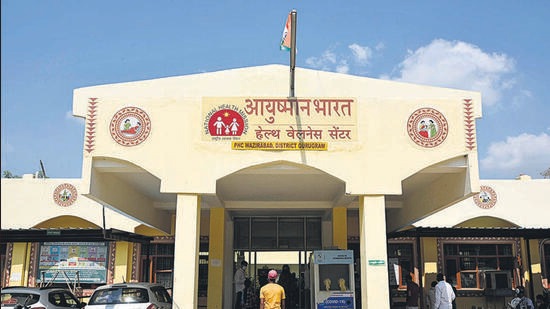
“These AB-HWCs are being revolutionized by connecting them with E- sanjeevani Teleconsultation services, which is providing free and affordable health care to all,” health minister Mansukh Mandaviya said on Sunday, while chairing a virtual review meeting with state health ministers and senior officials.
The government seeks to establish 150,000 such health centres, out of which 117,440 have been made operational by March. All these centres have started offering online consultations from Saturday.
Although private hospitals had been offering online health care services for some time, the huge response to the central government’s e-Sanjeevani initiative has led to the Centre’s focus on strengthening online consultations.
Apart from providing patients in rural and remote areas access to a specialist advice without travelling long distances, the move also led to decreased load in hospitals, especially tertiary care hospitals, which is a huge problem for super speciality hospitals in the country as many end up seeing in their out patient departments (OPDs) patients needing just primary care, according to a government official.
“People in many states have been quick to recognise the benefits of e-Sanjeevani and this has led to an encouraging trend of widespread rapid adoption of this digital modality of seeking health services,” Mandaviya said. “Patients consult with doctors and specialists on a daily basis using this innovative digital medium to seek health services.”
{{/usCountry}}“People in many states have been quick to recognise the benefits of e-Sanjeevani and this has led to an encouraging trend of widespread rapid adoption of this digital modality of seeking health services,” Mandaviya said. “Patients consult with doctors and specialists on a daily basis using this innovative digital medium to seek health services.”
{{/usCountry}}In some states, the service is operational on all days of the week; a few states are running it round the clock.
That the Covid-19 pandemic resulted in increased demand for online consultations has been established through surveys conducted by providers of tele- consultation services.
The average time spent by a patient with a doctor online during the Covid waves was 30 minutes, which is comparable to in-person visits, according to a recently-released report by Practo, a medical website that helps connect to medical specialists.
The Practo report was based on transactions by 120 million users in the three waves of Covid-19, and analysed the trends with regard to specialities, demographics and outlines their consequent impact on the health care ecosystem of the country.
As many as 57% used the platform for the first time after in-person consultations were restricted, according to the report, highlighting the level of comfort that patients attained with the idea of having an online consultation.
Demand in public sector seems to be no different, with the health ministry announcing last month that its e-Sanjeevani platform set a record of sorts by offering close to 200,000 consultations in a day, and around 50 million consultations since it was started.
The ministry began the facility of OPD consultations in April 2020 during the nationwide lockdown announced by the Centre in March to manage the Covid-19 outbreak in the country.
The service operates at two levels: doctor to doctor, and doctor to patient.
Tele- consultations proved to be crucial in helping bridge the rural-urban divide by taking quality health services to homes of beneficiaries in remote areas and making health care services accessible for all.
In other countries like the US, the pandemic resulted in increased demand for tele-health consultations.
A 2021 report by McKinsey & Company — Telehealth: A quarter-trillion-dollar post-COVID-19 reality? — says that early in the Covid-19 pandemic, tele- health usage surged as consumers and providers sought ways to safely access and deliver health care.
In India, the authorities are implementing hub and spoke model, wherein states have identified and set up dedicated hubs in medical colleges and district hospitals to provide tele- consultations to spokes such as primary health centres.
“States and Union Territories should mobilize all stakeholders in providing services at the spokes and efficiently connecting them with the hubs,” said Mandaviya.
Experts also believe the digital medium is the future.
“For most of us who have been championing digital adoption over the past two decades, this digital health revolution is not just evolutionary, it is revolutionary,” Rajendra Pratap Gupta, author of Digital Health – Truly Transformational, said in a statement. “Either corporates or technologists have led the first two revolutions, and this time, this is being led by patients.”
“As work from home becomes a reality, consult from home is also becoming prominent,” Gupta said “The hybrid model of care is a reality now.”