Sign in

Terror to dominate agenda of CMs’ meet with Modi in Delhi today

The 11th Inter-State Council meeting, to be held at Rashtrapati Bhavan, will focus on intelligence sharing, coordination for combatting terror, insurgency, police reforms and modernisation.

Updated on: Jul 16, 2016, 01:17:56 IST
Hindustan Times | By , New Delhi
Share
Share via
  • facebook
  • twitter
  • linkedin
  • whatsapp
Copy link
  • copy link

In the backdrop of the lone wolf terror attack in France, Prime Minister Narendra Modi will meet state chief ministers on Saturday to discuss religious radicalisation and Pakistan-sponsored terror in the hinterland.

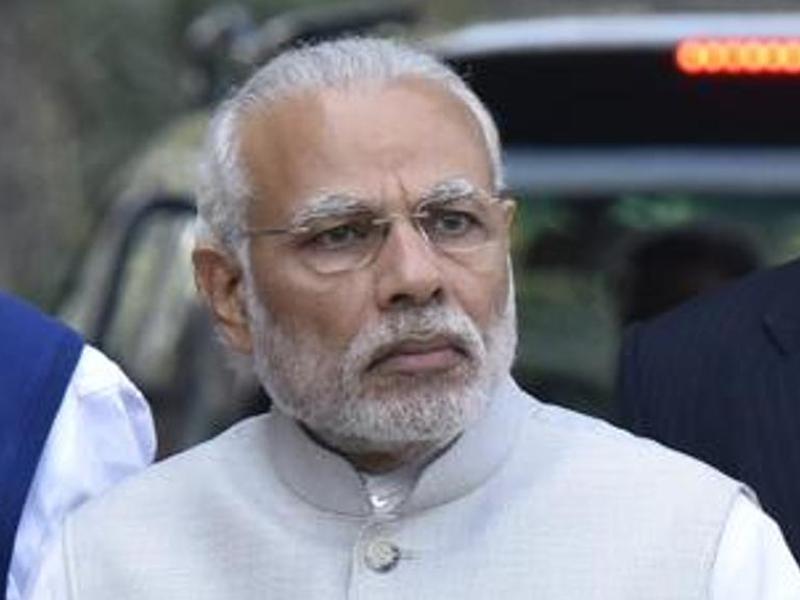
File photo of PM Narendra Modi.  The 11th Inter-State Council meeting on July 16, 2016,  to be attended by the PM and state chief ministers, will focus on intelligence sharing, coordination for combatting terror, insurgency, police reforms and modernisation. (Arvind Yadav / HT Photo)
File photo of PM Narendra Modi. The 11th Inter-State Council meeting on July 16, 2016, to be attended by the PM and state chief ministers, will focus on intelligence sharing, coordination for combatting terror, insurgency, police reforms and modernisation. (Arvind Yadav / HT Photo)

The meeting comes right on the heels of an interaction between state counter-terror chiefs that revealed the technological limitations police forces face while patrolling cyberspace, where most radicalisation is taking place, and their struggles to have adequate human assets on the ground.

The 11th Inter-State Council meeting, to be held at Rashtrapati Bhavan, will focus on intelligence sharing, coordination for combatting terror, insurgency, police reforms and modernisation.

While the agenda paper accessed by HT does not mention the Islamic State (IS) threat or religious radicalisation, the topic will find resonance in a preliminary briefing to the chief ministers by home secretary Rajiv Mehrishi.

The agenda paper blames Pakistan’s Inter-Services Intelligence for promoting terror in India through affiliate terrorist groups like the Lashkar-e-Taiba, Jasih-e-Mohammed, Hizbul Mujahideen and Indian Mujahideen. It says there have been at least 56 infiltration attempts in Jammu and Kashmir so far this year, and points to the presence of 12 terrorist training camps in Pakistan-occupied Kashmir and five in Pakistan.

The meeting of the counter-terror chiefs laid bare the police’s inability to block online radicalisation since the servers of popular applications like Google Plus, Facebook, Twitter, Telegram and Pidgin are based in the US or Europe.

The police want these companies to have servers in India so they can immediately get to the location of IP addresses being used for radicalisation or planning terror attacks. They also want more human resources to develop intelligence on the ground to pre-empt any terror threat.

Online radicalisation has become a major security issue. No less than 60 Indians are in the Islamic State ranks in Syria, and recent news of 21 missing Kerala youth joining the terror group has brought home this threat even more.

The police have had some success in busting IS modules in Haridwar and Hyderabad, with the help of security agencies, and pre-empting their plans to attack temples and gatherings to cause communal tensions.

But despite the seriousness of the IS threat, states like Tamil Nadu, Kerala, Karnataka and West Bengal — which has a real problem on its hands due to the rising influence of the Jamaat-ul-Mujahideen Bangladesh — are yet to set up anti-terror squads due to political sensitivities.

The agenda paper also points to the threat from Left-wing extremists, who are trying to target new states and carve out a base on the tri-junction of Karnataka, Kerala and Tamil Nadu.

  • Shishir Gupta
    ABOUT THE AUTHOR
    Shishir Gupta

    Shishir Gupta is Executive Editor at Hindustan Times and one of India's top journalists covering national security, strategic affairs, foreign policy and geopolitics. Over the past three decades, he has extensively reported on India's military, diplomatic and security landscape, covering every major conflict and national security challenge, from the 1999 Kargil War and the 2020 East Ladakh standoff to Operation Sindoor in 2025. He has also covered major terror attacks, including the IC-814 hijacking, the 26/11 Mumbai attacks and the 2025 Pahalgam terror strike, along with numerous Pakistan-backed terrorist incidents in the Kashmir Valley and across India. He has reported on national and state elections for more than three decades. A recognised authority on strategic affairs, Gupta has covered India's nuclear programme since the Pokhran-II (Shakti series) tests in May 1998 and has written extensively on global nuclear issues, Indian diplomacy and the country's expanding global outreach. He has also reported widely on international conflicts and terrorism, with a special focus on the Indian subcontinent. Gupta has interviewed Prime Minister Narendra Modi more than four times, including Modi's first interview with the print media after becoming Prime Minister in May 2014. His other interviews include three with the Dalai Lama, as well as conversations with Benjamin Netanyahu, Amit Shah, Yogi Adityanath, S. Jaishankar, Nirmala Sitharaman and Piyush Goyal. He is the author of Indian Mujahideen: The Enemy Within (Hachette, 2011) and Himalayan Face-off: Chinese Assertion and Indian Riposte (Hachette, 2014). He was awarded the Chevening-Wolfson Joint Scholarship at Wolfson College, University of Cambridge, UK, in 1998 and participated in the International Visitor Leadership Program (IVLP) of the US State Department in 2006. He received the Ben Gurion Prize from Israel in 2011 and the K. Subrahmanyam Prize for Strategic Studies in 2015 from the Manohar Parrikar Institute for Defence Studies and Analyses (MP-IDSA). Since 2024, he has hosted Point Blank, Hindustan Times' weekly YouTube show on global geopolitics.Read More

Get the latest India News, breaking headlines and real-time updates from across the country. Stay informed about politics, government policies, crime, weather and major national developments.