Sukumar Mukherjee, the third generation caretaker of the Jallianwala Bagh Memorial, says it deserves much more respect than what it gets from visitors. At the entrance of the memorial that was inaugurated in 1961, there is a gallery, full of words and photos on the massacre. The lines, “It’s a tragedy of national importance that cannot be allowed to be forgotten”, are a stark reminder of how India freed itself from colonial brutality.
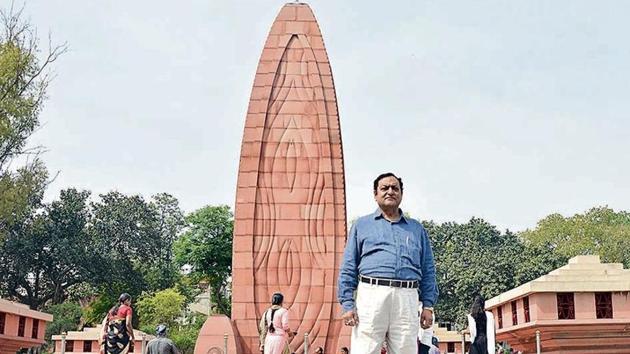
For Mukherjee, secretary of the Jallianwala Bagh National Memorial Trust, this is both home and office – his residence is a short flight upstairs.
The 64-year-old with green eyes was born here, like his father Uttam Charan. The Mukherjees from the Hooghly district of West Bengal have been the caretakers of the Jallianwala memorial since its inception. Mukherjee’s grandfather Sashti Charan Mukherjee, a homeopath practising in Allahabad, was deputed by Congress leader Madan Mohan Malaviya to arrange a session in Amritsar in 1910. He never went back. Present at the bagh on the day of the 1919 massacre, Sashti Charan escaped death by hiding under the dais, and later moved a resolution for acquiring the site at the Congress session in Amritsar. This was followed by a nationwide appeal for fundraising by Mahatma Gandhi and a trust was set up with Malaviya as president and Sashti Charan as secretary. The British, it is said, wanted to obliterate the signs of the massacre by setting up a cloth market here but the Indians managed to acquire the land in 1920. Miffed, the authorities arrested Sashti Charan, who had the land deed, but he remained resolute.
Ever since, the Mukherjees have been the caretakers of the memorial. Sukumar, the youngest of three brothers, quit his bank job to take on the mantle from his father Uttam Charan when he died in 1988. “I was appointed by then PM Rajiv Gandhi,” says Mukherjee. “Most visitors treat it as a picnic spot, sometimes they don’t even care to read its history,” he rues.
{{/usCountry}}Ever since, the Mukherjees have been the caretakers of the memorial. Sukumar, the youngest of three brothers, quit his bank job to take on the mantle from his father Uttam Charan when he died in 1988. “I was appointed by then PM Rajiv Gandhi,” says Mukherjee. “Most visitors treat it as a picnic spot, sometimes they don’t even care to read its history,” he rues.
{{/usCountry}}Although the Trust is headed by the Prime Minister, managing the memorial is no cakewalk, says Mukherjee. In 2011, he had goons following him when the Punjab and Haryana high court ordered eviction of an illegal occupant from one of the Trust buildings.
During militancy in Punjab in the 1980s, a group of youngsters with swords apparently threatened to kill his father, saying they had seen people smoking in the bagh. “Papaji was very gutsy, he said, ‘kill me’ and they left,” Mukherjee recalls.
Living with a piece of history has its challenges. Kakoli, Sukumar’s wife who came here as a young bride in the 1980s when militancy had gripped the state, remembers the siege during Operation Bluestar. “We couldn’t step out for over a week, thankfully papaji (Uttam Charan) had a habit of storing ration.” It was due to the barter of onions and tomatoes that she came close to her neighbours during that period, Mukherjee says. “My daughters worry about my health and tell me ‘Papa, you’ve done enough sewa, come stay with us’, but I want to see the memorial through its 100th anniversary. Then, I will see,” Mukherjee says.