
 E-Paper



The impact of frequent alliance swaps on the bureaucracy in Bihar
When the political scenario keeps changing, as it has in Bihar, what does this mean for the officers of the state?

 Prefer HTon Google


The impact of the frequent changes in the government in Bihar since 2013 and Janata Dal (United)’s swapping of alliances periodically between the Bharatiya Janata Party (BJP) and the Rashtriya Janata Dal (RJD) is not just political, it also affects the governance.
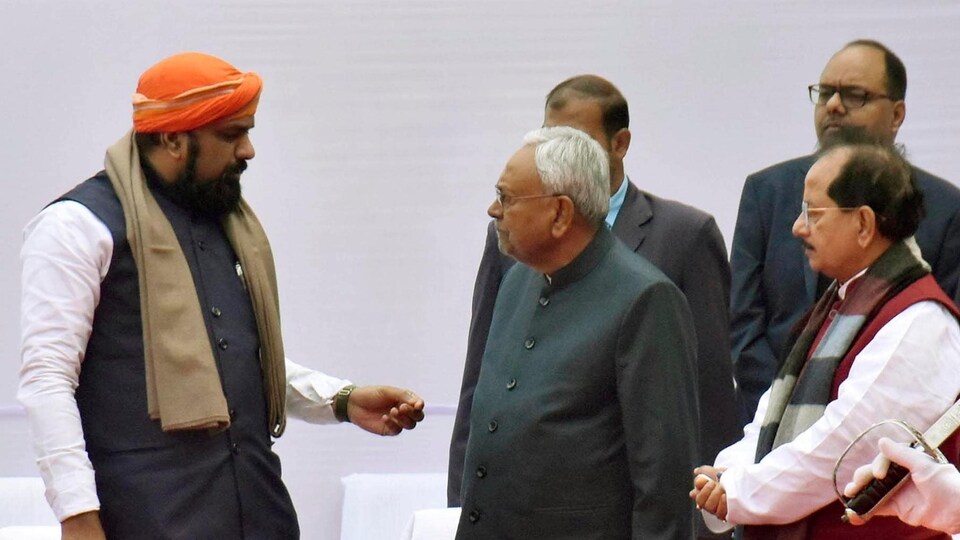
However, political analysts say Bihar’s scenario is slightly different — the chief minister (Nitish Kumar) remains constant as head of the government, irrespective of alliance partner. Thus, his policies and programmes don’t get discontinued.
“His core bureaucratic team has also remained more or less intact all throughout to lessen the impact of the changes in government, which has been based on his 'Saat Nischay’ or 7 Resolves [parts] 1 and 2,” said former director of AN Sinha Institute of Social Science DM Diwakar.
In 2015, when Nitish came to power, he launched a development concept of 7 Resolves for holistic socio-economic development in the minimum time possible. It is the vision document of the state government’s plan for developments in the state for the next five years. Later in 2020, 7 Resolves 2 was launched to take the development plan forward with a focus on seven sectors, including health, infrastructure, employment and women’s empowerment.
A retired IAS officer, who held key positions in the past, said that a bureaucrat has to remain neutral and is guided by the Constitution and law despite taking forward the policies and direction of the government.
“The change in government can impact policies and priorities, but in Bihar that has not been the situation. The CM symbolises the government and that position has not changed. Only the Opposition has changed. The CM has managed to keep the officials he wants in key positions for taking his programmes forward,” he added, pleading anonymity.
Another retired bureaucrat, who was in the government during the first uninterrupted stint of the NDA government from 2005-13, said that the bureaucracy is headed by secretaries and district magistrates, and it plays a crucial role in implementing the programmes and policies of the government.
“With the General Administration Department and home department remaining with the CM, who has hitherto been the only choice at the top, the government has been able to place its officers at key positions and there has been continuity. The two key departments have always remained with the CM. But yes, there is always a chance of instability if the minister and the secretary don’t get along,” he added.
The bureaucracy is clearly not immune to political controversy. Recently, an additional chief secretary (education) KK Pathak was involved in an ugly letter war with department minister Chandrashekhar’s office and even stopped the latter’s private secretary from entering office. The minister, who belongs to the Rashtriya Janata Dal (RJD), did not approve of the style of functioning of the ACS and did not attend office for nearly a month and later even when he joined, things did not improve. Later, the minister was replaced — within days, JD-U walked out of its alliance with the RJD and joined the NDA.
The two retired officers quoted above said that as per the rules of executive business, a minister has to interact with his department secretary to prioritise work and frame policies, but if the two work at cross-purposes things suffer, as has been evident in some cases in Bihar.
“Even if the ministers want some change or shift in priorities, the secretaries may be guided by the guidelines of the CM Secretariat to maintain continuity and that can lead to fissures between the two. However, the trend of allowing secretaries to undermine the ministers is also not good. The ministers are there for check and balance,” they added.
Social analyst Nawal Kishor Choudhary said that the frequent changes in the government without any change at the top have created a situation where the bureaucracy may not get affected by symbolic changes in anticipation that things could change anytime again without holistic change.
“In Bihar, Nitish Kumar is the government. The line dividing the government and the one heading it has vanished. That way, the bureaucracy knows which way to go. They know the changes don’t impact them as long as the CM is unchanged,” he said.
The story has been rectified. An earlier version mistakenly referred to Janata Dal (United) as Janata Dal (Secular). The error is regretted.


