The Supreme Court has had a handful of instances when more than one Chief Justice of India (CJI) took the highest chair in the judiciary in a year. But the year 2022 will become only the second such year since the top court’s inception in 1950 when it will have three different CJIs in under three months.
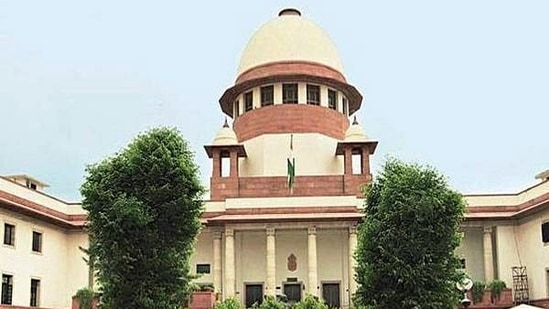
The incumbent, justice NV Ramana, will retire on August 26 after a tenure of 16 months. Justice Ramana will pass the baton to
The Supreme Court has had a handful of instances when more than one Chief Justice of India (CJI) took the highest chair in the judiciary in a year. But the year 2022 will become only the second such year since the top court’s inception in 1950 when it will have three different CJIs in under three months.
The incumbent, justice NV Ramana, will retire on August 26 after a tenure of 16 months. Justice Ramana will pass the baton to justice Uday U Lalit, who will get just a little over two months as the head of the judiciary before he demits office on November 8. Justice Lalit’s retirement will pave the way for justice Dhananjaya Y Chandrachud to take over as the CJI with a term of two years.
The quick successions, starting August 26, will go down in the history of the highest court as only the second precedent when the country would have had three different CJIs in a short span of 76 days.
Previously, in 1991, the country had three different CJIs between November and December that year. Justice Ranganath Misra retired as the CJI on November 24, 1991. Justice Kamal Narain Singh then took over as the CJI, holding the record of the shortest tenure of 17 days, from November 25 to December 12, 1991. Justice MH Kania succeeded justice Singh and remained at the helm from December 13, 1991 to November 17, 1992.
Supreme Court judges take over as the CJI on the basis of their seniority. While there is no tenure fixed for a CJI, the retirement age of the judges in the apex court has been ascertained at 65 under the Constitution.
Speaking to HT, Attorney General of India KK Venugopal said he is aware of the peculiarity of the events that will unfold with the retirement of the current CJI, justice Ramana.
“I believe every CJI should have a minimum tenure of three years. There are several important issues such as judicial and administrative reforms coupled with the problem of huge arrears of cases that need to be tackled. A CJI should get sufficient time to execute his or her vision and usher in reforms as planned. I think the issue of a minimum tenure of a CJI should be considered by the central government as well as by the judges of the Supreme Court,” Venugopal said.
One way of ensuring a minimum tenure of three years for a CJI, the A-G underlined, could be through an inbuilt mechanism by the collegium. “At the time of recommending a judge for his or her appointment in the Supreme Court, the collegium is aware of the tenure of each and every judge, as also who would go on to become a CJI and for how long. The collegium can make sure that the appointee to the Supreme Court gets at least three years as a CJI. This can be done without any requirement of governmental interference or amending any constitutional provision,” added Venugopal.
According to the top law officer, increasing the retirement age of Supreme Court judges could go a long way in assisting the cause. “You have lawyers practising till they are 75 or 80. Also, the retirement age of the judges of the constitutional courts was fixed long back based on the average life of that time. It needs a revision now,” said Venugopal.
The A-G added that the retirement age of the judges of high courts and the Supreme Court should go up. “In my opinion, high court judges should retire at 67 (they currently retire at 62) and the Supreme Court judges should retire at 70. If they are fit enough to take up arbitration work after their retirement, why should they not continue as judges? It would need a constitutional amendment to increase the retirement age of the judges of high courts and the Supreme Court and, I believe, it should be done,” emphasised Venugopal.
In the past, there have been a few instances when a single year witnessed three CJIs. In 1954, justice M Patanjali Sastri, justice MC Mahajan and justice Bijan Kumar Mukherjea became CJIs in the same year. Again, in 1966, justices PB Gajendragadkar, Amal Kumar Sarkar and Koka Subba Rao became CJIs.
The year 1989 also saw three CJIs — justices Raghunandan Swarup Pathak, ES Venkataramiah and Sabyasachi Mukharji. In 1991, the apex court again had three different CJIs — justices Ranganath Misra, Kamal Narain Singh and MH Kania.
In 1998, justices JS Verma, MM Punchhi and AS Anand were CJIs and, similarly, the country had three different CJIs in 2002, 2004, 2014 and 2017.
One Subscription.
Get 360° coverage—from daily headlines
to 100 year archives.
Archives
HT App & Website