Tamil Nadu chief minister MK Stalin on Tuesday announced that schools in the state will spread awareness about climate change among students through a climate change policy and establishment of ecology clubs.
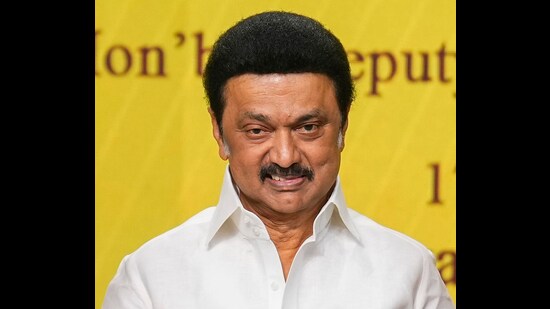
Stalin was spelling out the state government’s mission to impart climate literacy to the masses through students at the third edition of the Tamil Nadu Climate Summit held in Chennai.
“We plan to address climate change through education as it is the foundation stone to realise the dreams of Tamil Nadu,” Stalin said. “We have decided to take climate literacy to the people as a movement. We will form ecology clubs in all schools across the state.”
The chief minister said that there was a need for a state-level climate change policy to be able to respond to disasters as both intensity and frequency have increased in the past decade.
The DMK-led state government is planning to provide capacity building training for climate change prevention and adaptation to officials of various government departments with a special focus on the departments that are affected by climate change such as agriculture and water resources, he said.
“We have to find ways to reduce emissions of greenhouse gases and the Tamil Nadu government has declared heat wave as a state calamity and published it in the gazette,” Stalin said. “We have declared that families of people who die in heat waves will get a solatium of ₹ 4 lakh and have allowed State Disaster Response Force funds to be used to combat heat waves,” the chief minister said.
{{/usCountry}}“We have to find ways to reduce emissions of greenhouse gases and the Tamil Nadu government has declared heat wave as a state calamity and published it in the gazette,” Stalin said. “We have declared that families of people who die in heat waves will get a solatium of ₹ 4 lakh and have allowed State Disaster Response Force funds to be used to combat heat waves,” the chief minister said.
{{/usCountry}}At the summit, Stalin also released a Master Plan to make Rajapalayam –– a major town in Virudhunagar district –– with a population of 2 lakh, to make it a zero carbon city by 2041.
“We have been working continuously towards economic development with environmental responsibility. Every decision is made, keeping this in mind,” he said, adding that societies must understand climate change and adapt to its threats.