
 E-Paper





Follow the latest breaking news, major developments and agenda-setting stories from India and around the world with the newsdesk at Hindustan Times. Operating round the clock, the desk brings together experienced editors, reporters and correspondents to deliver fast, accurate and contextual reporting across subjects that influence public policy, governance, business, society and international affairs. The HT News Desk covers politics, elections, government policies, the economy, business and markets, science and technology, the environment, law and order, infrastructure, education, climate issues and geopolitics, while closely tracking developments across states, institutions and global capitals. The team also leads coverage of major breaking news events, policy announcements, court proceedings, natural disasters, public emergencies and significant international developments. Reports published by the newsdesk are based on information gathered from reporters on the ground, official statements, government agencies, court records, regulatory filings, recognised institutions and other authoritative sources. Stories undergo editorial scrutiny and verification processes to ensure accuracy, fairness and relevance, and are updated as events evolve and additional information becomes available. Whether covering a key political decision in New Delhi, an economic policy shift affecting millions, a landmark court ruling or a major global event, the HT News Desk aims to provide readers with reliable, fact-based journalism that delivers not only the latest developments but also the context and analysis needed to understand their wider implications.
Top Afghan peace negotiator Abdullah Abdullah expected to visit India on October 6
Abdullah is expected to meet the top Indian leadership to seek support for the intra-Afghan negotiations currently underway at Doha in Qatar. India had sent an official delegation to Doha to attend the event marking the launch of negotiations and the event was also addressed by external affairs minister S Jaishankar.


Afghanistan’s top peace negotiator Abdullah Abdullah is expected to visit India on October 6 as part of an outreach to key countries in the region for support for the negotiations between the Afghan government and the Taliban, people familiar with developments said on Saturday.
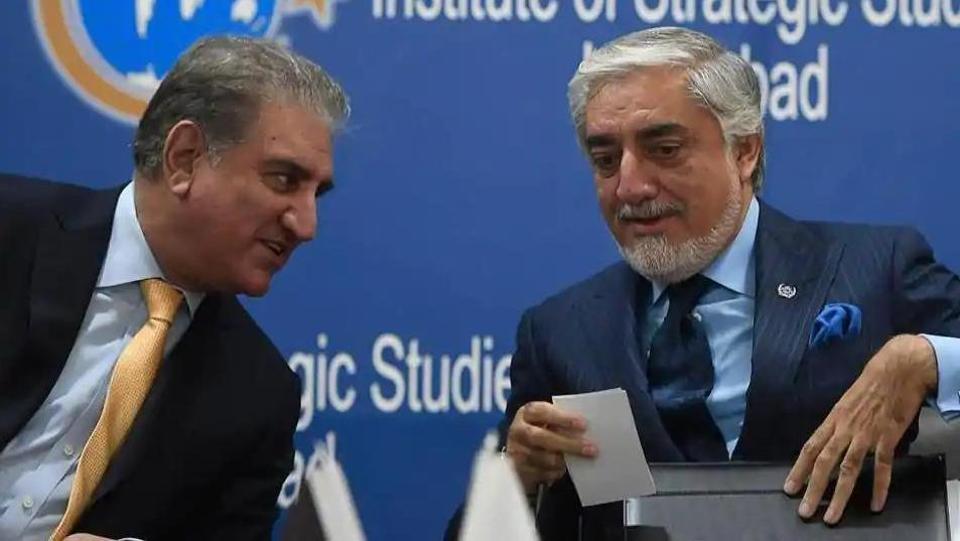
Abdullah, chairman of the High Council for National Reconciliation in Afghanistan, will travel to India after a three-day visit to Pakistan that concluded on Wednesday. This is his first visit to India after the formation of a new government in Kabul following last year’s troubled election.
The people cited above said on condition of anonymity that Abdullah is expected to meet the top Indian leadership to seek support for the intra-Afghan negotiations currently underway at Doha in Qatar. India had sent an official delegation to Doha to attend the event marking the launch of negotiations and the event was also addressed by external affairs minister S Jaishankar.
In his speech, Jaishankar said that any new dispensation which emerges from the intra-Afghan dialogue process must ensure that the soil of Afghanistan is never used for anti-India activities.
Senior Afghan leader Marshal Abdul Rashid Dostum had visited India on September 25 and held talks on the peace process with Jaishankar, who told him New Delhi remains committed to Afghan-led, Afghan-owned and Afghan-controlled negotiations.
During his interaction with the Pakistani media in Islamabad, Abdullah said both Pakistan and Afghanistan are on “the same page” on the issues of reducing violence and showing flexibility in the negotiations underway in Doha. These views should be emphasised in “messages communicated to Taliban”, he said.
India, the region’s largest provider of development aid to Afghanistan, has expressed concern at a recent spike in violence by the Taliban and terror attacks on minorities such as Sikhs. It has said that the intra-Afghan negotiations must ensure the interests of minorities, women and vulnerable sections of society and reduce violence across Afghanistan and its neighbourhood.
Since 2001, India has undertaken projects worth $3 billion in Afghanistan, including $1 billion pledged in 2016 under the “new development partnership” scheme for five years.


