
 E-Paper



Top court allows SC/ST subcategories in quota
By allowing subclassification, the Supreme Court has opened the door for states to identify and provide targeted benefits to the most disadvantaged subgroups within the broader SC/ST categories

 Prefer HTon Google


The Supreme Court on Thursday ruled that state governments have the authority to create subclassifications within the Scheduled Castes (SCs) and Scheduled Tribes (STs) for the purpose of preferential reservations, in a verdict that will have far-reaching implications for reservation policies for marginalised communities.
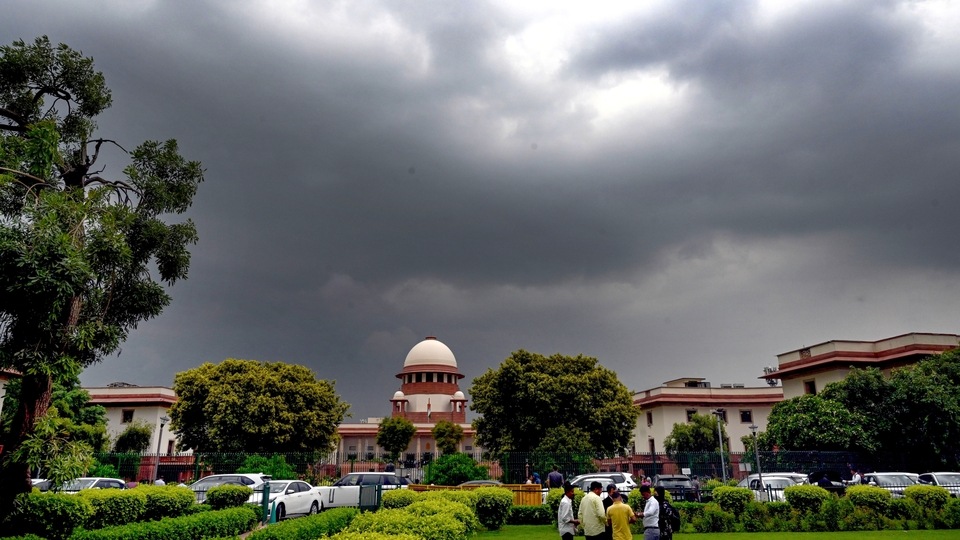
By allowing subclassification, the Supreme Court has opened the door for states to identify and provide targeted benefits to the most disadvantaged subgroups within the broader SC/ST categories, provided they base their decisions on empirical evidence and rational criteria.
The decision by a seven-judge Constitution bench was passed with a 6-1 majority, with the majority overruling the apex court’s earlier decision in the 2004 EV Chinnaiah case, which had held that subclassification within SC/STs was impermissible as it treated these groups as homogenous classes.
Read more: Creamy layer among SCs, STs must be excluded from quota benefits: Supreme Court
“Historical and empirical evidence demonstrates that the SCs are a socially heterogeneous class. Thus, the state in exercise of the power under Articles 15(4) and 16(4) can further classify the SCs if (a) there is a rational principle for differentiation; and (b) the rational principle has a nexus with the purpose of subclassification,” the verdict said.
Chief Justice of India Dhananjaya Y Chandrachud, and justices BR Gavai, Vikram Nath, Pankaj Mithal, Manoj Misra and Satish Chandra Sharma comprised the majority while justice Bela M Trivedi dissented. The bench rendered six separate opinions. CJI Chandrachud wrote an opinion for himself and justice Misra while justices Gavai, Nath, Mithal and Sharma wrote separate but concurring opinions. Justice Trivedi’s dissenting opinion affirmed the 2004 Chinnaiah ruling.

Significantly, one concurring judgment also called for identifying and excluding the “creamy layer” from SC/ST reservations, extending a concept hitherto used only for other backward classes (OBC) to weed out economically well-off people from the ambit of quotas. Another judge called for reservation benefits to be extended only for one generation.
“The State must evolve a policy for identifying the creamy layer even from the Scheduled Castes and Scheduled Tribes so as exclude them from the benefit of affirmative action. In my view, only this and this alone can achieve the real equality as enshrined under the Constitution,” justice BR Gavai said, and was supported by CJI Chandrachud, and justices Vikram Nath, Pankaj Mithal, Manoj Misra and Satish Chandra Sharma.
Read more: States empowered to make sub-classifications in SC, ST for quota: Supreme Court
The majority ruling acknowledged the social and economic diversity within SC/ST communities and allowed states to provide targeted benefits to the most disadvantaged subgroups, thereby promoting a more equitable distribution of affirmative action.
Marking a significant shift in the landscape of reservation policies in India, the court held that the SC/ST communities are “not homogenous” but are a “socially heterogenous class” and that there are varying degrees of backwardness within these groups that ought to be addressed by the State for the fulfilment of the constitutional goal of social equality.
The ruling held that subclassification within SCs does not violate Article 341(presidential order identifying SCs) of the Constitution, provided that it does not lead to the exclusion of any caste from the list of SC. However, any preference or exclusive benefit to certain castes within such reserved categories must be justified by data and empirical evidence, it declared. To be sure, the judgment interpreted only Article 341 because that was the bone of contention in the case before it, but the principles enunciated in the verdict applies to both SCs and STs.
Holding that states can create subclassifications within SC/STs if there is a rational basis for doing so, such as inadequate representation of certain castes in public services, the majority verdict stated that the states must collect data on this inadequacy and demonstrate that it is linked to the caste’s backwardness. The judgment also stated that “the State must establish that the inadequacy of representation of a caste/group is because of its backwardness.”
Simultaneously, the court made it clear that states would not be allowed to set aside all of the seats designated for SC/STs in favour of a single subclass, disregarding all other castes on the list and that the subclassification would also be amenable to judicial review.
This judgment is poised to have a profound impact on the implementation of reservation policies across India, empowering state governments to tailor their reservation policies to address the nuanced and diverse needs of marginalised communities. This ruling also has the potential to influence future debates on reservation policies in India, particularly in relation to other marginalised groups.
At the heart of the matter before the seven-judge bench was whether subclassification within the SC/ST categories is constitutionally permissible. This debate stemmed from the long-standing issue of whether all subgroups within SCs and STs, which are constitutionally recognised as homogenous classes, should be treated equally or if a more granular approach should be allowed to ensure that the most disadvantaged within these groups receive adequate benefits.
The genesis of this legal battle lies in the 2004 Supreme Court judgment in EV Chinnaiah vs State of Andhra Pradesh, where a five-judge bench ruled that subclassification within SCs/STs was not permissible. This judgment held that SCs and STs form homogenous classes and that any attempt to create subgroups for preferential treatment would violate the principle of equality. It further held that tweaking with the reservation policy by the states violated Article 341 of the Constitution. This provision allows the President of India to notify a list of SCs for each state and stipulates that the list can only be modified by parliament. This ruling became the basis for several legal challenges, particularly against state policies that sought to provide specific benefits to certain sub-castes within the SC/ST categories.
A significant case in this context involved the Punjab government, which in 1975 issued a notification dividing its existing 25% reservation for SCs into two categories - half of the reserved seats were earmarked for Balmikis and Mazhabi Sikhs, with the remaining half allocated to other SC groups. This notification was quashed by the Punjab & Haryana High Court in 2006, citing the Chinnaiah judgment. In response, the Punjab government passed the Punjab Scheduled Caste and Backward Classes (Reservation in Services) Act, 2006, which introduced a “first preference” reservation for Balmikis and Mazhabi Sikhs. However, this too was struck down by the high court, leading to an appeal in the Supreme Court.
In 2020, a five-judge bench of the Supreme Court referred the matter to a larger bench, observing that the Chinnaiah judgment required reconsideration.
Over three days of hearings in February 2024, the seven-judge bench grappled with the complex arguments for and against subclassification. The Union government, along with several states including Punjab, Tamil Nadu and Telangana, strongly supported subclassification, arguing that it is essential for ensuring that the benefits of reservation truly reach the most marginalised within the SC/ST communities. On the other hand, opponents of subclassification argued that it could lead to political manipulation and the fragmentation of SC/ST unity.
The CJI’s judgment held that inter-se backwardness within the SC/STs is a roadblock to achieving substantive equality. “Subclassification is one of the means to achieve substantive equality. The doctrine of classification gives content to the guarantee of equal protection of the laws. Under this approach, the focus is on the equality of results or opportunities over equality of treatment...The principle of subclassification will be applicable to the Scheduled Castes if the social positions of the constituents among the castes/groups is not comparable,” it said.
Drawing on the precedent set by the nine-judge bench verdict in the Indra Sawhney case (1992), which upheld subclassification within Other Backward Classes (OBCs), the court ruled that this principle could also be extended to SC/STs under Articles 15(4) and 16(4) of the Constitution that empowers the State to make special provisions for the socially and educationally backward classes.
One of the pivotal aspects of the judgment was the interpretation of Article 341(1) of the Constitution, which deals with the identification of SCs. This judgment clarified that the provision does not create a homogenous class but allows for the inclusion of various castes within the SC category, each of which can be treated differently based on empirical evidence.
Additionally, the court addressed the role of Article 335, which mandates that the claims of SC/STs should be considered in public appointments, consistent with the maintenance of administrative efficiency. The judgment ruled that efficiency should be interpreted in a manner that promotes inclusion and equality, rather than as a limitation on the power of states to grant reservations. The ruling stressed that the “efficiency of administration must be viewed in a manner which promotes inclusion and equality”.
The judgment clarified that the State’s course of action is subject to judicial review and that the subclassification followed must be justified based on empirical data gathered by the State.
“While the State may embark on an exercise of subclassification, it must do so on the basis of quantifiable and demonstrable data bearing on levels of backwardness and representation in the services of the State. It cannot, in other words, merely act on its whims or as a matter of political expediency,” held the court.
The judgment further clarified that although sub-categorisation based on each caste is permissible, there can never be a situation where seats are allocated for every caste separately.
POLITICAL RESPONSES



