The Supreme Court on Thursday unveiled a fresh set of directions to tackle the mounting pendency of cheque bounce cases across the country -- over a million cases across Delhi, Mumbai and Kolkata alone -- calling for their conclusion at the threshold stage wherever possible and directing that if an accused is willing to pay the cheque amount on the very first day, the matter should be disposed of immediately, without dragging on for years.
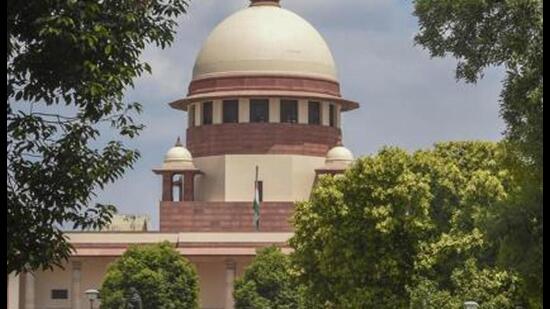
A bench of justices Manmohan and NV Anjaria, while deciding a pending cheque dishonour matter, noted that despite repeated judicial interventions in the last decade, cases under Section 138 of the Negotiable Instruments Act (NI Act) continue to choke trial courts in major metropolitan cities.
“The pendency… continues to be staggeringly high, putting an unprecedented strain on the judicial system,” the bench noted. According to data from the National Judicial Data Grid, as on September 1, 2025, over 650,000 such cases were pending in Delhi district courts, 117,000 in Mumbai, and 265,000 in Kolkata. In Delhi alone, nearly half (49.45%) of all trial court cases are cheque dishonour complaints.
The judgment, authored by justice Manmohan, marks yet another attempt by the apex court to fuse precedent with technology and process innovation to ensure that what is essentially a financial dispute is resolved quickly, without adding to India’s crippling backlog of cases.
The court stressed that punishment under the NI Act was never meant as retribution but as a means to secure payment and uphold the credibility of cheques as a substitute for cash. It, therefore, sought to fuse earlier directions with new methods enabled under the Bharatiya Nagarik Suraksha Sanhita (BNSS), 2023, to expedite trials and promote early settlement.
{{/usCountry}}The court stressed that punishment under the NI Act was never meant as retribution but as a means to secure payment and uphold the credibility of cheques as a substitute for cash. It, therefore, sought to fuse earlier directions with new methods enabled under the Bharatiya Nagarik Suraksha Sanhita (BNSS), 2023, to expedite trials and promote early settlement.
{{/usCountry}}Among its directions, the court said that service of summons could no longer be confined to the usual modes of post and process servers but must also include personal service by the complainant and electronic service through email, mobile numbers, WhatsApp or other messaging applications. To guard against misuse, the complainant would be required to file an affidavit verifying that the particulars indeed belonged to the accused, failing which action could be taken against the complainant.
The bench also directed that district courts should set up online payment facilities through secure QR codes or UPI links so that an accused can directly pay the cheque amount at the initial stage itself. Once such a payment is confirmed, courts may pass appropriate orders for compounding or closure of proceedings. Endorsing the view of the Karnataka high court, the Supreme Court further clarified that magistrates were not required to issue summons before taking cognisance of complaints, a procedural step that has often been a source of delay.
In order to streamline the handling of cases, the bench required every complaint under Section 138 of the NI Act to carry a one-page synopsis placed upfront in the file so that magistrates could grasp the essentials quickly. It also clarified that while digital hearings may be used before the service of summons, once summons are served, such cases should ordinarily be placed before physical courts to encourage quicker and more informal resolution.
The bench further also called upon high courts to revise the pecuniary limits for evening courts, observing that Delhi’s current limit of ₹25,000 was “too low” to make any real impact.
To improve oversight, the court said that district judges in Delhi, Mumbai and Kolkata must maintain dashboards reflecting pendency, disposal rates, adjournments and settlements, and conduct monthly reviews, with consolidated quarterly reports sent to the high court. It asked the chief justices of these high courts to constitute committees to monitor pendency, ensure appointment of experienced magistrates, and promote mediation, Lok Adalats and other dispute resolution mechanisms for cheque dishonour cases.
The court also revisited its earlier framework for compounding laid down in the 2010 judgment in Damodar S Prabhu, which had introduced graded costs for delayed settlements. With interest rates falling in recent years, the bench held that the scheme required revision.
It ruled that if the accused pays the cheque amount before recording defence evidence, the case may be compounded without any cost or penalty. If payment is made after the evidence stage but before judgment, the accused would have to pay an additional 5% of the cheque amount. Payments made at the revision or appeal stage before a sessions court or high court would attract 7.5% costs, while settlements reached at the Supreme Court would involve a 10% cost.
In addition, trial courts have been empowered to put a set of pointed questions to the accused at the initial stage, including whether the cheque belongs to their account, whether the signature is admitted, whether liability existed, and whether they wish to settle the matter at that stage. The responses would be recorded in the order sheet and would enable the magistrate to determine whether the case could be tried summarily or required a fuller trial.
Observing that cheque dishonour disputes, largely arising out of commercial and private transactions, have swamped courts for decades despite earlier attempts at streamlining, the bench said, “In some states, cases under Section 138 constitute nearly fifty per cent of trial court pendency. Unless trial courts are equipped with new tools of summons, early compounding, and online settlement, the judicial system will remain clogged.”