
 E-Paper



UAE to host Asia Cup; India, Pak in Group A
“When crowds gather to witness the tournament’s unforgettable clashes, it will be a great reminder of cricket’s power to build bridges,” said ACC chairman Mohsin Naqvi, who also serves as Pakistan’s interior minister

 Prefer HTon Google


India and Pakistan have been drawn in the same group for the Asia Cup Twenty20 tournament, organisers announced on Saturday, ending uncertainty over the event’s fate amid tensions following the Pahalgam terror attack and India’s Operation Sindoor.
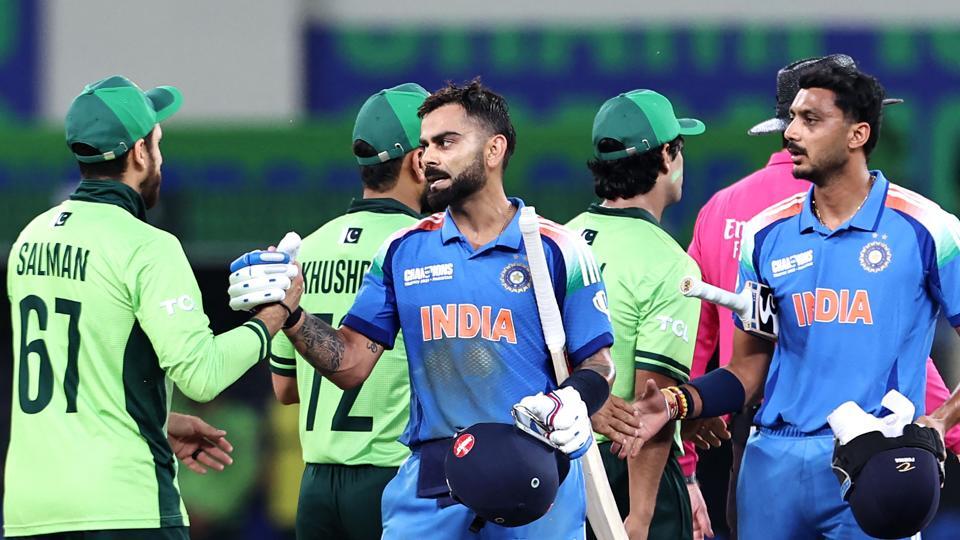
The arch-rivals, who have not met on either side’s soil for a bilateral series since 2012, have been placed in Group A for the eight-team tournament running from September 9-28 in the UAE. Their marquee encounter is scheduled for September 14, with a likely second clash on September 21 during the Super Four stage if both teams advance. The teams could potentially meet three times if both reach the final.
The tournament was moved to a neutral venue despite being India’s turn to host.
Relations between the countries deteriorated sharply this year following an intense four-day military conflict—their worst standoff in decades—that killed more than 70 people in missile, drone and artillery fire on both sides. The conflict was triggered by the April 22 terror attack on civilians in Kashmir that New Delhi accused Pakistan of backing.
“When crowds gather to witness the tournament’s unforgettable clashes, it will be a great reminder of cricket’s power to build bridges,” said ACC chairman Mohsin Naqvi, who also serves as Pakistan’s interior minister.
The announcement drew criticism on social media, coming on a day to mark the anniversary of India’s victory in the Kargil war and just three months after the April 22 attack that killed 26 people and triggered the subsequent military escalation.
However, a BCCI official told HT: “The tournament in its current form has been cleared by the government.”
The ACC meeting was held in Dhaka, with BCCI officials—who opposed the venue choice—participating virtually and delaying the schedule announcement by a couple of days. Despite the relocation, the BCCI will retain gate receipts as the designated hosts.
The decision to proceed with the tournament reflects cricket’s commercial realities. Media rights for four Asia Cup editions (2024-31) are valued at approximately $170 million, primarily from the Indian market. A BCCI withdrawal would severely impact the Pakistan Cricket Board and other Asian nations financially, as the India-Pakistan fixtures drive the tournament’s commercial appeal.
The current arrangement follows the precedent set during the ICC Champions Trophy in March, where India’s matches were played in Dubai after both teams refused to travel to each other’s countries. India went on to win that tournament.
The cricket relationship mirrors tensions in other sports. For this year’s women’s ODI World Cup in India, Pakistan will play their matches in Colombo. However, an Indian sports ministry official indicated there would be no restrictions on Pakistani teams travelling to India for upcoming hockey tournaments—the men’s Asia Cup in August-September and the junior World Cup in November-December.
This flexibility is partly linked to India’s bid to host the 2036 Olympics, according to government sources.
Past BCCI attempts to isolate distance itself from Pakistan in international cricket—despite its significant financial clout—have been challenging. Following the 2019 Pulwama attack, the Indian board urged the International Cricket Council to exclude Pakistan from global competitions, but the ICC deemed such action beyond its jurisdiction without broader diplomatic support.
Given cricket’s enormous financial stakes, both the Indian and Pakistani boards now view playing each other in neutral venues as the pragmatic middle ground.
Relations between the cricket boards remain strained. Naqvi used his ACC chairmanship to stage this week’s annual general meeting in Dhaka against BCCI preferences, with the Indian board’s virtual attendance delaying the schedule announcement.
The broader sporting divide was highlighted recently when double Olympic medallist Neeraj Chopra faced social media backlash for inviting Pakistan’s Paris Olympics javelin champion Arshad Nadeem to his Bengaluru event in July. Chopra later clarified the invitation was sent before the terror attack and would not have been extended in the changed circumstances.
UAE and Oman complete Group A, while Group B comprises Sri Lanka, Bangladesh, Afghanistan and Hong Kong.


