A United Nations Development Programme (UNDP) report has found India’s Aspirational Districts Programme, the development drive across 112 most backward districts, is a “catalyst for expediting development” that brought about “major changes” in sectors such as health care, nutrition, and education.
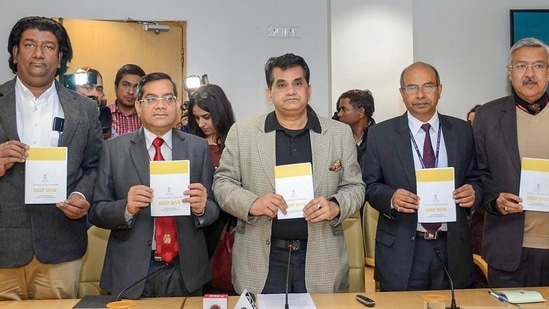
The first UNDP appraisal of the Aspirational Districts Programme (ADP) also recommended a realignment of sectors and focus, the addition of topics such as environment and gender, and pointed out that disparities among districts does not facilitate fair competition.
The report mentioned that, in these districts, the health sector has seen the setting up model anganwadi centres, efforts to increase number of institutional deliveries, reduction in Severe Acute Malnutrition among children, and improving antenatal care, among other measures.
In education, the UNDP noted that several districts have adopted innovative methods to suit local requirements. It pointed to an app developed in Jharkhand’s Godda that converts syllabus into smart classes to reach over 70,000 students.
The report also praised Prime Minister Narendra Modi and said, “the commitment shown by the top most political leadership” has “greatly contributed in its success”, underlining regular monitoring of the programme.
The appraisal said that while most districts highlighted their efforts focused in health and nutrition, education, and even agriculture and water resources, “the sectors of Skill Development and Financial Inclusion require immediate prioritisation among the Aspirational Districts to reach their full goals”.
{{/usCountry}}The appraisal said that while most districts highlighted their efforts focused in health and nutrition, education, and even agriculture and water resources, “the sectors of Skill Development and Financial Inclusion require immediate prioritisation among the Aspirational Districts to reach their full goals”.
{{/usCountry}}It also noted that sectors such as infrastructure indicated significant improvements, but still have scope for further improvement, especially in the “more remote districts and those plagued with the double burden of countering LWE activities”.
Niti Aayog CEO Amitabh Kant said, “We picked up 49 indicators... We rank districts on a real time basis. We are basically hand-holding these districts that account for 21% of the country’s population.”
The report, however, highlighted that sectors with lesser weightage need improvement, require alternative solutions to bridge gaps of technical expertise, while the “lack of human resources and technical capacities at the district and block level” remain as a challenge.