
Sign in

UN chief Guterres preached restraint to India after Pulwama, CAA and 370 abrogation

While Guterres condemned the killing of civilians at Pahalgam, he forgot to mention that the attackers killed the tourists on the basis of religious identity.

Updated on: May 6, 2025, 11:41:10 IST
Share
Share via
  • facebook
  • twitter
  • linkedin
  • whatsapp
Copy link
  • copy link

New Delhi: UN Secretary General Antonio Guterres's statement calling for India and Pakistan to exercise “maximum restraint” in the wake of the Pahalgam massacre is part of his standard template, as he gave a similar statement after February 26, 2019, Balakot air strike the post-Pulwama terror strike by Pakistan based Islamic terrorists.
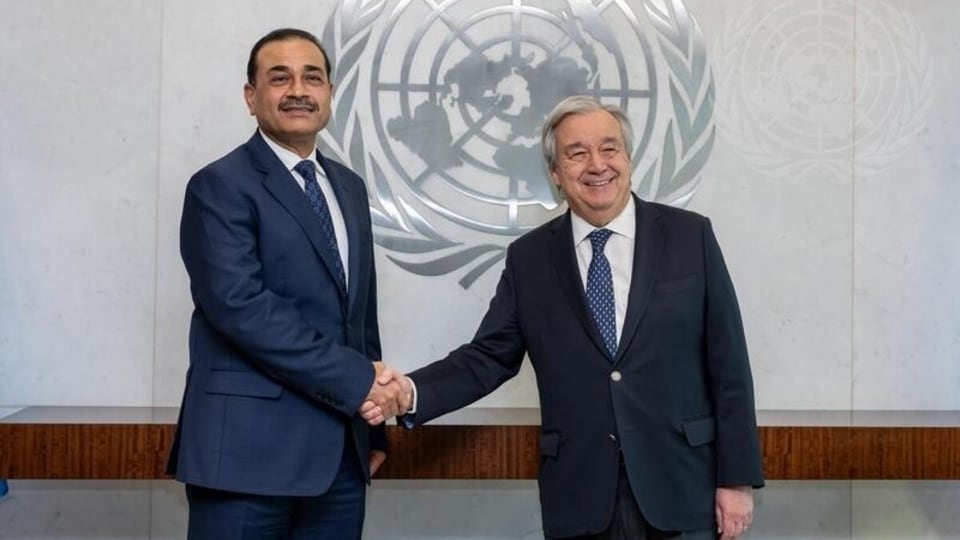
UN Secretary General Antonio Guterres with Pakistan Army chief General Asim Munir. (File)

While Guterres condemned the killing of civilians at Pahalgam on April 22, he forgot to mention that the attackers killed the tourists on the basis of religious identity and did not utter a word against Islamic terrorism.

Also Follow | Pahalgam attack news live updates

True to his politics, Guterres spoke against India after the Narendra Modi government abrogated Article 370 from then state of Jammu and Kashmir. He asked India to refrain from taking steps that could affect the status of Jammu and Kashmir and highlighted the 1972 Simla Agreement to substantiate his argument.

The fact is that Guterres spoke against India from Islamabad and raised non-existent concern about Indian Muslims after Parliament cleared the Citizenship Amendment Act on February 19, 2020. The statement talking about “risk of statelessness for two million Muslims on basis of CAA” was given by the UN top diplomat on the eve of US President Donald Trump visit to India.

Also Read | Pakistan says India choked Chenab water flow jeopardising early Kharif crop season

New Delhi witnessed a communal riot during that time even as Guterres raised personal concerns about rising discrimination against minorities in India. It is another matter, that the CAA has nothing to do with debarring Indians from citizenship.

Also Read | Pahalgam terror attack: What envoys said after UNSC meeting called by Pakistan

Given his past record, the Narendra Modi government has decided to ignore Guterres' “preachy” advice to India and concentrate on how to make Pakistan pay for using the Lashkar-e-Tayyeba terrorists for the Pahalgam attack in which 26 innocents were mowed down by AK-47 steel-coated bullets. PM Modi, on his part, is holding one-to-one meetings with national security planners and service chiefs to ensure that Rawalpindi will think twice before it launches a terror strike against India again.

  • Shishir Gupta
    ABOUT THE AUTHOR
    Shishir Gupta

    Shishir Gupta is Executive Editor at Hindustan Times and one of India's top journalists covering national security, strategic affairs, foreign policy and geopolitics. Over the past three decades, he has extensively reported on India's military, diplomatic and security landscape, covering every major conflict and national security challenge, from the 1999 Kargil War and the 2020 East Ladakh standoff to Operation Sindoor in 2025. He has also covered major terror attacks, including the IC-814 hijacking, the 26/11 Mumbai attacks and the 2025 Pahalgam terror strike, along with numerous Pakistan-backed terrorist incidents in the Kashmir Valley and across India. He has reported on national and state elections for more than three decades. A recognised authority on strategic affairs, Gupta has covered India's nuclear programme since the Pokhran-II (Shakti series) tests in May 1998 and has written extensively on global nuclear issues, Indian diplomacy and the country's expanding global outreach. He has also reported widely on international conflicts and terrorism, with a special focus on the Indian subcontinent. Gupta has interviewed Prime Minister Narendra Modi more than four times, including Modi's first interview with the print media after becoming Prime Minister in May 2014. His other interviews include three with the Dalai Lama, as well as conversations with Benjamin Netanyahu, Amit Shah, Yogi Adityanath, S. Jaishankar, Nirmala Sitharaman and Piyush Goyal. He is the author of Indian Mujahideen: The Enemy Within (Hachette, 2011) and Himalayan Face-off: Chinese Assertion and Indian Riposte (Hachette, 2014). He was awarded the Chevening-Wolfson Joint Scholarship at Wolfson College, University of Cambridge, UK, in 1998 and participated in the International Visitor Leadership Program (IVLP) of the US State Department in 2006. He received the Ben Gurion Prize from Israel in 2011 and the K. Subrahmanyam Prize for Strategic Studies in 2015 from the Manohar Parrikar Institute for Defence Studies and Analyses (MP-IDSA). Since 2024, he has hosted Point Blank, Hindustan Times' weekly YouTube show on global geopolitics.Read More

Get the latest India News, breaking headlines and real-time updates from across the country. Stay informed about politics, government policies, crime, weather and major national developments.