Finance minister Nirmala Sitharaman on Saturday, February 1, will present the Union Budget 2025-'26 in the Lok Sabha at 11am.
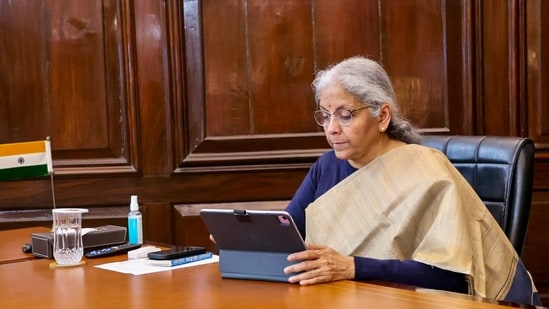
The budget speech will outline the government's fiscal policies, revenue and expenditure proposals, taxation reforms, and other significant announcements. Follow Income Tax Budget LIVE updates here
Ahead of the budget, Prime Minister Narendra Modi on Friday hinted at the possibility of a generous budget for the poor and middle classes.
“I pray to Goddess Lakshmi that the poor and the middle-class sections in the country are blessed by her,” Modi said while speaking to reporters outside the parliament in New Delhi.
The middle class is usually seen as being most invested in income tax rates, which come under the direct purview of the Budget. Income tax slabs in India have not been changed much since 2020, and there has been a growing clamour for doing so for two reasons.
Inflation has meant that higher slabs now kick in at much lower real incomes than what was the case earlier. The slowdown in the economy — India’s GDP growth went down from 8.2% in 2023-24 to an expected 6.4% in 2024-25 — has necessitated the need for policy efforts to boost consumption.
Also Read | Budget 2025: Why the government is reluctant to reduce personal income tax
{{/usCountry}}Also Read | Budget 2025: Why the government is reluctant to reduce personal income tax
{{/usCountry}}Deloitte India economist Rumki Majumdar said taxpayers, particularly lower middle tax, may likely get relief in Nirmala Sitharaman's budget.
Referring to PM Modi's remarks, Majumdar told PTI she hoped the prime minister was referring to Sitharaman and that she indeed blesses the middle class.
"Most likely they (should) probably look at the ₹7-10 lakh income slab, which is where they can probably go for more exemptions. That is a possibility," she said, adding that there has been a positive uptick in rural development in the past few months, owing to good agricultural produce," Majumdar told PTI.
"It's the middle class, which is kind of getting impacted, and a large proportion actually falls, with between 7-10. So, it probably makes sense to have some exemptions here and give them some relief. That will definitely boost consumption," Majumdar added.