India’s concerns over terrorism emanating from Pakistan and a lack of sufficient understanding of those concerns in the US can affect the India-US relationship, external affairs minister S Jaishankar said in New York on Monday, identifying the issue as one of the challenges facing the partnership.
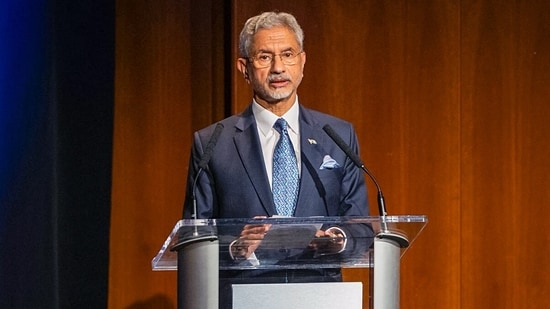
“What for us in India is particularly important is the issue of terrorism. There are very few countries that have been subjected to the kind of terrorism that we have from a neighbour as part of a deliberate, conscious policy over many, many decades,” Jaishankar said at a conversation hosted by the Asia Society.
Also Read I ‘World on edge of abyss today, seeing weaponisation of everything’: Jaishankar at UN
Deep Dive
How does Pakistan's terrorism impact India-US relations?
Why is terrorism a key issue for India in its foreign relations?
What are the main challenges facing India-US trade negotiations?
“Now, if something that matters so deeply to us — there isn’t enough understanding or appreciation or empathy of that — that creates a problem too,” the minister said.
“If one of my primary concerns is not fully appreciated by my partner, then that can have an impact on the relationship,” Jaishankar added, in an assessment of the challenges facing the US-India partnership.
S Jaishankar on the ‘big public opinion factor’
{{/usCountry}}“If one of my primary concerns is not fully appreciated by my partner, then that can have an impact on the relationship,” Jaishankar added, in an assessment of the challenges facing the US-India partnership.
S Jaishankar on the ‘big public opinion factor’
{{/usCountry}}Responding to a question on the problems that have affected the relationship over the past 18 months, Jaishankar also flagged growing opposition to immigration and mobility in the US, saying this could affect public perceptions of India and the US in both countries.
“Foreign policy and diplomacy today is not just something which is conducted by states or leaders or ministers or even by diplomats. In a social media era, there is a very big public opinion factor which, particularly in democratic societies, makes itself felt. I think that’s a reality we have to take into account,” the external affairs minister said.
Jaishankar was speaking as he concluded a visit to the US for the high-level week of the UN General Assembly, during which he held bilateral talks with US Secretary of State Marco Rubio.
Marco Rubia bilateral talks, China ties
According to India’s readout of the Jaishankar-Rubio meeting, the Indian minister raised concerns over the passage of the Sanctioning Russia and Iran Act in the US Congress, which could pave the way for tariffs of up to 100% on major purchasers of Russian oil, including India.
Jaishankar also discussed the challenges surrounding the India-US trade deal, which he said had created “bumps” in bilateral ties over the past year. Describing the agreement as “very, very far advanced”, he said its conclusion could contribute to an improvement in the relationship.
Also Read I Trump rejects Iran ceasefire proposal: Why talks have stalled and what happens next?
On India-China ties, Jaishankar said relations had steadily improved since 2024, while stressing that the situation along the border remained central to the relationship. “We have long been telling the Chinese that a stand-off between us and a dip in our relationship actually doesn’t help either of us. In fact, it is third parties who will take advantage of that,” he said.
Jaishankar said the improvement in ties with China had also helped India’s position on other issues by ensuring that Indian foreign policy did not become overly focused on a single challenge. The Union minister reiterated India’s position that the state of the border would determine the state of the broader relationship with China.