
 E-Paper



‘Watershed moment’: PM Narendra Modi as Parliament passes Waqf Amendment Bill
PM Modi hailed the passing of the Waqf (Amendment) Bill and Mussalman Wakf (Repeal) Bill as a pivotal moment for socio-economic justice.

 Prefer HTon Google


Hours after Rajya Sabha passed the controversial Waqf (Amendment) Bill, 2025 and Mussalman Wakf (Repeal) Bill, Prime Minister Narendra Modi called it a “watershed moment”, saying the bills will help marginalised people who have been denied voice and opportunity.
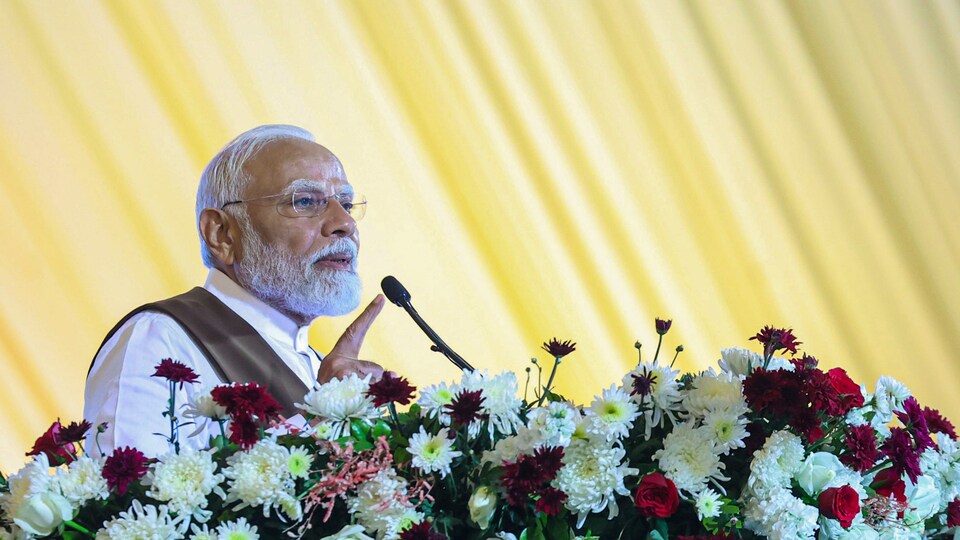
PM Narendra Modi also expressed gratitude to the members of Parliament and the people who shared inputs with the Joint Parliamentary Committee appointed to make recommendations on the bill.
In a long post on X (formerly Twitter), Modi said, “The passage of the Waqf (Amendment) Bill and the Mussalman Wakf (Repeal) Bill by both Houses of Parliament marks a watershed moment in our collective quest for socio-economic justice, transparency and inclusive growth. This will particularly help those who have long remained on the margins, thus being denied both voice and opportunity.”
Also read: Parliament passes Waqf Amendment Bill 2025; BJD MP backs it in Rajya Sabha. What next? 10 points
“Gratitude to all Members of Parliament who participated in the Parliamentary and Committee discussions, voiced their perspectives and contributed to the strengthening of these legislations. A special thanks also to the countless people who sent their valuable inputs to the Parliamentary committee. Yet again, the importance of extensive debate and dialogue has been reaffirmed,” he added.
‘Waqf Bill will boost transparency’
One of the major reasons the Centre put behind introducing the Waqf Amendment Bill was the lack of transparency in the functioning of the Waqf system. Modi echoed the same in his post and said that the system took away the rights of Muslim women and poor Muslims due to a lack of representation.
“For decades, the Waqf system was synonymous with lack of transparency and accountability. This especially harmed the interests of Muslim women, poor Muslims, Pasmanda Muslims. The legislations passed by Parliament will boost transparency and also safeguard people’s rights,” he wrote.
The newly passed bill will help to enter an era where the framework will be more ”modern” and “sensitive to social justice,” the Prime Minister said, adding that they remain committed to prioritising the dignity of every citizen.
“This is also how we build a stronger, more inclusive and more compassionate India,” he said.
Waqf Bill passed by Parliament
The contentious Waqf bill saw debates lasting as long as 12 hours in both the Houses of Parliament before being passed. The Lok Sabha had cleared the Bill on Thursday with a 288-232 vote while the Rajya Sabha passed this early on Friday with a 128-95 vote.
Both the Houses ran past midnight while engaging in discussion and debate over the Bill. Along with the Waqf Amendment Bill, the Rajya Sabha also passed the Mussalman Wakf (Repeal) Bill, 2024 after a 17-hour sitting.
Opposition vs Centre
The debate over the Bill saw a showdown, as expected, between the Centre and the Opposition in both Lok Sabha and Rajya Sabha. Union Minister Kiren Rijiju tabled the Bill in both the Houses and ensured that it doesn’t violate or take away the rights of any community. The Opposition, however, insisted that the Bill was “unconstitutional” and “anti-Muslim”.
Tearing into the Opposition, Kiren Rijiju accused it of trying to mislead people on the Waqf (Amendment) Bill and said it will benefit crores of people from the Muslim community. He also said that the Muslim community is welcoming the Bill with open arms.


