A day after US President Joe Biden said India’s position was “somewhat shaky” on Russia’s aggression in Ukraine, the State Department stepped in to allay apprehensions about what it means for the India-US relationship, highlighted convergences between the two countries, and reaffirmed the value of the Quadrilateral Security Dialogue (Quad).
Making a distinction between the India-Russia relationship at a time when the US was distant from India, and the contemporary context when the US was a a “partner of choice” for India, the State Department has also reiterated the US’s willingness and offer to deepen its security and defence partnership with India to help it offset its dependence on Russia.
While Delhi has emphasised the importance of dialogue and diplomacy, asked for an immediate cessation of violence, and reaffirmed its commitment to territorial integrity and sovereignty of states, it has abstained from votes on all Ukraine-related resolutions that have condemned Russian aggression, at various United Nations (UN) platforms, in the past month. On Monday, Biden said at a business roundtable in Washington that there had been a united response across Europe and the Pacific, through NATO and Quad, but added, “The Quad is…with the possible exception of India being somewhat shaky on some of this. But Japan has been extremely strong, so has Australia, in terms of dealing with Putin’s aggression.”
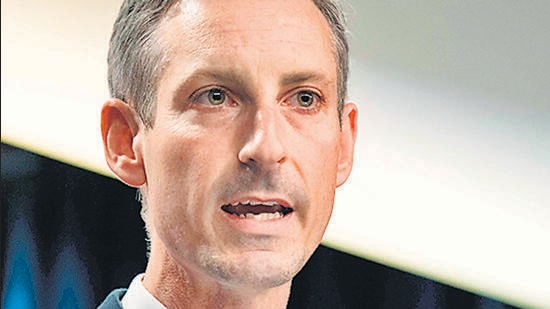
When asked if the Quad partners were in sync on understanding India’s position on Ukraine and its historic ties with Russia, and the future of Quad, State Department spokesperson Ned Price said on Tuesday, “In terms of India’s place in the Quad, in terms of our relationship with India in the Quad context and the bilateral context, we know that India is an essential partner for us in realising our shared vision of a free and open Indo-Pacific. That is really at the heart of the Quad’s goals.”
Referring to both the Quad meeting between the top leaders in early March, and Secretary of State Antony Blinken’s conversations with external affairs minister S Jaishankar, Price said, “During these engagements, the Secretary and the President respectively reaffirmed their commitment to a free and open Indo-Pacific in which the sovereignty and territorial integrity of all states are respected, and countries are free from military, economic, and political coercion. In fact, we heard that emanate from the leaders call on March 3. These are principles that we share with our Quad partners. They also reaffirmed their dedication to the Quad as a mechanism to promote regional stability and security.”
{{/usCountry}}Referring to both the Quad meeting between the top leaders in early March, and Secretary of State Antony Blinken’s conversations with external affairs minister S Jaishankar, Price said, “During these engagements, the Secretary and the President respectively reaffirmed their commitment to a free and open Indo-Pacific in which the sovereignty and territorial integrity of all states are respected, and countries are free from military, economic, and political coercion. In fact, we heard that emanate from the leaders call on March 3. These are principles that we share with our Quad partners. They also reaffirmed their dedication to the Quad as a mechanism to promote regional stability and security.”
{{/usCountry}}Price also referred to undersecretary of political affairs Victoria Nuland’s comments, made in an interview to NDTV on Tuesday, where she had acknowledged India’s historic defence ties with Russia but sought to make a distinction from that time with the current moment when the US and Europe were more willing partners.
Price said the India-Russia relationship had come of age at a time when the US and its partners were not prepared to have that kind of relationship with India. “It was a very different time, different considerations, but those times have changed. They have changed in terms of our willingness and ability to be a strong defence and security partner of India.” He added that the deepening of the bilateral relationship had happened over 25 years, on a bipartisan basis, and acknowledged it as a “legacy in large part of the George W Bush administration”.
It was during the Bush presidency that the US invested political and diplomatic capital in sealing the nuclear deal with India. “We have seen this bilateral relationship between the United States and India evolve and change for the better and deepen in a number of ways, including in our defence and security relationship.”
This meant, Price said, that the US was a “partner” now. “We are a partner of India when it comes to shared interests, when it comes to the values we share in a free and open Indo-Pacific. And we have invested in that relationship in terms of our defence and security. So historical relationships notwithstanding, we are a partner of choice for India now.”
India-US defence ties have deepened in recent decades, but there remain concerns in Delhi about the pricing of US weapon systems, the US’s willingness to share technological know-how due to its restrictive export control measures and invest in manufacturing in India at a time when indigenisation has been a core policy objective for the government, and its reliability as a supplier due to the legacy of the past. At the same time, Delhi recognises that the US has an unparalleled edge in terms of cutting-edge defence technologies and a key partner in the wake of China’s aggression.
A person familiar with India-US discussions on defence said that it was “too early” to interpret what Washington’s statements meant in terms of the defence partnership. “Let us see what this translates into in terms of specifics. The US can’t be an immediate substitute for what we get from Russia. This is a more medium-term to long-term discussion. But if Washington becomes more open and more accommodative of our concerns on defence acquisitions, and more doors open up, India will be open to all options that serve its national security interests.”