
 E-Paper



From growing methi to screentime test: What Shubhanshu Shukla did on Axiom-4 space mission, explained
During Axiom-4 mission, which concluded with a splashdown landing on July 15, crew conducted experiments on medicine, agriculture, and effect of space

 Prefer HTon Google


Indian astronaut Shubhanshu Shukla and his crewmates carried out at least 60 experiments in their Axiom-4 mission, during which they stayed for 18 days at the International Space Station. But what exactly were these experiments?
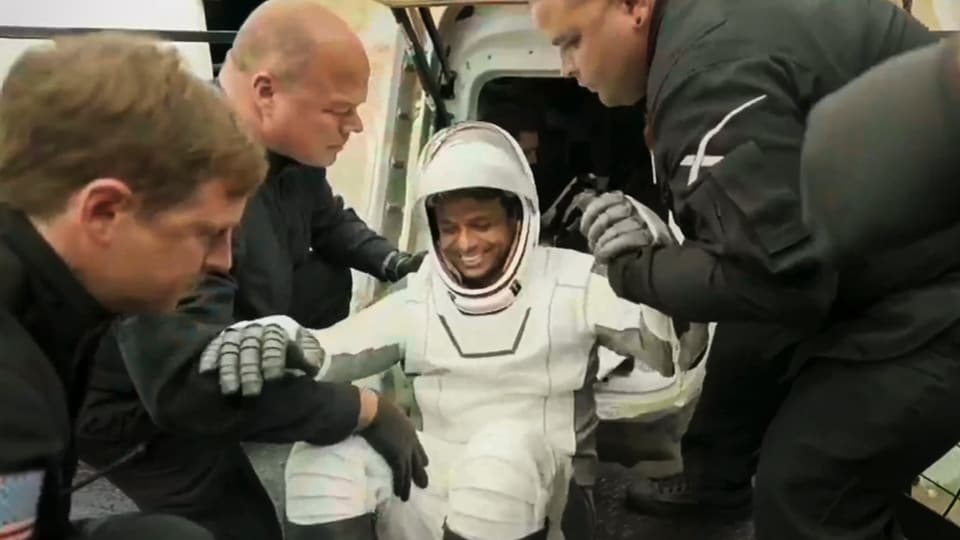
What Ax-4 crew worked on
The crew conducted experiments on medicine, agriculture, and, of course, space exploration. At the nub of it all was: how being in space affects things like growing food, managing water supply, and what it does to the human body.
Shubhanshu Shukla's experiments
The Indian Space Research Organisation (ISRO) said Group Captain Shubhanshu Shukla conducted at least seven experiments. Actually, the tests he undertook — or was a subject for — were part of a number of studies. These could have a wide impact on a range of researches.
India's Gaganyaan project ambitions by 2027 will also be informed by the findings.
- Testing ability to survive: Shukla's experiments included testing the growth and resilience, and the impact of space travel, on the Indian strain of Tardigrades, microscopic organisms known for extreme ability to survive in harsh conditions.
- Effect on muscles: He tested how being in space affects muscle tissue development, known as Myogenesis, in humans. This research is to understand muscle loss in space, of course; but could help develop potential cures people on Earth, too, for muscle-related issues.
- Impact on seeds: Shukla, an Indian Air Force pilot, played farmer, too, for a bit. He examined how 'moong' and 'methi' seeds would sprout in petri dishes, and then stored them in a freezer aboard the International Space Station (ISS). This is to study how microgravity influences their development.
- Oxygen production: Further, Shukla experimented on two strains of cyanobacteria, aquatic-photosynthetic organisms believed to have been the first on Earth to produce oxygen. Researchers want to see how how microgravity influences them, to check if these can be part of spacecraft recycling systems since they grow fast and efficiently recycle carbon and nitrogen.
- Growing food and fuel: Microalgae were at the heart of another experiment by Lucknow-born Shukla. Microalgae are tiny organisms that can be a rich source of food or even fuel. The experiment studied the impact of microgravity on the growth, metabolism, and genetic activity of these organisms as compared to algae grown on Earth.
- Screentime: He undertook ISRO's key study, called Voyager Display, to analyse the effects of using computer screens in zero gravity. While screentime is already part of debates across the board, from life sciences to social studies, this experiment focused on astronauts. Results would inform the design of computers and other gadgets on spacecraft, as we will know how much stress these cause.
- Brains to computers: Along with others, Shukla participated in a number of experiments, one of which included him and Slawosz Uznanski doing mental calculation while in a deep focus state. The point was to see if we can interact directly with computers using just our brains, our thoughts. This was the first time in history that humans communicated directly from their brain with a computer in space, the Polish neurotechnology firm behind the study claimed.
- Water bubbles: Shukla showcased a zero-gravity experiment with water to illustrate how microgravity transforms everyday physics. Using surface tension to his advantage, Shukla formed a floating water bubble. "I've become a water bender here in the station," he joked.
The crew took part in a mental health study for astronauts as well. Other studies by the group were on cancer, microgreens and plant biology, and how the human body, particularly blood circulation, behaves under microgravity conditions.
Others on the crew were US veteran astronaut Peggy Whitson, Slawosz Uznanski-Wisniewski from Poland, and Hungary's Tibor Kapu.
New standards, says ISS commander
Ahead of the departure, at a farewell ceremony, ISS Commander Takuya Onishi addressed the crew: “Peggy, Shux, Suave, Tibor, we really enjoyed your company and thank you so much for bringing so much joy, excitement, inspiration and other positive ways to make our experience here even better.”
“Your dedication to science and your profession definitely set a new standard for private astronaut missions,” Onishi said.
The short mission was financed by the governments privately and was the first time in more than 40 years that India, Poland and Hungary saw a manned mission of theirs go into space. These three were accompanied by America’s most experienced space flier, Peggy Whitson, who works for Axiom Space, which chartered the flight.
The Houston-based company's clientele includes the wealthy as well as countries seeking representation in space. NASA is all for commercial spaceflights. It was Axiom's fourth station trip since 2022, and SpaceX's 18th flight.


