
 E-Paper



What swung the vote in Bihar polls: Welfare outreach and cash transfers
Facing two decades of discontent in a young state, the NDA decided to unleash a barrage of welfare schemes

 Prefer HTon Google


Like millions of other women in India, Rinku Devi has had little say over major chunks of her life. When she was yanked out of school after Class 6, she didn’t demur. When her father made her start working in the fields, she couldn’t say anything. Even when her last name transitioned from Kumari to Devi, her participation in the decision-making was unfortunately minimal. Aise hi hai, this is how it is, said the resident of Bihar’s Araria district.
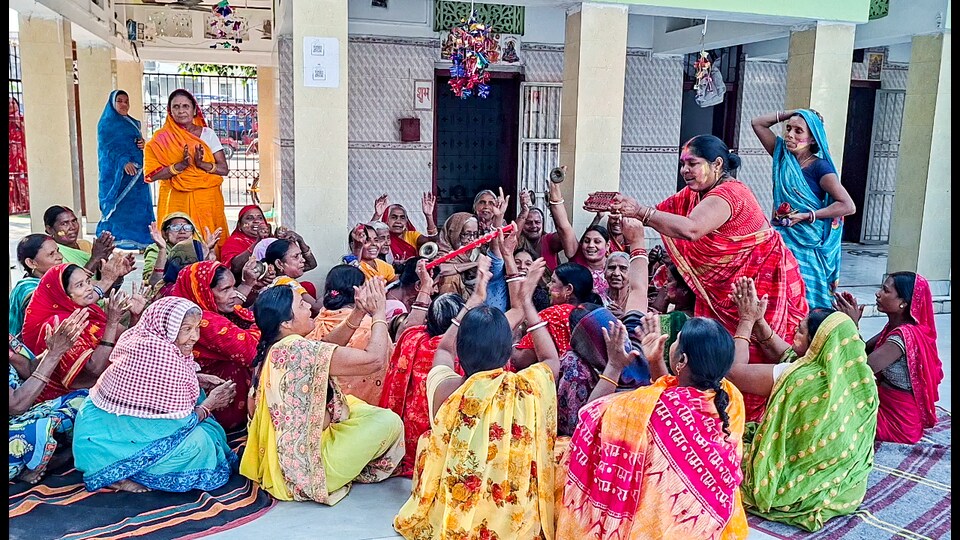
Now in her early 30s, Devi’s life runs in cycles of deprivation. Her husband is a manual labourer who accompanies a group of men in the village – some of them related by blood, others by caste – to Haryana every crop season. She works in other people’s fields and as a contractual government employee, managing the household and the lives of her two children – a boy and a girl. She hopes she wouldn’t have to pull her daughter out of school, but money is scarce and her husband’s earnings capricious.
This fall, though, hope wafted into her life. On the advice of the village chief, she enrolled herself for the Mukhyamantri Mahila Rozgaar Yojana and weeks later, received a one-time payment of ₹10,000 in her bank account. The money helped repair the tile roof of her hutment and buy a pair of new clothes for her children. And there is still money left, she beams. Devi was always a supporter of Nitish Kumar – she hails from the extremely backward classes (EBCs) that form a potent base for the Janata Dal (United) – but the welfare outreach convinced her that her vote should remain with whoever Kumar has aligned with. “In our seat, there was no teer (arrow – the symbol of the JD(U)), but I asked around and voted correctly,” she said.
By now, this is a tested template. In Madhya Pradesh, Maharashtra and Jharkhand, direct cash transfers aimed at women have handed stupendous victories to the incumbent party, helped offset anti-incumbency and nurture a new constituency of women voters. The Bharatiya Janata Party has used its impressive record of welfare delivery to fine tune the women cash transfer – from Ladli Behna in Madhya Pradesh to the Ladki Bahin in Maharashtra – while the Opposition has attempted its own version of the sop in Jharkhand (and to an extent, the guarantees in Karnataka and Telangana).
But Bihar’s NDA victory was not built solely on the back of this cash transfer to 15 million women. Facing two decades of discontent in a young state, the NDA decided to unleash a barrage of welfare schemes – announcing that the government would create 10 million jobs over the next five years, hiking the pension for the elderly, disabled, and widows to ₹1,100/month, and setting up special camps to enrol all eligible beneficiaries under the Mukhyamantri Vridhjan Pension Yojana, Indira Gandhi Old Age Pension, Indira Gandhi National Widow Pension, Indira Gandhi National Disability Pension, Laxmi Bai Social Security Pension, and Bihar State Disability Pension. In addition, Kumar increased the monthly stipend for anganwadi workers to ₹9,000, and helpers to ₹4,500, declared sops for construction workers, and ₹1,000 a month for graduates.
The slew of welfare schemes – announcements came almost every day during September – helped undercut anti-incumbency, shore up Kumar’s already formidable social coalition, make new inroads among women, and hive off a chunk of the youth vote that the Opposition was eyeing. The schemes became a key talking point for the NDA and in rally after rally, NDA leaders underlined the transformation catalysed by welfare, and connected it to Kumar’s legacy of sponsoring cycles for women, ensuring clean drinking water and 24/7 electricity in villages (and other similar welfare schemes) during his earlier terms. The landslide victory on Friday made it clear that the welfare offensive had charmed almost every caste and community and consolidated women support.
To be sure, legitimate questions can be raised about the timing of the cash transfer scheme, the impact on the fiscal health of an already impoverished state, and the ethics of the Election Commission allowing the deposits during the campaign.
The Opposition attempted to catch up by promising more jobs, regularisation of jobs for women contractual workers and pledging to pay more to women if it came to power, but it was too late in the day. Plus, as Devi said, “Why would we go elsewhere when we have already got something here?”


