
 E-Paper



When IT city was hub of arms innovation
According to historians, rockets find their origin on the road alongside Jumma Masjid and Taramandalpet in Bengaluru – the hub of the rocket project of 18th century ruler of Mysore Tipu Sultan.


While Bengaluru is known as the tech city today, not many know that Karnataka’s capital also has strong links to an engineering marvel that changed modern warfare forever – the rocket.
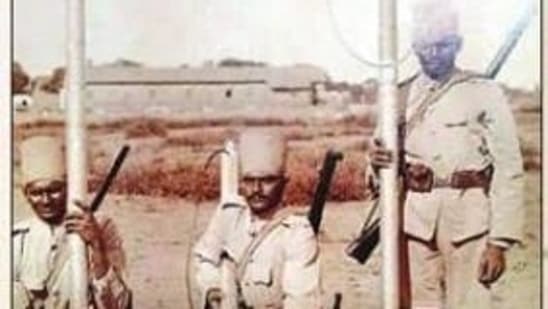
According to historians, rockets find their origin on the road alongside Jumma Masjid and Taramandalpet in Bengaluru – the hub of the rocket project of 18th century ruler of Mysore Tipu Sultan. Military inventions such as Tipu Sultan’s rockets and Bangalore Torpedoes by the Madras Sappers, an engineer group of the Corps of Engineers of the Indian Army, speak volumes of Bengaluru’s history in military inventions.
Even though the use of rockets in combat was perfected in Tipu’s labs in Bengaluru, this history was long forgotten. One of the first to rediscover it was India’s former president Dr APJ Abdul Kalam, who himself was hailed as ‘Missile man of India’. During a trip to the States of America in the 1960s, a painting in the lobby of NASA’s sounding rocket facility caught Kalam’s attention. The painting depicted one of the earliest usages of rocket on a battlefield.
Later, in his book ‘The Wings of Fire’, Kalam wrote in detail about what he saw. “The painting caught my eye because the soldiers on the side launching the rockets were not white but dark-skinned, with racial features found in South Asia. It turned out to be Tipu Sultan’s army fighting the British. The painting depicted a fact forgotten in Tipu’s own country but commemorated here on the other side of the planet,” he wrote.
The army of Tipu Sultan was the first to weaponise rockets. The ruler had created a designated force of nearly 5,000-strong men to operate rockets. Even though the Chinese and Europeans tried to make rockets soon after the invention of gunpowder, but according to historians, since they used bamboo to make rockets, the prototypes were not effective, and they were soon replaced by canons.
However, in the late 1700s when Tipu and his father Hyder Ali began experimenting with rockets, they made a major change by using iron tubes instead of bamboo. Over the years, the rocket-making unit in Taramandalpet experimented with several models, before they were deemed battle-ready.
Many historians believe that Tipu’s rockets could cover a range of up to 2 km, mainly because of the introduction of high-quality iron. The metal tubes filled with gunpowder were closed on one end, and on the other end a nozzle was provided to propel the rocket using the gases it emitted – a concept used even today.
Tipu Sultan’s forces used rockets with great effect in the four Anglo-Mysore Wars. One of the first mentions of the effective use of metal rockets was in the battle of Pollilur during the first Anglo-Mysore war in 1780. The advancing British East India Company forces were repelled by the Mysore army using several rounds of rocket fire. Several officers of the British army were taken prisoners following this defeat.
More than the number of casualties, the rockets were instrumental in creating panic among the enemies. One of the enemy commanders who faced the wrath of the rocket barrage was Arthur Wellesley, the first Duke of Wellington who later became the hero of Waterloo. During the fourth Anglo-Mysore war, while Wellesley was on a reconnaissance mission near a grove in Sultanpet in Srirangapatn, Tipu’s forces launched about a dozen missiles at a time at his troops, using wheeled carts with three or more rocket ramps.
The designs at the time were such that swords were also incorporated in the rockets, which served a dual purpose. “The swords acted as a guidance mechanism, providing the rocket with stability during the flight, and towards the end of the flight, the swords became a weapon. The rockets used to tumble after losing thrust as it came down towards its target, killing or severely injuring the soldiers who came under it,” says Col Rajeev R, a retired engineering officer with the Indian army and military history enthusiast.
The British, who suffered heavy losses because of these rockets, were quick to learn and adopt them into their arsenal. These were used in the battle of Waterloo and in the Anglo-American war, eventually finding a mention in the Star-Spangled Banner.
Another invention that put the city’s name on the world map was the Bangalore torpedo, whose design, historians believe, was so perfect that even more than 100 years after its development, armies across the world continue to use this weapon. “The Bangalore attack” was a strategy used extensively during the World War II, especially during the D-Day landings.
Bangalore Torpedo is a weapon system developed by engineers of the Madras Sappers (now called Madras Engineering Group) located next to Bengaluru’s Ulsoor in the late1910s. The weapon is a series of metal tubes with explosives that are around five feet long and are connected together, meant to clear obstacles on a battlefield.
During the World War II, allied soldiers faced with a wall of fire during beach landings were unable to move ahead because of the barbed wires installed across along the beach. It was here, they used Bangalore Torpedoes.
The original design of the weapon was put together by an army officer from the Madras Sappers, RL McClintock, who was then a major. The records of the first development of the weapon are present in a modest museum in today’s Madras Engineering Group (MEG) next to Ulsoor Lake in Bengaluru. ‘Annual record of 2nd Queen Victoria’s Own Sappers and Miners for 1912-1913’, talks about the trials of a weapon that was supposed to aid in trench warfare.
The development of the weapon began when the British army felt the need for a weapon that can help soldiers fighting in World War I to clear barbwires near enemy trenches. Major McClintock, who was superintendent of instruction at Madras Sappers here in Bengaluru, was given the task to come up with a solution. The designs were tested and perfected over a period of five years.
As per the records, still preserved by MEG, the material cost of the first design was 9 rupees, 10 paise and 5 annas.
According to Mondial Defence Systems Limited, which supplies modern-age Bangalore Torpedoes to the US army, the design of the ‘Bangalore’ has changed little since its inception. It still remains a steel pipe filled with available explosive (compound B, TNT, RDX/Wax and the likes). “The action of clamping the pipes together in this fashion ensures end-to-end carryover of the explosive train. Modern safety considerations have pushed suppliers of the Bangalore to incorporate ‘insensitive munition’ to ensure better safety,” read a statement from the firm.
In the years that followed World War I, the Americans were impressed by the success of the Bangalore Torpedoes and adopted them. Even though the design is more than 100 years old, The Bangalore Torpedo still remains in service with the British, US, Indian, Chinese, Canadian and Pakistani armed forces.


