E-Paper



Will customers be ready to spend a premium on satellite broadband?
Satellite internet is already available for governments and enterprises. Elon Musk’s Starlink will be the third service provider to focus on home users

 Prefer HTon Google


Wires can only be drawn so far. To the nearest telecom tower for 3G, 4G or 5G mobile networks. Or to indoor spaces, for wired broadband to create a Wi-Fi network for PCs and phones. That physical limitation is represented in the International Telecom Union (ITU) numbers, which indicate approximately 67% of the world’s population, that’s around 5.4 billion people, are now online in some form. Despite a 4.7% growth in 2022, 2.6 billion people still remain offline. That’s a big gap, for consumers and businesses. What gives?
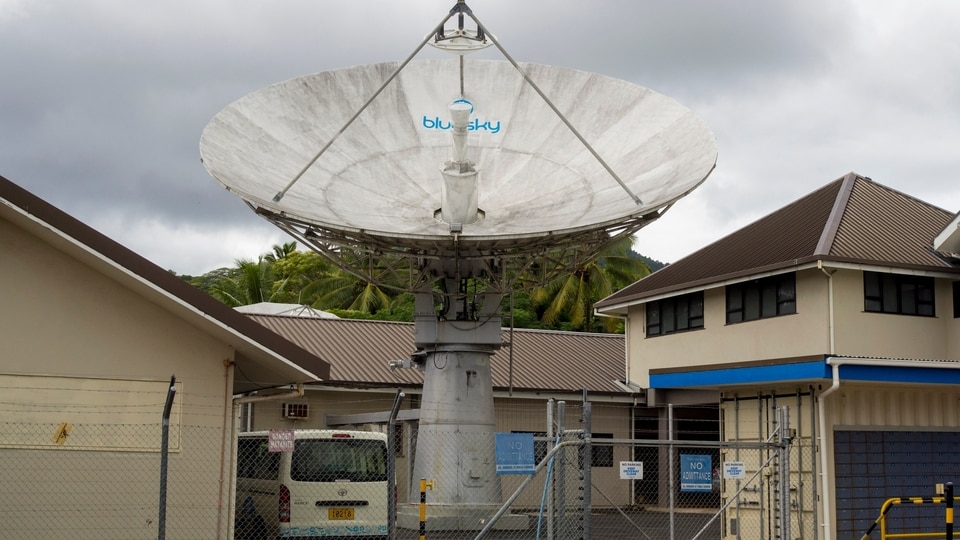
It isn’t easy to deploy last-mile infrastructure, particularly in difficult terrain and more so in lower income countries (terrain, not necessarily a limitation here; return on investment more so). Therefore, a lack of it, holds the key. In this case, beamed from the sky, specifically by satellites that are closer to the earth. It is a simple, yet complex premise of satellite broadband, a template used by SpaceX’s Starlink, Eutelsat OneWeb that’s backed by Bharti Airtel, HughesNet by Hughes Communications and the upcoming Reliance JioSpaceFiber, as well as Amazon Kuiper which is still in the testing phase.
Think of this as a melding between how you access mobile broadband on your phones wirelessly from a tower and how you may receive direct to home (DTH) television service from a satellite to your home with a dish antenna. In homes, offices, and static locations, an outdoor unit would receive signals from a satellite overhead which is connected via a networking cable to a Wi-Fi router that sits indoors.
Sounds simple? One size doesn’t fit all. There are different types of satellite that are being used for delivering internet and voice.
Once approvals come through, Starlink will become the third company to receive the global mobile personal communication by satellite, or GMPCS, license in India. This is the singular approval needed to offer data (i.e internet) as well as voice services through the satellite. Holding a license doesn’t necessarily mandate companies to provide both services. For instance, Starlink can choose to simply offer satellite broadband in India, and not a voice calling option on its network.
For now, Reliance and OneWeb hold the GMPCS license in India. The former is yet to commence commercial services, while the latter offers customised connectivity solutions for enterprises.
“Satellite broadband has the potential to expand connectivity, bridge the digital divide, unlock new economic possibilities, and foster digital inclusion. Over the short to long term, a confluence of technological breakthroughs, affordable service models, and supportive government policies can unlock the transformative potential of satellite broadband for India,” Prabhu Ram, Head for Industry Intelligence Group at Cyber Media Research (CMR), said.
OneWeb as well as Hughes with its Jupiter platform are already offering services for enterprises and businesses and they have been since late 2021. Focus areas are government systems such as connectivity for armed forces and provision of digital services in remote locations, maritime services that connect shipping fleets out at sea, aviation systems for commercial airlines and business jet operators as well as land transport fleets. The pricing and the technology used to deliver connectivity to all these use cases varies, and we’re not privy to those contracts. Delivering the internet via satellites directly to users isn’t cheap.
No escape: Satellite internet is expensive
Starlink’s focus will also be on consumer facing broadband services, apart from businesses. The company has so far kept relative global pricing parity with monthly subscriptions priced around $120 (roughly around ₹9,975 per month). This is ten times the cost of wired and 5G broadband services in India.
Can costs be corrected quickly enough? “With satellite internet on a growing path, supply may exceed demand for the next few years. This is majorly on account of traditional internet operators offering reliable high-speed internet at lower prices than satellite internet,” said Santosh Tiwari, EY-Parthenon India Partner in the consultancy firm’s latest report, How satellite internet can transform digital connectivity in India.
“Pricing of any new technology is always steep. But we also see that it's costs fall sharply upon adoption. There was a time just 15-20 years back when cellular was out of bounds for many who are using it on daily basis. Initially the price would be high, making it accessible to a niche segment but then eventually it’ll widen access and acceptability,” Faisal Kawoosa, Chief Analyst at research firm Techarc, said.
For instance, wired broadband plans (Airtel Xstream Fiber plans start ₹499 per month; Reliance JioFiber costs ₹399 onwards) including the flagship 1Gbps speed plans from Airtel Reliance JioFiber (both priced at ₹3,999 per month). If we are to consider the recent development of 5G connectivity for homes and offices, Reliance JioAirFiber has plans within a band of ₹599 and ₹3,999 per month for speeds between 30Mbps and 1Gbps.
Another cost you’ll likely encounter is the one for the hardware to get your premises connected with Starlink’s satellite broadband. Globally, pricing for the Starlink outdoor unit, the Starlink Wi-Fi Router (likely to be a dual-band Wi-Fi 5 spec) as well as the necessary cables, is around $599 (around ₹49,800).
“If some business model can make it $50-60 a month, it would see considerably good adoption,” adds Kawoosa, pointing to the high entry cost to buy the service and the hardware that’s needed to get a user connected to the service (the dish antenna-like device and the router, for instance).
At its core: methodology
While the satellite broadband template is the same, approaches differ. A lot of it has to do with the technology in use, and the target user demographic. Starlink uses LEO, or Low Earth Orbit satellites. Early last year, Starlink confirmed there were more than 4,000 satellites in the constellation enveloping the earth. Since then, they’ve added more Gen2, or second generation, satellites that can deliver faster speeds to more users simultaneously.
The LEO satellites operate in space at 2,000 km or less above the earth’s surface. They also tend to be less costly, owing to smaller sizes, but potentially shorter life spans in some cases. Starlink’s satellite constellation is LEO, specifically placed at about 550km above earth, and there’s a reason why SpaceX chose this method.
“Most satellite internet services come from single geostationary satellites that orbit the planet at 35,786 km. As a result, the round-trip data time between the user and satellite, also known as latency, is high, making it nearly impossible to support streaming, online gaming, video calls or other high data rate activities,” they point out in an explainer on their website. Since Starlink satellites are in a low orbit, that is closer to earth and thereby each user’s outdoor receiving unit, this latency is significantly lower.
The claimed difference could be as much as Starlink’s 25 millisecond range, compared with 600 milliseconds that MEO (Medium Earth Orbit) or GEO (Geostationary) satellites may deliver, but that may be a selective pitch you’d expect from a broadband company fighting off competition.
What’ll make a difference in the long term, as more users get on board, is the flexibility that LEO provides – smaller but more satellites – which gives Starlink the flexibility with variable orbit and demand specifics. Some real-world examples include Starlink terminals used in Ukraine after the Russian invasion in 2022, and OneWeb and SpaceX stepping in to reposition satellites over Alaska after a sub-sea fibre-optic cable in the Arctic Ocean was damaged, cutting internet access for a large part of the region.
OneWeb already has 618 LEO satellites in orbit. Hughes is relying on the Indian Space Research Organisation or ISRO’s GSAT-11 and GSAT-29 geocentric geostationary satellites for services in India, which float around 36,000km above the earth. These are now part of a 75-strong satellite cluster that use the Hughes Jupiter system.
Reliance’s upcoming JioSpaceFiber will deliver their satellite broadband services using Luxembourg based SES’s geostationary and MEO satellite fleet. Of this, the SES-12, will be the larger geostationary satellite placed around 36,000 km above the earth to cover India and large parts of South Asia, while the MEO satellites (these usually operate between 2,000 and 20,000 km above earth, depending on size and power) are named O3b mPOWER. Reliance Jio is expected to offer services to consumers alongside enterprises and businesses.
For India, satellite internet attains more importance because it could be the critical piece in the jigsaw of connectivity that isn’t easy in a country as diverse as India. There are geographical difficult locations where it is proving a challenge to provide internet coverage with mobile towers; wired internet connectivity is a distant dream. “Satellite will complete the equation enabling carpet connectivity across the country offering high speed Internet,” said Techarc’s Kawoosa.
For example, Reliance, conducted JioSpaceFiber tests in late 2023 to scope delivery of internet from the sky, in remote locations sch as Gir in Gujarat, Korba in Chhattisgarh, and Jorhat in Assam. It’ll be a recurring theme, as wireless from satellite increasingly covers parts wired internet cannot.